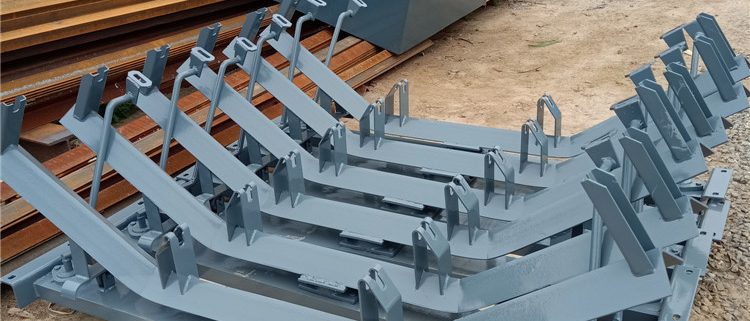
Self-aligning conveyor idler assembly with supporting frame and roller brackets

An empty belt can look reassuringly straight during an inspection and move sideways as soon as the feeder starts. For a plant buying a centering assembly, that difference matters more than a photograph of the belt at one convenient moment. Your belt tracking idlers supplier needs both operating states and the location where drift begins. Start with GRAM’s self-aligning idlers, but keep the proposed assembly separate from any loading, belt or support defect that must also be corrected.

A belt tracking idlers supplier needs to know when the drift begins

Describe whether the problem appears during an empty run, after material reaches the conveyor, as a particular feed changes, or at a recurring point in the belt’s circuit. These are different observations. “The belt goes left” omits the condition that makes the movement repeatable and leaves the supplier evaluating a component without a useful definition of the problem.

For a quarry conveyor that drifts only when one feeder operates, identify that feeder and the relevant material stream in the inquiry. The proposed GRAM centering assembly may be one part of the solution, but the buyer should not treat its presence as evidence that the incoming material is distributed correctly. Keep the loading condition attached to the order review so the original fault does not disappear from the discussion.

Keep three observations separate: the belt’s position before loading, its position after the load arrives, and the point where the changed position first becomes visible. A downstream edge mark alone does not describe all three.

Loaded-belt drift is a different inquiry from empty-belt wander

Compare like conditions rather than combining unrelated observations from different days. Record the material stream, operating direction and whether the conveyor was carrying its normal load when the position was observed. Existing site records can provide this information without creating a new operating experiment. Any additional observation should follow the plant’s approved access and operating arrangements.

The distinction is consistent with Martin Engineering’s discussion of mistracking causes: loading, rolling components and belt condition can contribute differently. That background helps frame a supplier discussion; it does not establish a correction rating or an installation position for a GRAM assembly.

A recurring splice event should stay attached to the belt inquiry

A maintenance buyer may see the belt move at a similar point on each circuit and receive an offer for additional tracking frames. Before accepting that explanation, preserve the observed relationship with the splice. GRAM’s mining conveyor belt range is a separate route for reviewing the belt construction and its duty. A support order should not erase a belt-related question that remains unresolved.

This does not diagnose a splice from its appearance or mean that every repeating movement has the same cause. It means the supply proposal should state whether belt condition has been assessed and which remaining problem the centering equipment is intended to address. That division gives the buyer a clearer acceptance case than a promise to stop all wander.

Self-aligning tracking idlers need a defined operating case

GRAM presents self-aligning idlers as a distinct centering route. Its assembly photographs show rollers supported by brackets and a fabricated frame with central supporting components. These visible parts establish that the offer concerns an assembly, not merely a replacement tube. They do not define its response, direction compatibility or correction range for every conveyor.

Ask the supplier to identify the offered assembly and the belt state used to select it. If the inquiry concerns loaded drift, the review must retain the loaded condition. If the belt wanders empty as well, include that observation separately. Acceptance based only on a straight empty run would leave the original loaded condition unanswered.

Observed condition Information for the GRAM proposal Question that remains separate
Drift after one feed starts Feed identity and location where movement begins Incoming material distribution
Wander during empty running Direction, affected belt run and retained supports Belt and machine alignment condition
Movement recurring with the belt circuit Relationship to the splice or visible belt feature Belt condition and joint assessment

Carrying and return positions must remain identifiable

A quotation should identify whether the proposed equipment is intended for the carrying or return side and describe the corresponding belt contact. The loaded carrying run and the returning belt present different support conditions. Do not approve an interchangeable description simply because both assemblies are called tracking idlers in an inquiry.

Describe the retained belt path at that position and the supports on either side. GRAM’s frame and roller photographs can help explain the proposed assembly, but the supplier’s order drawing must resolve the actual installation relationship. A purchaser should be able to connect each proposed unit to a specific belt run before the order is released.

For a supply inspection, use that accepted position reference to identify the frame and associated rollers. Check that the received assembly corresponds to the proposed carrying or return duty and that its supporting components match the agreed drawing. A complete-looking centering frame is not enough if its order reference has become detached from the operating case used to select it.

GRAM self-aligning idler assembly whose offered duty should identify the belt run and operating state
Identify the complete centering assembly and the belt run it is intended to serve.

Steel support rollers can change the conditions seen by a tracking frame

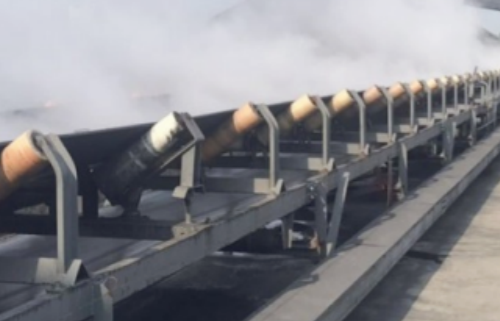
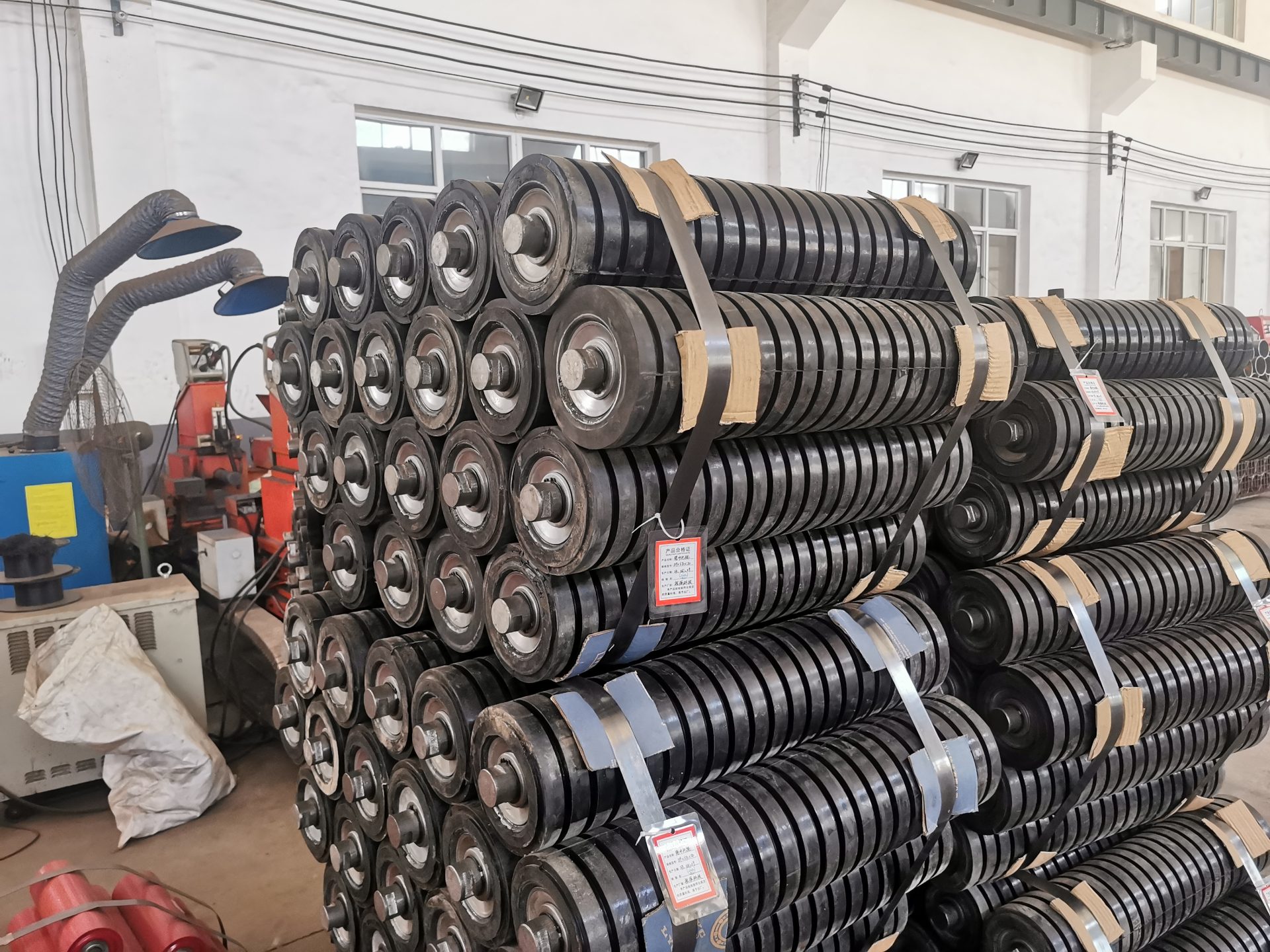
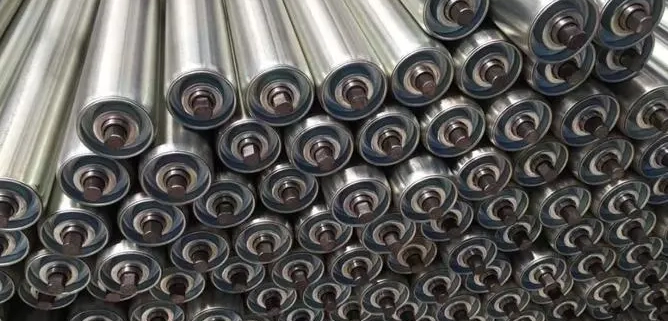
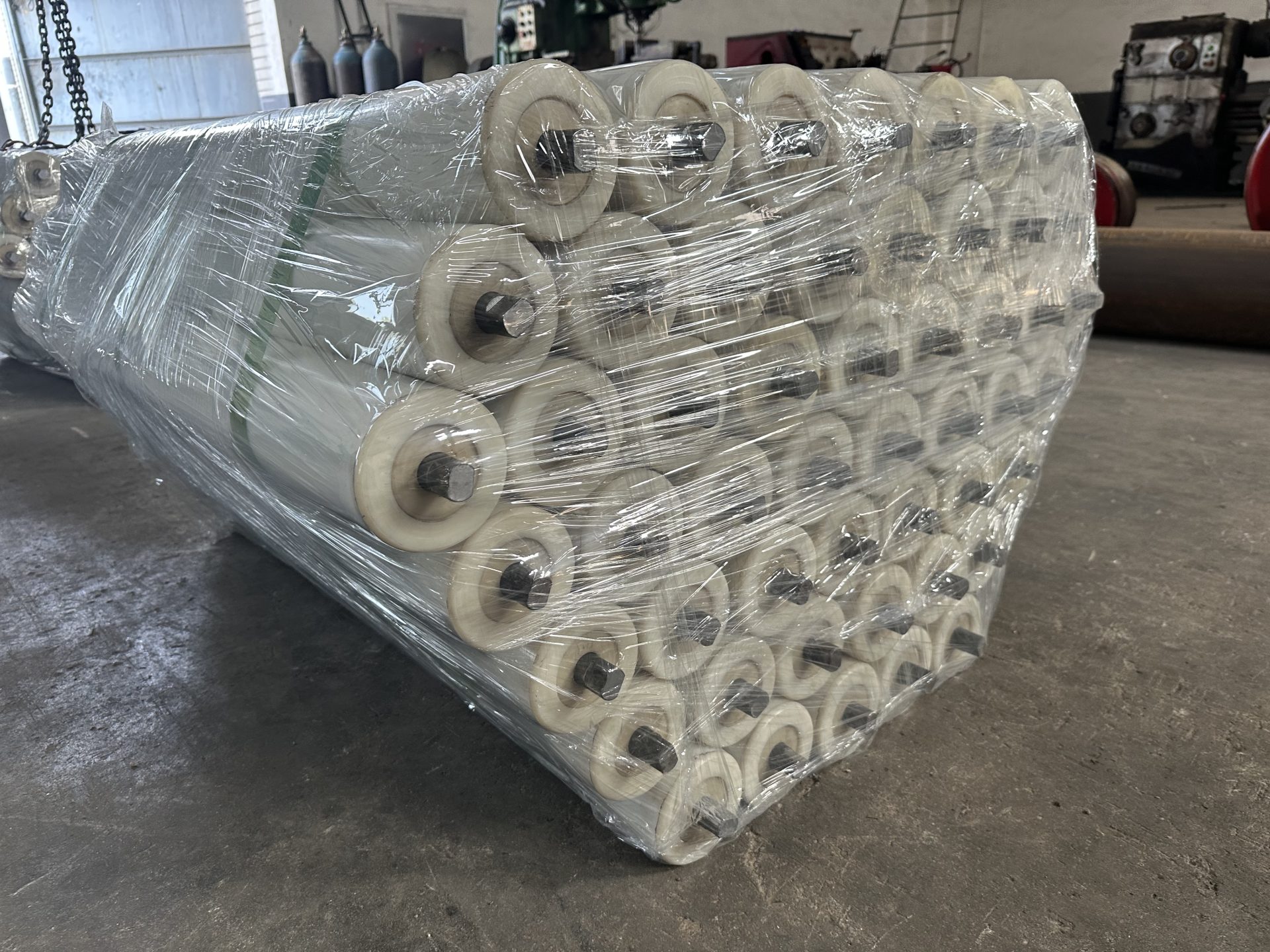
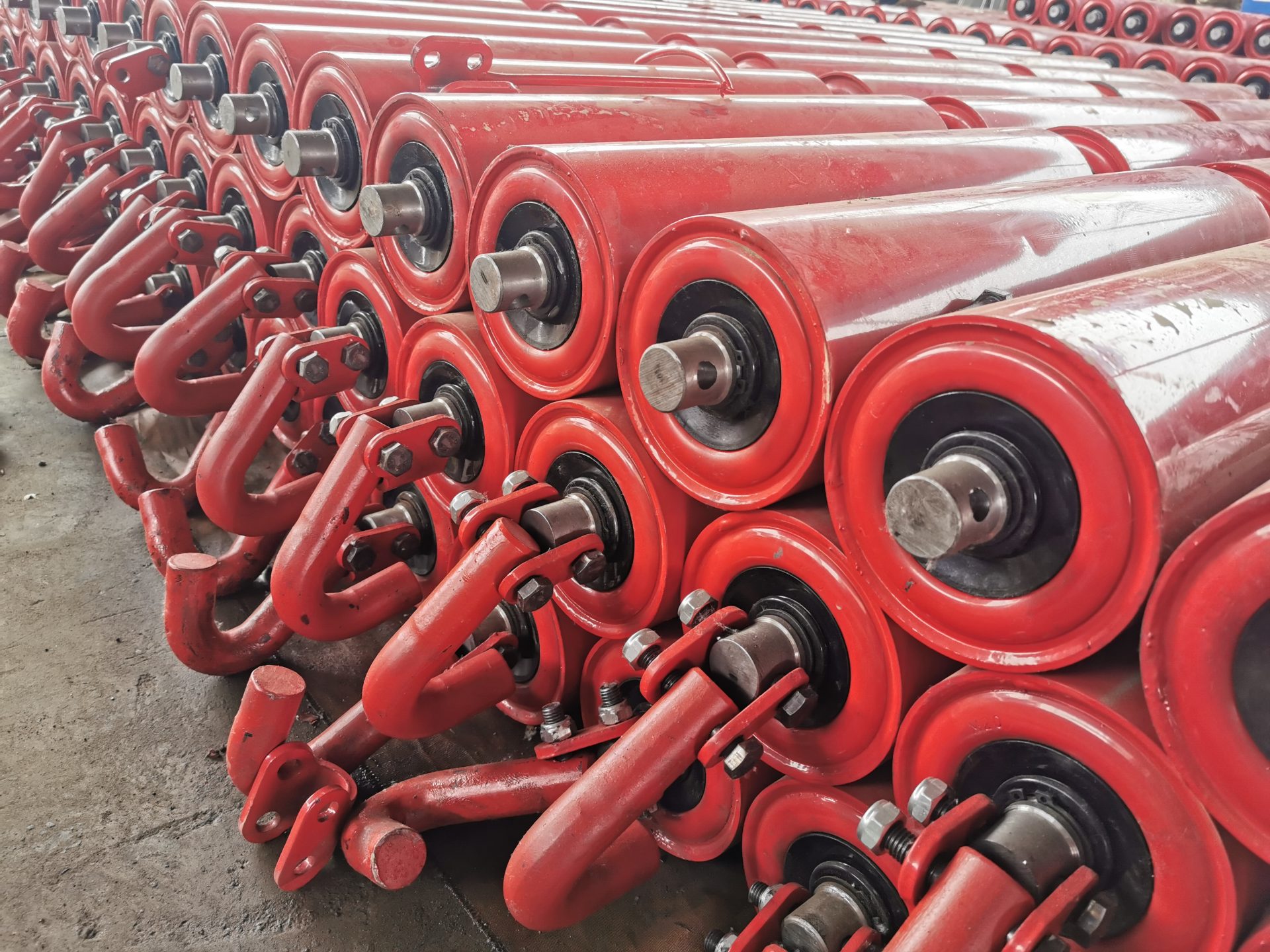
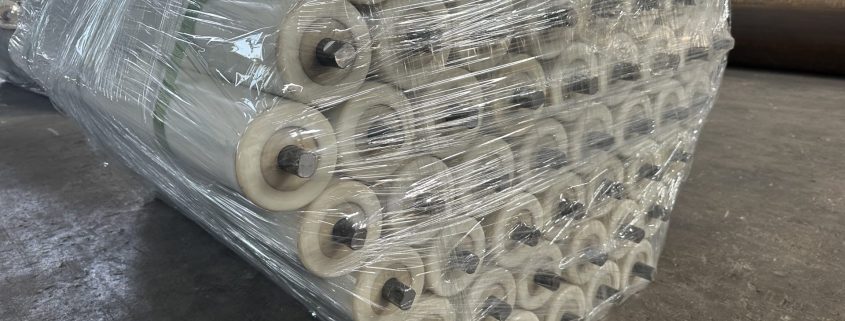
The tracking assembly does not operate on an isolated belt. GRAM’s steel rollers are a separate support family with cylindrical bodies, bearing ends and projecting shafts. The condition and installed relationship of retained rollers belong in the supplier review when they affect the belt approaching the proposed centering position.

Steel roller deposits are different from the original roller diameter

Material deposited on a working body can change the surface contacting the belt. An observation of the dirty roller is useful evidence of the operating condition, but its outer appearance should not be used as the manufacturing dimension for a replacement. Keep the accepted original body geometry separate from the accumulation shown in the site photograph.

If a plant is replacing damaged steel supports and adding a GRAM self-aligning assembly during the same outage, distinguish those two items in the supply scope. Replacement supports address the defined support condition; the centering assembly addresses the remaining tracking requirement. Receiving one package containing both should not make their acceptance responsibilities indistinguishable.

Bearing-end contamination does not describe the whole contact surface

A dirty bearing end and an uneven working body are different observations. GRAM’s steel assembly includes both the supporting end construction and the belt-contacting cylinder. Mark the affected part in the inquiry rather than using a general description such as “dust problem” to justify every proposed component.

The distinction also affects inspection of delivered replacements. Confirm the agreed body, shaft interface and end construction against the accepted order information. A tracking proposal should not quietly substitute a different supporting roller without stating that change, because the retained support relationship was part of the original assessment.

Guide rollers should not conceal the reason for loaded drift

GRAM’s guide rollers have a local guiding role and include built-in bearings. A buyer should distinguish that contact from the action of a complete self-aligning idler assembly. Adding a guide at the visible edge does not, by itself, establish that the load arrives centrally or that the approaching supports are in the required condition.

Where an existing guide is already being contacted repeatedly, include its location and the operating state associated with contact. The offered centering arrangement should explain its relationship to that guide. Otherwise, the buyer can receive two independently described products that have not been reviewed as parts of the same belt path.

Do not turn this review into a universal edge-clearance instruction. The allowable relationship depends on the actual equipment and accepted design. The useful purchasing outcome is a clear division between the guide’s local duty and the tracking assembly’s proposed duty, with neither treated as a substitute for investigating the loaded condition.

Polyurethane cleaning belongs in the tracking discussion when residue reaches the supports

If recurring carryback reaches the retained return supports, include the cleaning arrangement in the review. GRAM’s polyurethane conveyor cleaner is a direct-contact scraping route, with photographed blade, transverse support and adjustment elements. It is a separate supplied assembly rather than a feature of the tracking frame.

For a washed-aggregate belt, a tracking offer may look satisfactory while the return-side residue condition remains unchanged. In that scenario, define what the cleaner proposal addresses and what the self-aligning proposal addresses. No blade-pressure setting or cleaning guarantee follows merely from choosing polyurethane, and no centering guarantee follows merely from adding a frame.

GRAM centering idler frame and roller supports to identify separately from guides and belt cleaning equipment
The frame, supports and rollers need a defined role within the retained conveyor.

When several component families are supplied together, require the packing identification to preserve their order references and intended positions. A guide, a steel support roller and a centering assembly can belong to the same project while having different installation and acceptance requirements. The delivered grouping should make those differences easier for the receiving team to follow.

Accept the tracking supply against the condition that prompted the order

The earlier discussion of self-aligning frame clearance remains relevant to physical fit. Add an operating-state acceptance case to that fit review: which belt run is involved, which feed and direction matter, and which retained support or belt issues have been assessed separately. Physical installation and a meaningful operating review answer different questions.

Send the supplier a description that still makes sense when the conveyor is loaded, not just a photograph from the empty inspection. Approve the identifiable assembly against that description, preserve unresolved loading or belt questions, and make the receiving team’s component references match the accepted proposal. That gives the purchase a useful purpose even when the plant needs more than one corrective action.
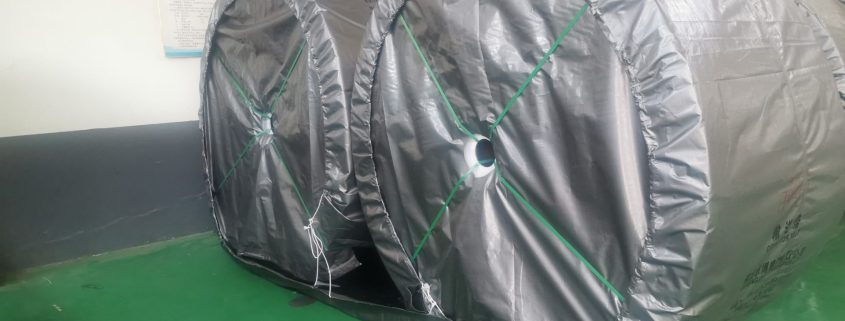
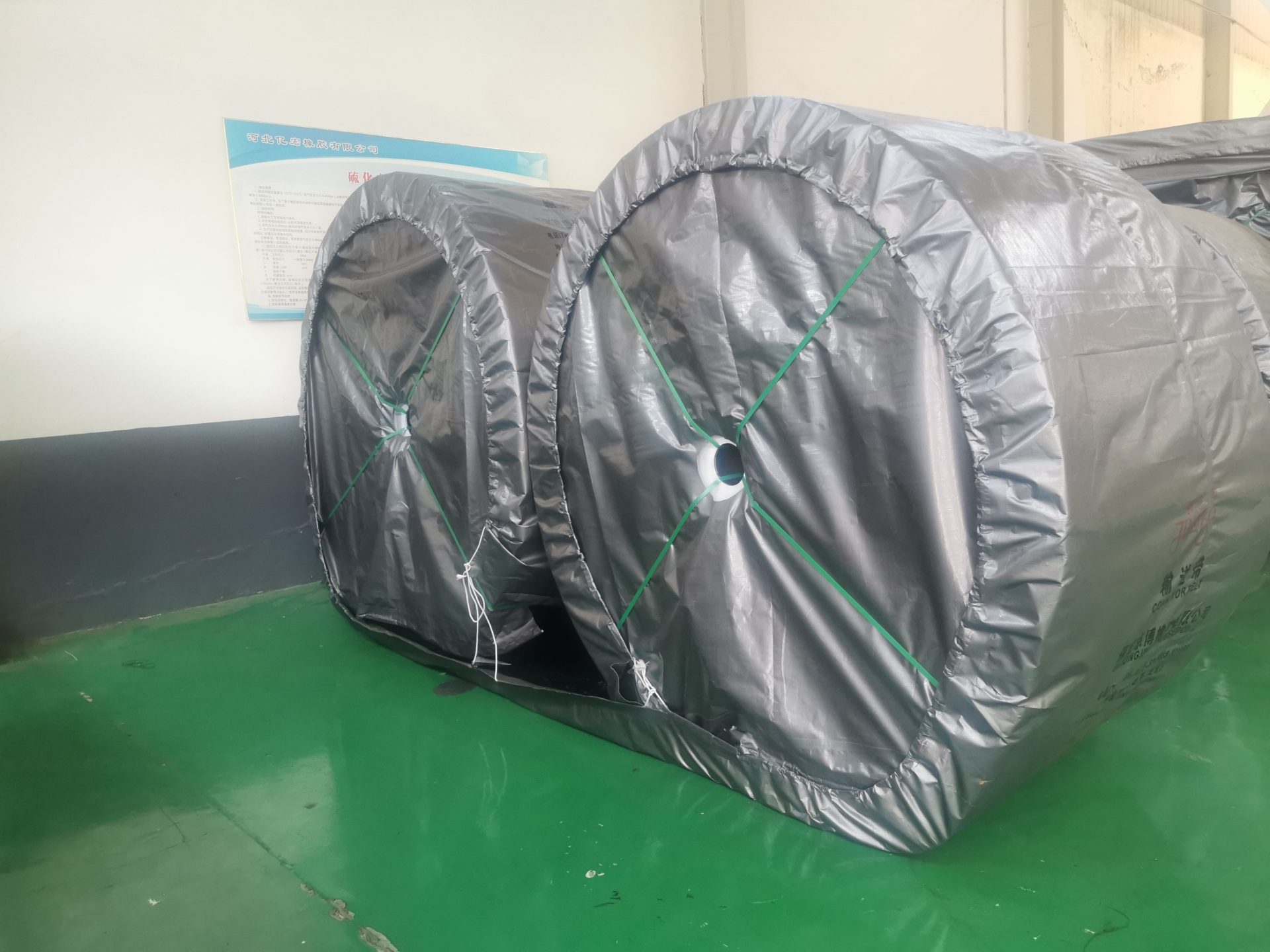
Wrapped GRAM belt rolls requiring identification of the actual supplied construction and form

An oily patch near a conveyor drive and oil distributed throughout the feed are different purchasing problems. The first may begin with an equipment leak; the second may be part of normal material duty. Before an industrial buyer asks an oil resistant conveyor belt supplier for a replacement, identify the oil and how it reaches the belt. GRAM’s belt range includes oil-resistant belting, while its rubber constructions provide fabric and steel-reinforced routes. Select an offered cover against the actual oil exposure, then confirm the reinforcement and retained conveyor separately.

An oil resistant conveyor belt supplier needs the source of contamination

Trace the oily contact before choosing a replacement compound. Ask whether oil arrives with the material, reaches the belt from equipment or is introduced during handling and cleaning. Record the actual product or material involved rather than describe every exposure as grease.

Oil-bearing feed should be described as normal belt duty

Where the conveyed material regularly contains oil or fat, give the supplier its identity, variability and contact conditions. GRAM’s belt offering discusses oil-bearing material and vegetable-oil processing contexts. Those application descriptions are a starting point for an inquiry; they do not establish the compatibility of every proposed cover with every oil.

For a plant handling oily material over a full shift, explain whether the oil is distributed throughout the feed or concentrated in occasional batches. Describe material retained on the belt after discharge as well. The offered construction needs to address the intended exposure, rather than an average description that hides a more demanding portion of the operating cycle.

A lubricant leak needs an equipment decision alongside the belt proposal

For a mineral-processing conveyor carrying normally dry material, a localized oily area can require a different investigation. Identify the equipment near the affected belt region and establish the contamination source through the plant’s maintenance assessment. A replacement cover does not remove a continuing leak.

If the lubricant is known, provide its identification and explain where it contacts the belt. Keep the belt proposal distinct from correction of the source. Ordering an oil-resistant construction may be appropriate for the duty the buyer needs assessed, but it should not conceal an unresolved equipment condition or become permission to leave that condition in place.

Oil reaches the belt through Information that changes the order
Regular carried material Material identity, oil type, variability and contact during normal operation.
Equipment contamination Actual lubricant, contact location and the separately agreed action on the source.

Keep an unidentified fluid marked as unidentified until the plant can supply a reliable description. A photograph may locate the affected area, but it cannot establish the fluid’s chemistry. Guessing mineral oil from appearance can leave the cover assessment based on the wrong exposure.

Mineral oils and vegetable oils are not one universal cover requirement

The oil’s identity matters to a compound assessment. Fenner Dunlop’s technical discussion distinguishes mineral and vegetable or animal sources and describes oil-related swelling and distortion. This is background on the purchasing problem, not a GRAM test result or permission to transfer another manufacturer’s compound grades to this order.

GRAM’s range uses oil-resistance descriptions including MOR. Obtain the meaning of the designation in the actual offer and the proposed compound’s supporting information. A familiar abbreviation is not sufficient evidence that two manufacturers’ covers have the same formulation, tested behavior or accepted exposure.

Ask what the proposed oil-resistant cover was assessed against

Request the fluid or media identified in the applicable evidence and the conditions of assessment. Compare them with the described conveyor duty. If the supplier offers an assessment using a different fluid, have the responsible technical reviewer decide whether it answers the actual requirement rather than assuming all oil results are interchangeable.

Keep the proposed cover identity attached to that evidence. If the offer changes during price negotiation, check whether the revised compound still has the relevant support. Do not retain the favorable description from one proposal while accepting another rubber construction without clarifying the difference.

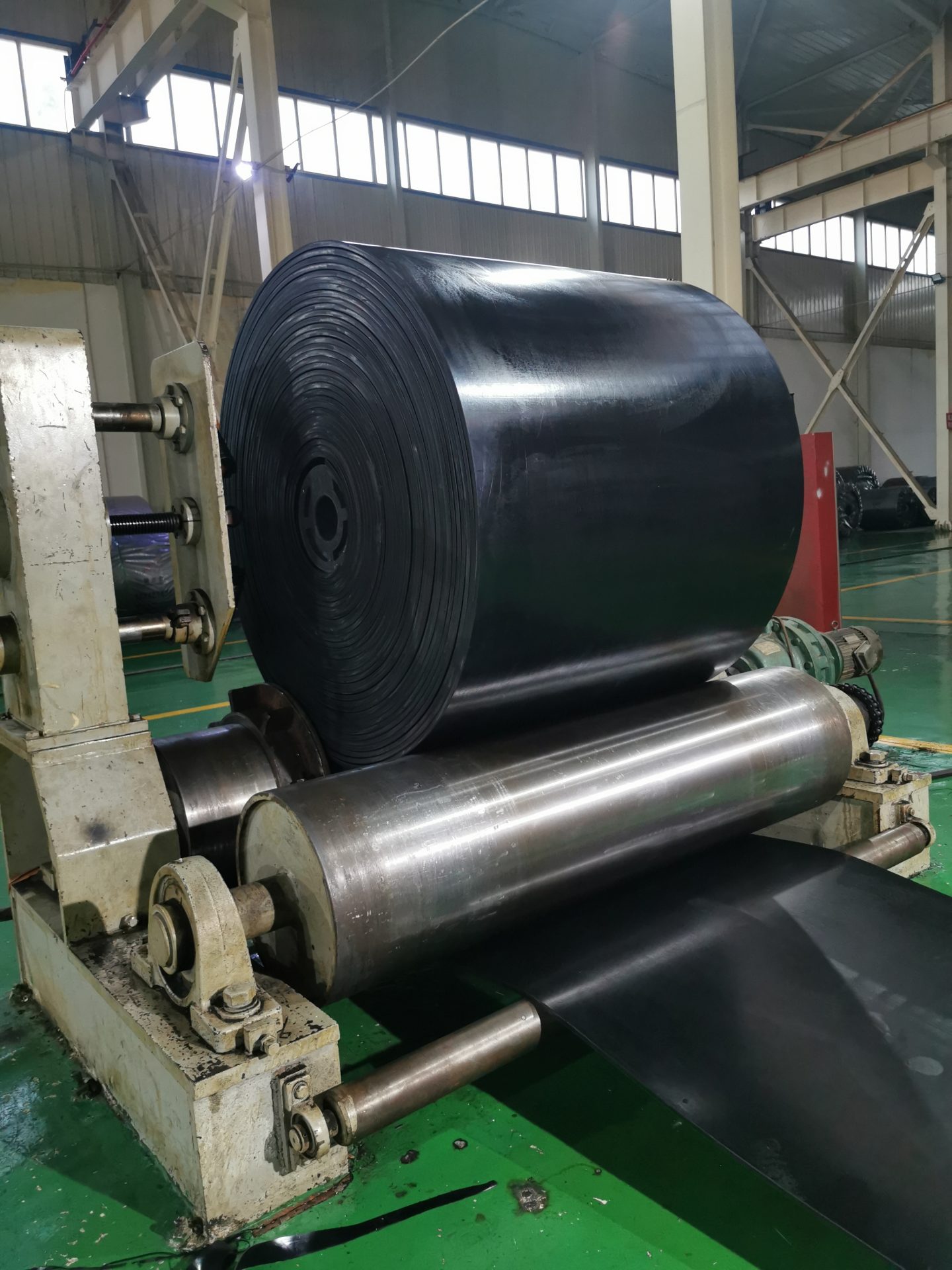
Rubber conveyor belt roll illustrating the construction to identify in an oil-exposure order
Roll form does not reveal the rubber compound’s compatibility with a particular oil.

Upper-cover and underside oil contact lead to different questions

The two belt faces have different normal contacts. The upper surface carries material; the lower surface interacts with conveyor components. GRAM’s EP construction separates the upper cover, textile carcass and lower cover. Use that distinction when locating the fluid exposure and requesting the offered cover arrangement.

When oil arrives in the feed, describe the material-contacting face and any path by which residue reaches edges or other belt regions. When contamination comes from equipment, identify whether the underside or another area is involved. A request for an oil-resistant upper cover does not automatically define the lower-cover requirement.

Visible swelling should not become the replacement drawing

If the old belt has distorted, preserve its original accepted construction information where available. Record the present condition separately. Measuring an affected section can help document what happened, but that measurement is not necessarily the original belt dimension or the correct dimension for the retained conveyor.

A maintenance team should provide both the known ordered specification and the observed change, with uncertain details clearly identified. The damage-pattern discussion helps organize that evidence. It does not diagnose the fluid or establish that swelling caused every tracking problem seen on the conveyor.

Preserve the reinforcement decision when the oil-resistant cover changes

An oil-related cover revision and a reinforcement revision answer different questions. EP identifies polyester longitudinal yarns and nylon transverse yarns. That fabric arrangement does not establish the oil compatibility of the finished belt. State the proposed cover and reinforcement together, rather than treat a familiar EP name as a complete replacement specification.

If the retained conveyor uses a textile belt, keep its required construction and dimensions visible during the cover comparison. Have any proposed reinforcement change assessed against the existing machine. A cover intended for oily feed cannot justify an otherwise unreviewed change to the belt’s mechanical construction.

A steel-cord proposal still needs its own oil-exposure cover

GRAM’s steel-cord belting is a separate route with longitudinal steel reinforcement. Steel cords do not establish the suitability of the surrounding rubber for the identified oil. Ask for the finished construction to which the compound assessment applies.

Longitudinal steel cords illustrating reinforcement independent of oil-resistant rubber selection
The reinforcement route and the oil-exposure cover require separate, connected decisions.

Keep joining information aligned with the proposed construction as well. Do not assume that the previously used materials or instructions remain applicable after a cover or reinforcement revision. Identify who will review the joining proposal for the actual replacement belt.

Combined heat and oil duty needs a combined construction proposal

GRAM’s HR offering discusses heat and oil exposure. Where both occur, describe them together and request a defined operating envelope for the offered construction. A heat description and a separate oil description cannot be assembled into a guarantee by the buyer.

If the material supplier can change the feed’s oil content, tell the belt supplier which range of conditions the plant needs assessed. A proposal for one identified oily batch is not automatically acceptance for a later mixture. Keep the feed change visible to the person responsible for the rubber construction. Likewise, if the site replaces an equipment lubricant, compare the new fluid with the exposure description used for the belt order rather than assume the replacement has the same effect on its covers.

At receipt, connect the supplied roll to the accepted reinforcement and cover description. Preserve that identity through handling so the installation team receives the same construction that was assessed. Packaging arrangements should protect the supplied faces and edges and retain identification; no particular package standard or delivery interval is established by a general oil-resistant label.

The useful next order starts with the source: normal oil-bearing feed, an identified equipment fluid or a condition still under investigation. Ask the supplier to answer that exposure with a defined cover, while the plant separately addresses the contamination source and retained-machine fit. An unexplained oil-resistant abbreviation should not be the deciding line in the purchase.

Bulk material conveyor belt supported by troughing rollers along the carrying run

A deep isolated cut and a gradually thinning cover point to different purchasing questions. Before asking a stone crusher conveyor belt supplier for a thicker replacement, a quarry buyer should describe the damage pattern, material entry and retained conveyor arrangement. GRAM’s rubber conveyor belt range includes stone handling and provides EP, NN and steel-cord routes to compare. Start with the belt’s actual mechanical specification and what the crusher discharge puts onto its working surface.

This guide suits crusher contractors, quarry maintenance teams and buyers replacing belts after sharp-fragment damage. First separate continuous abrasive wear from localized cutting, puncture or contact with the surrounding equipment. A replacement needs an appropriate cover and reinforcement, but it should not be expected to correct an unresolved chute or support problem.

A stone crusher conveyor belt supplier needs the damage pattern

Photographs of the isolated belt and a description of where the damage occurs can make the enquiry more useful. Mark the belt direction, loading position and location across the width. State whether the damage appeared repeatedly at one point or gradually across the working surface. Avoid naming a failure mechanism before the plant’s inspection supports it.

Sharp-fragment cuts are different from ordinary cover abrasion

A cover can wear gradually while carrying abrasive stone. A localized cut can involve a different contact, such as a sharp fragment or an unintended equipment interface. The buyer should not treat both as proof that the original cover was simply too thin. Describe the observed damage and have the operating arrangement reviewed.

A crusher contractor finding isolated cuts on a relatively new belt should inspect the relevant transfer and surrounding contact under the site’s approved procedure. Record any unusual fragments and changes in the discharge arrangement. This gives the supplier a factual basis for discussing the offered cover instead of asking it to make an unsupported cut-proof promise.

Puncture or tearing should not be hidden inside an abrasion requirement

Identify whether the damage extends into the reinforcement or remains on the cover. That distinction affects how the replacement is assessed and whether the existing belt can remain in service under the plant’s approved decision. A generic abrasion-resistant description does not establish resistance to every localized penetrating load.

If a project requires evidence for a particular cutting or tearing condition, put that requirement in the enquiry and obtain applicable product-specific documentation. Do not use an abrasion test result as proof of an unrelated damage mechanism. The test method and the offered construction must correspond to the property being evaluated.

Observed condition Evidence to give the supplier Decision that still needs review
General surface wear Location and progression across the cover Offered cover suitability for abrasive stone
Isolated cuts Damage position and sharp material condition Material entry and relevant cover evidence
Edge damage Belt location and nearby contact geometry Transfer, tracking and equipment clearance
Reinforcement damage Inspection findings and original belt construction Approved service decision and replacement carcass

Stone crusher belt selection must keep the carcass specification clear

GRAM’s EP rubber belt uses polyester warp and nylon weft, while its NN rubber belt uses nylon in both directions. These are different fabric constructions. Neither name establishes the complete reinforcement strength, cover arrangement or finished belt requirement on its own.

EP and NN offers should match the retained pulley and tension requirements

Provide the existing conveyor specification and identify which elements remain unchanged. If the proposed replacement changes reinforcement or overall construction, have the system requirements reviewed. A fabric name cannot establish compatibility with every pulley, take-up arrangement or joining method.

Do not identify the internal fabric by the belt’s external color. If the original specification is missing, obtain the equipment records or a suitable assessment of the sample. The purchase should end with a declared offered construction, not an informal instruction to provide another black crusher belt.

Steel-cord reinforcement does not eliminate sharp-fragment risk

GRAM’s steel-cord conveyor belt range describes longitudinal steel reinforcement for demanding conveying. That is a mechanical construction route to evaluate where the approved conveyor duty requires it. It is not a blanket guarantee against cutting, puncture or tearing.

The cover still meets the material, and the complete belt still needs an appropriate installation and splice. If a buyer considers moving from fabric to steel cord, that change should follow the conveyor designer’s assessment. Do not select the reinforcement only because the word steel sounds more resistant to sharp stone.

Longitudinal steel reinforcement cords illustrating a conveyor belt carcass construction distinct from its rubber cover
Reinforcement and cover are separate parts of the crusher belt decision.

Review the crusher discharge before increasing cover thickness

A quarry buyer considering a thicker cover should have the retained loading arrangement assessed at the same time. The belt must fit and operate within the approved pulley, support and clearance conditions. A construction change should not be made without understanding those interfaces.

Rubber-ring impact rollers support a different duty from normal carrying rollers

GRAM’s impact rollers use rubber-ring working surfaces at loading zones. Their role should be reviewed against the actual material landing condition. The belt and support enquiries should share the same description of the crusher discharge rather than being evaluated separately with different assumptions.

If the rock stream has moved after a chute alteration, establish whether the support still lies beneath the relevant landing region. A new belt cover cannot determine that position. The responsible project team should coordinate the transfer and support changes before the replacement belt is accepted.

Rubber-ring impact rollers for assessing belt support at a stone crusher discharge
Loading support belongs in the damage investigation before a belt construction is changed.

Build the crusher belt offer around the required evidence

Ask for the actual cover and reinforcement proposed for the stated duty. If the project specifies a test or grade, obtain the corresponding documentation for that offered belt. A general durability statement does not establish a measured result or prove that the cover meets the site’s required acceptance criterion.

Dunlop’s conveyor belt range literature distinguishes reinforcement constructions and cover duties. It supports the general principle that those requirements should be kept explicit. Dunlop’s grades, test figures and product claims are not GRAM performance data.

The quarry belt selection discussion is relevant when one plant contains several material-transfer conditions. Keep the crusher-discharge damage description specific to this conveyor rather than allowing a general quarry application label to replace it.

Mixed feed should be described before the crusher belt is reordered

Occasional sharp or unusual material can matter even when most of the feed is ordinary stone. Identify what the plant’s process can credibly put onto the belt and which upstream controls are part of the approved arrangement. The belt supplier should receive that operating boundary. Do not claim the replacement is suitable for uncontrolled debris that has never been assessed.

If the plant changes its feed or crusher operating arrangement, update the next enquiry. The old belt’s mounting and route dimensions may remain correct while the cover duty changes. Keeping the current material description with the approved construction prevents a repeat order from preserving an obsolete service assumption.

Keep crusher replacement construction changes visible before shutdown

The replacement offer should identify what has changed from the damaged crusher belt

A buyer comparing a thicker proposed cover with the old belt should ask which other construction details remain unchanged. The offered reinforcement, overall arrangement and applicable joining information need to be clear. If the supplier changes more than the cover, have the complete proposal assessed against the retained conveyor rather than treating it as a like-for-like surface upgrade.

For a phased quarry repair, identify whether the chute, support or neighboring conveyor interfaces will be renewed before the belt enters service. The supplier needs the intended operating arrangement, while the project team coordinates those retained and changed components. A belt selected for a corrected transfer should not be accepted under the old damaging condition without review.

A distributor holding emergency crusher-belt stock should preserve the customer’s approved cover and reinforcement description. Two rolls with the same width can have different constructions. An urgent request should not turn a conveniently available black rubber roll into an assumed equivalent. Assess any substitute against the mechanical specification and the current sharp-material exposure.

If the original damage investigation remains incomplete, state what is known and what still needs engineering confirmation. The buyer can progress the dimensional and delivery enquiry while retaining the unresolved cover or transfer requirement. That is more useful than asking the supplier for an unsupported assurance that the next belt cannot be cut.

Specify the required width, delivered length, reinforcement and cover arrangement, together with the agreed supply form. Identify whether the order concerns an open length or a completed loop and who performs the joining. The joining requirement should be coordinated with the chosen construction before the final length is approved.

At delivery, compare the belt identification and supplied documents with that approved record. Inspect visible cover and edge damage before installation, following the agreed handling procedure. Arrange packing and package size around the actual belt and site’s handling access; do not assume a generic reel can reach every crusher location.

Make the replacement decision answer the damage that was actually found. Use cover evidence for the material-contact duty, carcass information for the mechanical requirement and a transfer review for the loading condition. If the sharp-fragment problem remains undefined, more cover thickness is still an assumption rather than an approved solution.

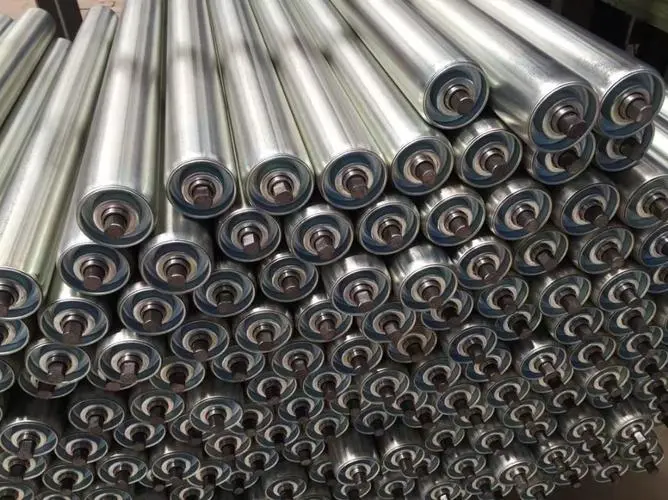
Steel conveyor rollers stacked with bearing ends and shaft interfaces visible

A roller sounds smooth when turned by hand, but the conveyor becomes noisy when real loads pass over it. Those are different comparisons. A low noise conveyor rollers supplier should assess the installed duty, including the load, motion and supporting structure, before the buyer accepts a quiet-operation claim. GRAM’s silent roller range describes a unit-handling route with specific end-cap, bearing and tube options. First establish whether that route matches the conveyor being evaluated.

A distribution operator moving cartons and a mine operator supporting a bulk-material belt should not share an acoustic acceptance assumption merely because both purchase rollers. Identify the working role, then compare proposals under representative conditions. A quiet hand-spin impression is useful for noticing obvious differences; it cannot demonstrate the sound of the loaded installation.

Define the Installed Comparison with the Low Noise Conveyor Rollers Supplier

Use the same operating condition when comparing the present arrangement and a proposed replacement. Record the actual load, motion, roller position and surrounding equipment. A different load or operating condition can change the sound independently of the proposed roller, making an apparently impressive comparison difficult to interpret.

Carton Contact and Frame Sound Need to Stay Visible in the Trial

For a gravity unit-handling line, identify the packages crossing the rollers and the condition of their contacting surfaces. Carton bottoms, pallet runners and other unit loads do not present the same contact. The comparison should use the load that the proposed roller is expected to handle, rather than whichever empty package happens to be available.

Also record where a load transfers between conveyor sections. A package striking a joint or uneven support can create sound that is not explained by the roller’s bearings. If the proposed sample is tried on a different section with smoother transfer geometry, the buyer cannot attribute the complete difference to the sample construction.

Keep the frame arrangement consistent unless frame changes are part of the proposal. A rattling retained fixing or another local contact can remain after a quieter roller is fitted. Where an adjustment is made during the trial, record it as an adjustment so the commercial decision does not credit the roller for an unrelated correction.

A Bulk Belt Idler Needs a Different Test from a Gravity Package Roller

GRAM’s wider roller range includes different working contexts. Belt-support rollers meet a moving belt and its carried duty; gravity package rollers directly support unit loads. Distinguish those contacts before using a silent unit-handling description to evaluate a bulk conveyor replacement.

A quarry operator comparing support rollers should identify the belt condition, installed position and actual operating duty for the trial. A distribution operator should identify the contacting packages and gravity conveyor arrangement. Neither should import the other’s acceptance result without reviewing whether the supplied construction and contact are comparable.

Ask Which Construction the Low Noise Conveyor Rollers Supplier Is Offering

GRAM’s silent range describes black polyamide end caps, precision ball bearings and a labyrinth-shaped polypropylene protective cap. These are distinct construction elements to identify in the offered roller. They are useful technical details, but their names alone do not establish a measured sound reduction on the buyer’s conveyor.

Polyamide End Caps and Polypropylene Protection Answer Different Questions

The end cap and protective cap are different components in the described arrangement. Keep the offered assembly identifiable, rather than treating every black end feature as the same material or function. Ask for the proposed drawing and construction record if a replacement sample must match retained roller supports.

The polypropylene labyrinth description concerns a protective arrangement. It should not be converted into an unverified wash-down protection class or a guarantee against all contaminants. Where the operating environment changes, assess the complete offered assembly for that exposure as well as for the acoustic comparison.

A buyer comparing two samples should therefore record their construction identities, not only which one sounds smoother when spun. If the end construction or protective arrangement differs, the accepted result should remain tied to that actual assembly. A later substituted component can change the proposal even when the body material remains familiar.

Precision Ball Bearings Still Need a Representative Loaded Assessment

The silent product description identifies precision ball bearings. Their proposed assembly should be reviewed with the actual operating duty and installation. A bearing label does not establish every permissible load, speed or contamination exposure, nor does it isolate the sound produced by the rest of the conveyor.

Use an identified sample that represents the supplied construction. If its bearing arrangement or assembly condition differs from the commercial offer, resolve that difference before using the trial to accept a production order. The point of the trial is to assess the proposed product, not a particularly favourable demonstration sample with a different construction.

Choose the Tube Route for the Environment Without Assuming a Noise Result

The silent range describes steel, zinc-plated steel, anti-shock PVC and AISI 304 stainless-steel tube options. These routes introduce different material and exposure considerations. Select the construction for the working application, then assess the acoustic result under the agreed conditions rather than use a material name to predict which assembly will be quieter.

Steel and AISI 304 Options Need Their Own Installed Comparison

The steel roller offering provides broader steel-bodied options, while the silent description identifies an AISI 304 route for its stated environments. Do not assume every steel roller belongs to the same unit-handling construction or that a stainless tube proves approval for every cleaning process.

A wash-down user should provide the actual cleaning exposure and obtain confirmation for the offered tube, ends, shaft and bearing protection. Selecting a corrosion-resistant body is only part of that assessment. If the body route changes between compared samples, keep the remaining assembly details identifiable so the buyer knows which complete construction was evaluated.

Dark polymer conveyor rollers showing different body profiles and exposed end interfaces
A different body route requires a complete application assessment; its appearance is not an acoustic test result.

Nylon and Other Polymer Rollers Should Not Share an Unverified Acoustic Claim

GRAM separately presents nylon conveyor rollers and a polymer roller family. These routes can be discussed for their actual working applications, but they should not be collapsed into a single claim that all nonmetallic rollers deliver the same sound reduction.

The polymer description includes sealed precision bearings, non-contact rubber sealing and metal end caps. That makes a body-only comparison incomplete. Identify the full offered product and its approved role before assessing it against a steel or unit-handling alternative. Similar outside colour is not evidence of a shared material grade, end construction or installed acoustic performance.

Nylon conveyor rollers with cylindrical bodies and mounting ends visible
Identify the proposed nylon assembly and duty rather than transfer a result from another polymer construction.

Agree What the Roller Trial Will Hold Constant and What It Will Record

The comparison can be compact, provided its conditions are explicit. Keep the trial tied to one identified working role and a representative load. Use the site’s competent technical personnel to select a measurement approach appropriate to the decision; this guide does not prescribe a legal noise limit or certify hearing-safety compliance.

Held constant: the stated conveyor section, contacting load, operating condition and observation location.

Identified separately: the existing roller, proposed complete construction and any frame, transfer or fixing changes.

Recorded outcome: the actual observed or measured result under those conditions, with the method and relevant background sound.

If numerical sound results are used, retain the measurement method and conditions rather than compare two unexplained figures. Background equipment or a different observation position can affect the result. Do not turn a single reading into a universal reduction for every conveyor in the buyer’s fleet.

Rulmeca’s unit-handling product information likewise distinguishes roller products by working application. Its product names and claims belong to that manufacturer. The useful comparison principle is to define the actual duty before treating a quiet-operation description as evidence of equivalence.

When the proposed result is accepted, attach it to the roller construction and application that were evaluated. A distributor ordering for several customers should preserve that boundary instead of repeating the same noise claim across different conveyors. If another customer changes the package, frame or working role, assess that application separately.

For bulk belt installations, the existing mine roller noise discussion provides a different operating context. Keep that context separate from a gravity package trial when evaluating the particular proposed construction.

Agree shipment protection around the identified roller ends and body surfaces so transport does not introduce damage that changes rotation or contact. At receipt, compare the supplied assembly with the accepted proposal and investigate visible damage before installation. These are order-specific requirements to settle with the supplier, not a statement that every tube route uses one prescribed package.

Approve the quieter option when the evidence describes the conveyor you need to improve and the complete product you will receive. If the trial still mixes package impacts, altered frame contacts and unidentified samples, narrow the comparison before placing the order. A representative result is more useful than a confident quietness claim that cannot be reproduced on the working line.

Steel conveyor rollers stacked with bearing ends and shaft interfaces visible

Two garland quotations can differ sharply in price because one covers a connected replacement group and the other covers only loose roller components. A suspended garland idlers supplier should make that distinction clear before a mine, contractor or distributor compares the offers. Begin with GRAM’s carrying garland range, identify the retained suspended group, and decide which parts of that group the order must replace.

A partial replacement can be appropriate when the retained components and interfaces have an accepted basis for continued use. A complete group proposal can be appropriate when the buyer needs one defined assembly instead of combining new components with an uncertain retained arrangement. Neither route is automatically the cheaper accepted solution once its full scope is understood.

A suspended garland offer should state what remains on the conveyor

List the parts that stay in the retained arrangement alongside the parts being supplied. GRAM describes garlands as several rollers linked together in a suspended chain-like group. A component order therefore relies on more retained relationships than the working body of one worn roller.

Partial replacement

Identify the supplied roller and any connection parts included, then identify the retained group on which that proposal depends.

Complete group

Identify the connected supplied assembly and the boundary between that group and the conveyor’s retained suspension or supports.

These descriptions prevent a supplier’s line item from being interpreted more broadly than intended. They are not a claim that GRAM includes every suspension accessory with every group. The actual quotation must establish the included hardware and any exclusions.

One garland roller still belongs to an identified connected group

A mine replacing a selected worn unit should identify its position and the accepted interfaces with adjacent components. A loose sample provides useful information, but it does not show every retained connection relationship. Include the group record or a clear current arrangement alongside it.

If the replacement proposal changes an interface that another component relies on, assess that change before accepting a partial order. The buyer should not assume that the original group remains unchanged simply because most of its rollers are retained. Keep the affected component boundary visible in the offer.

A complete suspended assembly is not the surrounding conveyor

A complete garland group can define the connected rollers being supplied while still relying on retained supporting equipment. State the boundary clearly. The buyer needs to know whether the offer includes only the linked group or also specified attachment components, and which existing supports are expected to receive it.

The separate garland suspension connection discussion helps define those interfaces. Here the purchasing question is the extent of replacement: which accepted components arrive together and which retained relationships the proposal depends on.

GRAM connected carrying garland to distinguish a supplied linked group from individual replacement rollers
Compare the actual supplied group with the parts that remain on the conveyor.

Garland roller construction belongs in the scope comparison

Two offers with the same stated number of rollers can still propose different working constructions. Keep the actual body material, end construction and working surface recognizable. A group count does not establish the capacity or suitability of every proposed component.

Steel bodies do not define every connection in a garland

GRAM steel rollers use a cylindrical body with bearings toward the ends and projecting shaft interfaces. Those details describe the roller assembly. The linked garland connection and suspension relationship still require their own definition in the group proposal.

For a distributor comparing a steel component price with a complete garland price, do not add assumed connection costs to create a fictitious equivalent package. Ask each supplier to identify the included scope for the same retained arrangement. Only then can the buyer compare like-for-like proposals.

Ringed impact rollers change the group being offered

GRAM’s rubber-ring impact roller route is relevant where the proposed working surface addresses incoming material at a loading position. A ringed assembly and a plain steel assembly should remain separate constructions in the comparison. Their similar underlying body shape does not make them identical items.

If a mine’s selected loading group uses ringed working surfaces, preserve that requirement in both the component and complete-group proposals. The supplier should state which supplied rollers have the accepted construction. An impact description does not authorize a numerical load claim or establish the suitability of a changed surrounding support.

GRAM rubber-ring impact roller whose working construction should be stated when comparing garland supply scopes
A working-surface difference belongs in the quotation, not only in a product photograph.

Polymer alternatives need their own complete assembly description

The GRAM polymer roller route describes a machined polymer tube or solid bar, sealed precision bearings, non-contact rubber seals and metal end caps. If that material route is considered for the intended arrangement, ask for the actual proposed roller and group interfaces. The general range description does not establish a universally interchangeable garland component.

A proposal that retains some steel components while changing others to polymer should identify the mixed arrangement as offered. Do not treat the polymer body alone as proof of the complete group’s environmental resistance or load acceptance. The accepted construction includes components beyond the polymer surface.

Count garland quantities in the unit the buyer actually needs

A request for ten “sets” can be ambiguous when one supplier counts connected groups and another counts individual rollers. Write the unit in words. Distinguish the number of complete assemblies, the number of component rollers and the number of separately supplied connection items.

For a contractor planning replacement at several positions, keep each required group identity alongside that unit. Aggregated quantities are useful commercially, but they should not conceal differences among the retained arrangements. If several positions are considered equivalent, that equivalence should be accepted explicitly.

The scope comparison should also identify whether a quoted spare is intended for a particular group or remains a proposal awaiting interface review. Otherwise a distributor can receive enough individual cylinders while still lacking the accepted parts needed to complete the customer’s arrangement.

External garland technical descriptions discuss configurable roller and attachment combinations. That general variability explains why the supply unit matters. Competitor configurations, maintenance claims and attachment systems are not automatically offered by GRAM.

Agree the delivered group and loose-part identification separately

When buying complete assemblies, agree how the delivery information identifies each supplied group. When buying components, agree how their references connect to the intended retained groups. Different scopes need different information even if both deliveries use the same transport arrangement.

Where separately packed connection items are included, identify them in the accepted offer and receiving information. A photograph with surrounding hardware does not establish that those items will arrive. Confirm the actual packing and supplied assembly form for the order rather than invent a standard export package.

GRAM’s conveyor accessories range is a route for discussing associated components. It is not evidence that every attachment shown or needed by the retained conveyor is included in a garland price. Keep accessories that form part of the actual supply recognizable as those specified items.

If the customer requires groups to be kept identifiable for different destinations, state that requirement before dispatch. The supplier can then address the actual delivery arrangement. This protects the accepted group distinctions without making an unsupported promise about stock, assembly service or lead time.

Approve a suspended replacement scope that the receiving team can recognize

Consider a contractor asking for two connected groups plus several loose rollers for existing spares. Those are two different supply units. The complete groups should retain their accepted assembly references; the loose rollers should retain the component and intended-group references that make them useful. A single total quantity labelled “garland rollers” makes it harder to confirm whether the dispatch contains complete assemblies or enough loose parts to reconstruct them. The accepted delivery form should follow the actual purchase decision.

A buyer should also distinguish a component proposed for replacement from a component approved to remain. The decision to retain existing links or suspension parts needs the project’s actual assessment. A supplier quotation that excludes new links does not establish that the old ones are acceptable. Where that assessment is unresolved, compare the partial replacement as a conditional proposal rather than a fully accepted alternative to a defined new group.

If the partial route depends on a retained connection that cannot be identified, request the missing interface information before ordering the component. Do not turn that uncertainty into a promise that a complete group will solve every support problem. The complete alternative still needs a defined boundary with the conveyor. Both routes become reviewable when their dependencies are visible.

Compare the accepted parts, retained interfaces and quantity units before comparing totals. A component-only offer with unresolved retained connections should not be presented as an accepted complete-group alternative. A complete-group offer should not quietly imply replacement of supporting equipment beyond its stated boundary.

For the mine, the useful choice is the proposal that describes the replacement it can actually accept. For the distributor, it is the proposal that can be passed to the customer without adding assumed hardware or compatibility. Keep that shared scope in the final order so the receiving team gets the same assembly that the buyer evaluated.

GRAM rubber-ring conveyor impact rollers

A quotation describes a roller diameter, but the replacement is covered with rubber rings. Does the number describe the underlying body or the working surface that will contact the belt? A rubber ring impact rollers manufacturer should resolve that distinction before a contractor approves the assembly. Start with GRAM’s impact roller route, identify the proposed ringed surface, and keep the underlying body and mounting ends distinguishable in the actual offer.

The rings are not an optional descriptive detail. They form part of the working construction selected for the intended loading duty. At the same time, their outside appearance does not define every internal component or establish the acceptance of the retained support arrangement.

The rubber ring impact roller offer should define the working profile

Ask the supplier to identify the dimensions and arrangement that describe the ringed belt-contacting surface. Keep them separate from dimensions concerning the core body and shaft. A short description such as “same diameter” can conceal which physical surface is being reproduced.

For a contractor retaining the brackets, the mounting ends remain important even when the immediate concern is the rings. The accepted assembly should connect the ringed profile, underlying roller and end interfaces. Approving one part does not settle the other parts of the supplied unit.

Outside ring diameter is not the underlying steel diameter

The ringed surface lies outside the roller body. Preserve the actual reference used by the drawing or supplier description. Do not substitute a body diameter for the working diameter in the retained support review, or compare two values that identify different parts of the assembly.

Where a sample’s rings are worn, the visible outside diameter may not establish the original accepted profile. Identify the sample’s condition and seek the relevant original or proposed construction information. The manufacturer should offer a defined working profile rather than invent a nominal value from a damaged surface.

The ringed span belongs with the intended belt contact

Identify how the proposed rings occupy the working body. The supplier’s actual arrangement should make clear what surface is offered across the roller and which dimensions describe it. A photograph of several rubber rings does not define every ring width, spacing or retained relationship.

A buyer should not assume a universal acceptable gap or ring count from a general impact description. If the retained assembly has an accepted arrangement, provide that record. If the proposal changes it, keep the revision explicit for the project review.

Ring retention is an offered construction detail, not an assumed method

Ask how the actual ringed working arrangement is defined in the supplied assembly. The answer should identify the proposed construction. Do not infer a bonding, moulding or retention process from the fact that the rings appear fixed in a catalogue photograph.

Where an offer concerns only separate rings rather than complete rollers, make that scope explicit. GRAM’s visible roller route is not proof that every individual ring or rebuilding service is supplied. A component proposal and a complete manufactured assembly are different purchases.

Underlying roller construction still matters beneath the rubber rings

GRAM steel rollers use a cylindrical body rotating around a central axle, bearings toward the ends and projecting shaft interfaces. Those construction relationships remain relevant when evaluating a ringed unit. Rubber on the outside does not remove the body’s support and end requirements.

GRAM steel roller bodies and shaft ends illustrating assembly features separate from rubber-ring working surfaces
Keep body and end requirements visible alongside the ringed profile.
Assembly part Meaning in the offer
Rubber-ring working surface The contact profile actually proposed for the belt
Underlying body The roller construction beneath that surface
Bearing ends and shaft interfaces The rotating assembly and its relationship to retained supports

For the buyer, the table is a way to compare information, not a design calculation. The supplier needs to identify the actual selected assembly and its applicable duty basis. A correct-looking ring photograph cannot supply a missing body rating or a mounting definition.

Primary impact roller descriptions distinguish rubber-ring surfaces and steel cores. That general construction principle is useful context. The manufacturer’s named series and capacity claims do not describe a GRAM unit.

A rubber ring impact rollers manufacturer needs a clear sample role

State whether the removed roller is an accepted construction to reproduce or evidence of an operating problem. Those roles can differ. A worn assembly may show the retained shaft interfaces while no longer showing the original working profile accurately.

A contractor should preserve any available original assembly record with the sample. Mark uncertainties instead of turning wear into a nominal specification. If the buyer accepts a newly proposed profile, keep that proposal distinguishable from the construction represented by the removed unit.

Consider a replacement enquiry containing a shaft-end sketch from one roller and ring photographs from another. The manufacturer should not be expected to combine them into an assumed complete assembly. Identify the intended relationship, or ask for a clearly defined new proposal for the retained equipment.

For a distributor passing samples between the customer and supplier, preserve which component each photograph or dimension concerns. A single item reference should connect the agreed working surface and complete roller. That prevents the final customer from receiving a hybrid description that no party actually accepted.

Ringed rollers in a suspended group have an additional assembly boundary

GRAM carrying garlands use linked rollers in a suspended group. Where a ringed proposal forms part of that arrangement, identify both the individual roller construction and the connected group scope. A loose impact roller is not automatically interchangeable with a component of every garland.

GRAM suspended garland group whose connected assembly remains distinct from an individual ringed roller proposal
A group proposal must identify its connected scope as well as the roller components.

Ask whether the offered assembly replaces one component or the complete connected group. Keep the retained links and supports distinguishable from supplied parts. Do not assume that surrounding hardware shown in an illustration is included in the price.

If the ringed arrangement changes within a retained group, the project should review the actual revised assembly. An unchanged connection dimension does not establish that every working-surface change has been accepted. The supplier’s proposal needs one identifiable current construction.

Impact beds are a different support proposal from ringed rollers

The GRAM impact bed route shows longitudinal support bars and inclined supporting regions. This is a distinct support construction, rather than a roller with a different cover. Compare complete alternatives for the actual loading duty if the project considers a support change.

The material landing-zone discussion helps describe that duty. Here the buyer’s additional task is defining the ringed assembly accurately. A more precise working profile does not, by itself, establish that rollers or a bed are the accepted support solution.

GRAM’s mining belt route provides the conveyed-material context for many loading enquiries. The actual retained belt and incoming duty should remain recognizable in the support proposal. Do not invent an impact capacity from the application name.

Carry the accepted ringed construction into the manufactured order

Consider a manufacturer’s drawing that labels the body diameter but shows rubber rings without dimensioning their outside surface. The contractor can understand the internal roller size while still lacking the working-profile information needed for the retained belt support. Ask for the actual ringed construction to be defined. Do not add an assumed rubber thickness to the body value and present the result as the supplier’s accepted working diameter.

A second ambiguity arises when a removed sample and a current proposal use different ring arrangements. Preserve which reference describes the intended new assembly. The supplier should not be expected to reproduce a photograph of worn rings while following a different drawing unless the relationship has been resolved. Mark the accepted current profile and keep the sample as supporting evidence with its limitations.

For a distributor ordering several impact rollers, keep differences in working span or mounting interfaces with their respective item references. A combined quantity of ringed rollers can be commercially convenient without making all units identical. Agree how those selected assemblies will remain distinguishable in the delivered order, so the receiving team does not distribute them solely by the similar black rubber surfaces.

Before release, identify the current assembly reference, working profile, underlying body and mounting ends. Where the supplier revises the rings or body, retain that revision explicitly. A shared product-family name should not conceal a changed complete roller.

Ask for the actual evidence the supplier can provide for the selected construction and requirement. A material description alone should not be presented as a measured hardness, impact result or complete roller test. If those results are required and unavailable, keep the acceptance question open.

Agree how the ringed working surfaces and projecting ends will be protected in the proposed package for these assemblies. Keep delivery identification connected to the accepted item reference. Do not assume an unspecified packing method or treat a similar outside appearance as proof of the selected ring arrangement.

Approve the ringed profile and the complete roller as one identifiable proposal. That gives the manufacturer a clear assembly to supply and gives the receiving team a better basis than an ambiguous diameter beside a photograph of rubber rings.

Self-aligning conveyor idler assembly with supporting frame and roller brackets

The bolt holes line up, yet nearby steelwork prevents the new centering frame from moving as intended. A quarry engineer asking a self aligning conveyor idlers supplier for a retrofit should show the available movement space, not just the mounting points. GRAM’s self-aligning idler route addresses belt-centering duties. Start by identifying the proposed mechanical assembly, the retained support structure and the belt condition it must address. A frame that can be fastened in place is not necessarily a frame that can perform its intended function there.

The tracking problem should already be under investigation. Uneven loading, changed support positions or damaged retained components can create conditions that a new centering assembly is not intended to replace. Keep that investigation separate from approval of the proposed frame’s installation. This guide follows the installation question: can the selected assembly operate within the actual conveyor envelope?

Show the Self Aligning Conveyor Idlers Supplier the Frame’s Movement Envelope

A mechanical centering assembly needs the movement intended by its design. Ask the supplier to identify the proposed frame, its operating principle and the space required around the moving parts. Do not invent a pivot angle or movement limit from a product photograph.

Nearby Brackets Can Obstruct a Frame That Fits the Mounting Pattern

A fixed carrying set may occupy less of the surrounding space than a frame that moves in operation. In a confined quarry transfer area, a retained bracket, guard support or chute member can stand close to the proposed assembly. Show those objects on the installation review so their relationship to the intended frame movement is visible.

The relevant envelope includes more than the empty frame outline. Identify the rollers and other components that belong to the actual proposed assembly. A bracket may be clear of the frame itself while approaching a roller end or another part during movement. Review the complete offered construction, not an incomplete frame photograph.

Where the supplier’s proposal depends on moving or removing surrounding structure, identify that change explicitly. A conditional drawing approval should not become a component-only purchase order that omits the required access or clearance work. The installer needs to know what finished arrangement the technical decision assumes.

Debris Around the Pivot Belongs in the Installation Assessment

A frame can have free space when clean but encounter a different condition after material accumulates around it. Describe the material exposure and accessible cleaning area relevant to the proposed position. That helps the reviewer assess whether the intended movement remains practical under the site’s operating and maintenance arrangements.

Do not infer a contamination rating from the appearance of the pivot or supporting component. Ask for the actual assembly’s construction and care requirements. A bearing or support feature visible in a photograph does not establish permission to expose it to any washdown practice or to leave it beneath persistent buildup.

Fabricated self-aligning idler frames with roller mounting brackets and central support structures
The roller brackets and surrounding frame outline should be considered in the complete installed movement envelope.

Keep the Idler Frame Mounting and Moving Parts Distinct

GRAM’s photographs show fabricated support frames, roller mounting brackets and central supporting or pivot components. Those visible features identify separate interfaces to review. They do not determine the movement range, bearing specification or load capability of an offered unit. Obtain the actual assembly drawing for the order.

The Retained Support Must Hold the Intended Station Position

A mine maintenance buyer may keep the supporting steelwork while changing the centering frame above it. Establish the intended station position and inspect the retained structure before using it as the replacement reference. If it has shifted or been repaired, copying its current bolt positions may not reproduce the approved belt-support geometry.

The frame proposal should identify how its stationary parts attach and how the moving parts relate to them. A photograph showing central support hardware does not resolve mounting responsibility. If new fixings, an adapter or modified supports are required, include them in the engineering and supply scope.

Ask the supplier to identify which fixing features belong to the stationary mount and which are part of the moving arrangement. The installer should not need to infer that distinction from paint colour or from a loose collection of bolts. The actual assembly instructions should preserve the function of the selected mechanism.

A frame arriving without its intended rollers may look clear of nearby structure until the roller ends are fitted. Include those ends in the final envelope review. If the buyer proposes retained rollers with a different shaft arrangement, the resulting complete assembly needs confirmation before a frame-only approval is treated as sufficient.

Where the existing support is distorted, separate structural repair from tracking adjustment. A moving idler frame should not be expected to compensate for an unapproved mounting condition. The review should state which retained geometry will exist after repairs and assess the proposed assembly against that condition.

Roller-end Clearance Must Follow the Offered Frame and Rollers

Identify the rollers intended for the proposed frame and the positions of their ends during the permitted movement. A buyer retaining old rollers should obtain confirmation that they belong in the new assembly. Matching an outside diameter does not establish correct face length, shaft form or support relationship.

GRAM’s steel roller family is a separate product route for reviewing supporting components. The selected rollers must still be assessed as parts of the actual centering assembly. Do not transfer a general carrying-roller approval to a moving frame without confirming the complete arrangement.

If a frame-only quotation assumes reuse of rollers, keep that assumption visible to the receiving and installation teams. A complete-set quotation and a frame-only quotation have different supplied-parts boundaries. Their prices become comparable only after those boundaries and retained components are identified.

Match the Self-aligning Assembly to the Belt Position and Direction

The intended conveyor position helps determine the function the assembly must perform. Identify whether the offered unit is intended for the carrying or another belt position, and describe the relevant load and travel conditions. A generic centering label should not become approval for every station on the conveyor.

Reversing Belt Duty Needs Explicit Assembly Confirmation

If the belt reverses, tell the supplier before the construction is selected. Ask whether the actual proposed assembly is suitable for that duty and which installation conditions apply. Do not assume reversibility because another manufacturer offers a reversing design or because an uninstalled frame appears to move in both directions.

Rulmeca’s self-centering set description distinguishes specific construction options, including a route for reversible belts. Those models, movement limits and placement recommendations belong to Rulmeca. They illustrate why operation and positioning must be confirmed for the particular GRAM proposal, not copied as universal settings.

Likewise, do not borrow a placement interval from an unrelated assembly. The engineer should establish where the selected construction belongs on the actual conveyor. The ordering record needs that agreed location and duty, rather than an assumed standard distance that has not been assessed for the project.

A Changed Mining Belt Can Alter the Support Review

GRAM’s mining belt constructions offer relevant reinforcement routes for a mine conveyor. If the belt is changing with the frame, identify the proposed width and construction in the same review. A centering assembly selected for the removed belt should not be presumed correct for an unreviewed replacement.

Keep the intended loaded and unloaded operating conditions clear. If tracking observations change with material distribution, retain that information for the system investigation and the proposed assembly assessment. A frame’s installation fit does not demonstrate that the original belt behaviour has been resolved under every loading condition.

Do Not Treat Guide Rollers and Suspended Garlands as Equivalent Tracking Frames

GRAM also offers bearing guide rollers and carrying garlands. These are distinct functions and structures. The correct route depends on the support and guiding duty the engineering review identifies, rather than the fact that all three arrangements contain or carry rollers.

A Local Guide Contact Is Different from a Frame-centering Function

A guide can constrain contact at a particular position, while a centering assembly is intended to influence the belt’s tracking. Replacing a guide with a centering frame is a system change requiring its own assessment. Conversely, adding a local guide does not establish that the conveyor has the movement space or support arrangement required for a proposed centering unit.

Where a belt edge already shows damage, keep that condition in the investigation. A new tracking component does not restore a damaged belt or establish the original cause of the contact. Approve the support modification and any belt repair or replacement as the distinct actions they are.

Garland Connections Need a Separate Suspended-support Decision

A garland links rollers into a suspended arrangement attached to the frame. Its connections and support geometry differ from a centering frame mounted on retained steelwork. Do not use the linked assembly’s flexibility as proof that it can perform the intended tracking function of another construction.

If the project compares those routes, identify the function and installation scope each proposal addresses. A complete suspended set, an individual guide and a centering frame are different supply objects. Matching one dimension or a product-family name cannot make their quotations equivalent.

Stacked self-aligning idler frame structures with slotted roller brackets and central mounting hardware
Slotted roller supports and central hardware need a confirmed complete assembly before they become an installed tracking solution.

Preserve the Centering Frame’s Approved Geometry Through Delivery

The assembly reference should identify the frame, its rollers, mounting components and agreed operating duty. Where several frame sizes travel together, keep their references distinguishable from the outside. A shared label such as “tracking frames” can conceal different roller or mounting arrangements.

Agree how protruding brackets and central support components will be protected during handling and transport. The actual assembly mass and approved lifting information should determine the handling plan. A photograph of stacked frames is not permission to use the same stacking or restraint method for a different supplied unit.

At receiving, compare the frame geometry and supplied components with the final approved drawing. Record bent brackets or visible damage before the frame is installed. A damaged roller support can change the intended assembly relationship even if the lower mounting points still match the retained structure.

For mixed deliveries, separate the frames by their approved belt position and roller arrangement. A frame allocated to one station should not be moved to another merely because the lower holes appear identical. The movement envelope and retained obstruction review belong to the original approved location; a change of location requires its own compatibility decision.

Keep the supplied operating and maintenance information with that location reference. It should identify the selected mechanism, rather than general bearing advice unrelated to the centering frame.

  1. Confirm the stationary mounting interface and the retained structure’s accepted condition.
  2. Confirm the offered rollers and the space needed for the complete moving assembly.
  3. Confirm the intended belt position, direction and operation for that particular construction.
  4. Keep required surrounding-structure changes in the final installation scope.

The existing idler training and tracking explanation provides background for the belt-centering discussion. The retrofit approval should remain tied to the actual proposed frame and its location. Do not turn general background into an adjustment instruction for an unnamed mechanism.

Approve the frame when its stationary mounts, moving envelope and belt duty are all defined together. If its roller brackets approach retained steelwork or its operating direction remains unconfirmed, settle that issue before installation. A centering assembly should arrive as an understood mechanical arrangement, rather than as a component the site must make move after it has already been bolted down.

Bulk material conveyor belt supported by troughing rollers along the carrying run

Washed gravel arrives with a different combination of water and fines from dry screened stone. A contractor choosing a sand and gravel rubber conveyor belt supplier should provide the material condition at loading, the retained conveyor dimensions and the way residue leaves the belt. GRAM’s rubber conveyor belt range explicitly includes sand and gravel handling. Start there, then compare EP, NN and steel-cord construction against the actual mechanical duty.

The first purchase decision is not simply how thick the belt should be. Identify the required reinforcement, cover duty, pulley arrangement and finished delivery form. Moisture is an operating condition to describe, not proof that a particular belt construction is suitable for every wet installation. A replacement should fit the conveyor and the washed product together.

A sand and gravel rubber conveyor belt supplier needs the wet product description

Record whether the conveyor receives freely draining gravel, damp sand or a mixture with fine material. Explain where the product is loaded and how its condition changes along the route. A brief label such as aggregate does not establish the contact, contamination and cleaning requirements that matter for the offer.

Washed sand can create a different return-side condition from dry stone

A wash plant retaining its existing conveyor may see more residue returning after discharge when the sand moisture changes. Record that condition before selecting the replacement belt. A cover chosen for abrasion still needs to be evaluated with the actual material and cleaning arrangement; it should not be expected to eliminate carryback by itself.

The supplier also needs to know whether the wet condition is normal or associated with an occasional drainage upset. Define the credible range rather than providing only the easiest operating case. The offered rubber compound and construction should be identified for that range without an unsupported promise of wet grip or universal residue release.

Gravel entry should be assessed for abrasion and loading damage separately

A contractor replacing an outdoor gravel belt should distinguish general cover wear from cuts or damage near the loading point. Describe the observed pattern and the material entry arrangement. Adding cover thickness is not a complete response if the retained loading support or chute creates an unresolved mechanical condition.

GRAM’s load-zone support route uses longitudinal bars and inclined side support regions. It is relevant to a separate review of belt support at entry. The belt supplier enquiry should identify the support expected beneath the new belt rather than assume a different belt construction will correct the loading arrangement.

Longitudinal-bar conveyor impact bed for reviewing support at a sand and gravel loading point
The loading support and belt construction should be assessed against the same material entry.

Sand and gravel belt construction should match the retained conveyor

GRAM offers EP rubber belts, NN rubber belts and steel-cord belts. These names identify different reinforcement routes. They should not be used interchangeably in a quotation merely because all can appear in bulk-material conveying.

GRAM reinforcement route Published construction distinction Question for the gravel conveyor
EP Polyester warp and nylon weft Does the offered construction meet the conveyor’s approved tension and flexibility requirements?
NN Nylon in warp and weft Is the complete proposed belt appropriate for the retained pulleys and take-up arrangement?
Steel cord Longitudinal steel reinforcement cords Does the duty justify this route, with a compatible splice and conveyor design?

EP and NN descriptions do not establish a complete belt specification

The fabric construction is one part of the belt. The offered width, reinforcement specification, cover arrangement and finished length still need to be declared. Give the supplier the retained conveyor requirements rather than asking it to select a generic EP or NN belt from the material name alone.

A buyer replacing an old fabric belt should identify its actual construction where possible. If the original markings are unclear, obtain the equipment specification or a suitable assessment of the sample. Do not treat a black rubber surface as evidence of the internal reinforcement. The delivered belt needs an identifiable construction record.

Steel-cord reinforcement is a mechanical route, not a wet-service approval

The GRAM steel-cord range discusses heavy and long-distance conveying. Its longitudinal reinforcement can be relevant where the approved conveyor duty calls for it. That does not make steel cord the automatic answer to washed material or establish the suitable rubber cover for the exposure.

Have the conveyor designer confirm the required reinforcement and splice arrangement. A change from fabric to steel cord can involve requirements beyond the material name. Keep that engineering assessment separate from the cover’s abrasion or wet-material behavior.

Compare rubber cover evidence against the actual sand and gravel

The cover is the belt’s working surface and must be assessed for the required service. Describe the abrasive material, any sharp fragments and credible contamination. Ask what compound is actually offered and which relevant information supports the selection. A generic abrasion-resistant label does not establish a particular test result.

Dunlop’s conveyor belt range literature separates reinforcement and cover options for different duties. That distinction is useful professional background. Its grades, test values and claims remain specific to Dunlop products; they should not be assigned to a GRAM belt.

If a project requires a specified test method or cover grade, put that requirement in the enquiry and obtain the offered belt’s matching documentation. Compare results only when the method and material being assessed are clear. Do not combine a cover result from one product with a reinforcement description from another to create an apparent complete specification.

Outdoor gravel replacement needs a defined length and delivery form

The finished belt requirement should distinguish an open length from a completed loop or another agreed supply form. State how the new belt will be joined and who owns that work. A stock roll description cannot establish the installed length or the approved splice for the conveyor.

Include the route through which the belt will reach the installation location. If handling constraints affect the delivered section size or package, discuss them before production. Ask the supplier to identify the proposed packing and delivery arrangement for the actual belt; do not assume a standard reel size or available lifting service.

Wrapped GRAM conveyor belt rolls illustrating the need to identify the actual supplied construction and delivery form
A wrapped roll should remain traceable to its declared belt construction and agreed supply form.

Wet-line belt receiving should preserve the construction identification

Compare the supplied identification with the approved width, length, reinforcement and cover arrangement. Inspect the edges and working surfaces for visible damage, and retain any supplied handling instructions. If the packaging prevents examination of the complete surface, agree the staged inspection before the belt is installed.

Keep the belt protected during outdoor storage according to the supplier’s instructions. The fact that it will carry washed gravel is not a reason to leave its packaging and identification exposed unnecessarily. Separate any damaged delivery for review before the shutdown installation begins.

Use the gravel line’s operating condition when the belt is reordered

Washed gravel enquiries should state what reaches the belt after drainage

Measure or describe the material condition at the conveyor’s actual loading point, rather than copying the wash circuit’s general description. Some routes receive material after a drainage stage; others receive a wetter stream. The supplier needs the condition that the cover and cleaning arrangement will encounter. Keep any uncertain moisture information clearly identified so it can be resolved during selection.

A contractor should also identify whether the replacement belt is part of a wider transfer repair. If the chute, support or cleaning equipment changes, the expected new operating condition may differ from the old belt’s history. Give the supplier the intended arrangement and separate it from observations made before the repair. That prevents an offer being evaluated against two incompatible process descriptions.

Fabric belt joining must be coordinated with the chosen carcass

An EP or NN purchase should identify the proposed joining approach and the documentation needed by the party performing it. The fabric name alone does not define the complete belt or an approved splice. Ask for the offered construction details and have the joining arrangement assessed against the conveyor’s requirements before the final delivery length is agreed.

If a completed loop is required, preserve that boundary in the order. If an open length will be joined at site, identify the retained equipment and the installation responsibility. Neither arrangement should be inferred from a roll photograph. A finished length that omits the agreed joining requirements can create a problem even when the supplied rubber and reinforcement are correctly described.

For a distributor, retain the customer’s approved reinforcement and cover arrangement with the wet-material description. A repeat order should not substitute a differently constructed black rubber belt solely because it has the same width. Compare any proposed alternative against the original mechanical requirements and the current sand or gravel condition.

The aggregate screen-discharge guide is relevant where loading and downstream product conditions change. A sand and gravel replacement should retain its own moisture and residue information rather than reuse a dry aggregate description.

If a wash circuit, screen product or cleaning arrangement changes after the original belt was selected, update the next enquiry. The mounting and route dimensions may stay valid while the cover duty changes. Keep the operating description with the approved belt construction so that a repeat purchase is based on the current process.

For this order, give the supplier the washed material condition and the retained conveyor specification together. Select the reinforcement through the mechanical requirements, assess the cover for the actual material and identify the delivery and joining form. Those decisions provide a sound basis for comparing offers without treating every black rubber belt as a suitable wet-gravel replacement.

GRAM nylon conveyor roller assembly

The replacement roller fits in a dry workshop, but that is not the whole operating environment. An outdoor conveyor may expose it to rain, wet material and changing storage conditions. Industrial buyers discussing an order with a nylon conveyor rollers supplier should first define the nylon material and the conditions under which fit is accepted. GRAM’s nylon roller offering is the relevant starting route. Its general material description is not an identified nylon grade or a quantified wet-service dimensional result. Get those distinctions clear before accepting a replacement by its dry-store measurements alone.

A nylon conveyor rollers supplier needs more than the word nylon

Nylon identifies a material family, not a complete roller specification. The buyer needs to know which part is nylon, what material is proposed for it and how the complete assembly fits the intended conveyor. Different constructions should remain distinguishable even when they share a general nylon description.

GRAM lists nylon rollers separately from its wider polymer roller route. That is useful product navigation, but it does not establish that the materials or constructions are equivalent. Request the actual proposed grade and assembly drawing for the nylon order. Do not insert a familiar nylon grade into the purchase merely because it is common elsewhere.

A nylon roller body and a polyamide end cap are different objects

Identify the material’s location in the roller. GRAM’s silent roller description includes polyamide end caps, precision ball bearings and a polypropylene labyrinth cap. That is not evidence that its complete cylindrical body is nylon. An end-component material and a body-material description answer different questions.

A distributor receiving a request for nylon rollers should ask whether the customer means the working body, an end component or a previous supplier’s commercial family name. This clarification prevents an offer with a nylon component from being treated as the requested nylon working surface. It also keeps a unit-handling construction separate from a bulk belt-support proposal.

Dry-store and wet-service nylon roller measurements need a common basis

A dimension should be accompanied by the condition in which it was measured. For a proposed replacement moving from dry storage to wet service, tell the supplier about both environments and ask how the supplied material is to be evaluated. An unexplained change in condition can make a fit comparison difficult to interpret.

Ensinger’s material-selection information explains that moisture uptake in plastics depends on material and environmental conditions and can affect dimensions. This is general background. It provides neither a GRAM nylon grade nor a dimensional change to apply to a GRAM roller.

Condition at receipt
Record where the nylon assembly has been stored and the agreed condition for checking the proposed drawing dimensions.
Condition on the conveyor
Describe rain exposure, wet carried material and any cleaning routine relevant to the actual roller position.
Condition for acceptance
Agree with the supplier and responsible engineer which observations and measurements establish fit for that proposal.

Outdoor wetting should be described separately from immersion

Rain or damp feed does not describe the same exposure as continuous immersion. State what actually reaches the nylon roller and for how long, rather than using waterproof as a substitute for a duty description. Include any cleaning liquids separately; moisture behavior alone does not establish chemical compatibility.

For a maintenance buyer moving a familiar roller design from an indoor conveyor to an outdoor line, retain the original drawing but reopen the exposure discussion. A successful dry fit is useful evidence of that checked condition. It is not proof of unchanged dimensions, bearing protection or suitability through the new wet duty.

The nylon working face still needs the correct frame clearance

The proposed working-face length, shaft interfaces and complete assembly dimensions must match the intended installation. Ask how the material’s specified condition relates to those dimensions and tolerances. The engineer should establish the acceptable clearances for the actual frame rather than the buyer adding a generic moisture allowance.

Do not change a mounting dimension to compensate for an unknown material effect. First obtain the proposed material identity and the supplier’s dimensional basis. Where the answer is missing, record the unresolved fit question instead of assuming the same change applies to every nylon component.

Compare nylon, polymer and steel roller proposals without losing the duty

Alternative material routes can be useful when an exposure or fit question remains open. Compare complete proposals for the same conveyor role, however, rather than choosing a body material in isolation. GRAM’s nylon, polymer and steel offerings give the buyer different starting routes, not a universal order of suitability.

Polymer conveyor roller assemblies shown as an alternative construction route to compare with nylon
The polymer route should remain separately identified. Its photograph does not define the nylon material or wet-service fit of another proposal.

A polymer body does not establish the bearing-end exposure

The wider GRAM polymer description includes end caps, bearings and seals. Those components need their own identification when the conveyor’s wet duty is assessed. A corrosion-related description of a polymer body does not settle how water reaches the assembly ends or what the bearing arrangement can withstand.

The polymer assembly discussion explains that separate body-and-end review. For the nylon order, use the actual proposed assembly rather than transfer every polymer construction detail to it. A shared broad material category is not proof of identical seals or bearing components.

A steel roller alternative changes the material assessment

GRAM’s steel roller route is another option to discuss for the defined conveyor role. It changes the body-material question but does not remove the need to assess bearings, end protection and the actual wet exposure. A steel proposal also needs its own surface and construction details.

Stacked steel conveyor rollers illustrating a separately specified material alternative
A steel construction is a different proposal. Keep its dimensions and exposure assessment distinct from the nylon order.

A purchaser should not turn a material substitution into an unreviewed assembly substitution. Keep the intended working position, dimensions and conveyor conditions fixed while comparing alternatives. If the new proposal changes the end arrangement or shaft interface, record that difference for the installation review.

Keep a nylon guide request separate from a carrying-roller order

GRAM also lists guide rollers. A guiding contact and a carrying position are different working roles. If a buyer asks for nylon because of a contact-surface concern, first identify the role and contact location before selecting a material route.

For a distributor stocking replacements, label the proposed nylon item by assembly and intended duty, not just by body diameter and material name. A guide assembly cannot be treated as a carrying spare merely because both are cylindrical. The drawing and installed role should remain linked to the item offered to the customer.

If the customer asks whether a polymer roller can replace the nylon request, answer with the actual proposed construction and the differences that need approval. If the customer asks for a guaranteed wet expansion value, obtain grade-specific evidence rather than borrow a number from a general material reference. These are two separate questions, and a photograph cannot answer either.

Agree the nylon acceptance condition before the replacement is released

Use a representative proposed assembly and an agreed evaluation plan where the site requires practical confirmation. The plan should identify the material, drawing revision, measurement condition and relevant conveyor exposure. Any conditioning method or test duration must come from appropriate technical agreement; there is no universal soaking recipe established by the product route.

Packaging and storage should preserve the intended inspection basis and protect the identified shaft and end components. Agree how the item will be stored before measurement and installation. Do not promise a moisture-controlled package or a standard storage interval when the actual supply arrangement has not specified one.

Release the nylon replacement when the supplier’s material identity, dimensional basis and the site’s fit decision refer to the same assembly. If the only information available is nylon roller, leave the wet-service acceptance question open. A precise proposal is more useful than a confident promise attached to an unidentified material.

Bulk material conveyor belt supported by troughing rollers along the carrying run

A belt width tells a troughing idlers supplier how wide the belt is, but it does not show how the belt sits across the retained supports. An engineer replacing a troughed station should begin with the actual cross-section: roller locations, inclined supports, contact arrangement and the belt construction being retained. GRAM’s conveyor roller range provides routes for defining the roller components. The complete station and its interface with the conveyor still need an identifiable accepted arrangement.

This distinction matters when the purchasing description says “troughing idlers” but the quotation covers only loose rollers. State whether the order is for components, a connected group or a defined support assembly. A product family name should not conceal who is responsible for the retained frame geometry.

The troughing idlers supplier needs the retained support shape

Use a section drawing or a clear current equipment record to show the belt support across the conveyor. Identify the centre and inclined regions, the relevant roller bodies and the mounting relationship. Where a drawing describes an earlier arrangement, mark the current differences before using it as the purchasing basis.

The drawing should not merely repeat the belt width beside a sketch that has no identified dimensions. Its value is connecting the belt, the contact surfaces and the supporting equipment. Actual dimensions and accepted tolerances belong to the project’s engineering information; they cannot be taken from a general product illustration.

Centre and wing contacts should describe one accepted belt section

The centre contact and wing contacts work together to support the belt’s cross-section. Separate roller dimensions remain necessary, but the engineer should assess their combination in the retained station. A set of individually correct loose parts does not automatically establish a correctly defined complete support arrangement.

For a contractor replacing only one wing unit, preserve the centre and opposite wing references that remain. This prevents a component offer from being interpreted as a redesign of the whole station. If a revised arrangement is proposed, show the change explicitly and have it accepted as that revision.

Steel roller ends must fit the support drawing

GRAM steel conveyor rollers have a cylindrical body, bearings near the ends and projecting shaft interfaces. The support drawing needs to define how those interfaces are retained. Neither a body photograph nor an overall length alone identifies every locating relationship.

Keep the belt-contacting body length distinguishable from dimensions describing the shaft and ends. If a support bracket is being retained, its actual receiving interface is part of the review. If new brackets are expected, identify their supply scope instead of assuming they accompany a roller quotation.

GRAM steel roller bodies and projecting shaft interfaces to define in a troughing support drawing
Roller bodies and mounting ends answer different parts of the station drawing.

Troughing support geometry is not a capacity certificate

A section can show how an assembly is arranged without proving its suitability for the conveyed load. Keep the geometry and duty requirements connected but distinguishable. A plant changing the feed should describe that change alongside the retained cross-section, rather than use an unchanged belt width as proof that the old support selection remains adequate.

Manufacturer descriptions of carrying troughing arrangements distinguish roller combinations and the frames that hold them. That general distinction helps establish the review scope. It does not authorize borrowing another manufacturer’s angles, load ratings or standard classifications for a GRAM assembly.

Information in the section Separate acceptance question
Working contacts and roller locations Does the complete arrangement suit the actual retained belt and duty?
Shaft and bracket relationships Which interfaces are retained and which supplied parts are new?
Current support shape Has a change in belt construction or loading been reviewed?

A drawing with all three rows completed is still a project record, not a universal guarantee. The accepted supplier proposal should identify the actual supplied construction and the basis on which its use is approved. Where evidence is missing, leave the corresponding requirement open.

Loading-zone rings change the working support surface

GRAM’s rubber-ring impact rollers provide a different belt-contacting construction from a plain steel cylinder. If a troughing position lies under incoming material, record whether the accepted proposal uses those ringed surfaces. Their working shape belongs to the cross-section review as well as the individual component description.

Do not substitute an underlying steel body diameter for the outside working surface of a ringed assembly. The engineer needs the accepted complete roller definition. Likewise, an impact label does not establish a numerical impact capacity or automatically approve the surrounding frame.

Where an ordinary carrying position and a loading position share similar supports, preserve their duty distinction in the supplier order. The plant should not receive a mixture of plain and ringed components with no identified destination. Agree the supplied assembly and its position before consolidating the commercial quantities.

Suspended garlands require a different support boundary

GRAM carrying garlands use connected rollers suspended as a group. That arrangement cannot be represented accurately by a loose-roller drawing alone. The linked group and its retained or proposed suspension relationships belong to the engineering boundary.

GRAM connected garland rollers forming a suspended carrying support rather than a rigid loose-roller station
A suspended group needs its own accepted arrangement, not a copied rigid-frame section.

If a buyer compares a rigid station with a suspended group, compare complete proposals for the same intended belt duty. A component price that excludes connections or supporting hardware should not be treated as the total cost of a replacement station. Ask what each offer actually includes, and which retained equipment it relies on.

The suspension arrangement also changes the meaning of a static section drawing. The project should define the accepted operating envelope where that is relevant. This is a request for the responsible engineering review, not an installation instruction or an assertion of a universal permissible movement.

A different fabric belt can reopen the troughing review

GRAM’s fabric conveyor belt route separates the reinforcing carcass from the rubber covers. If the proposed belt build changes, assess its relationship to the retained support shape. A replacement of the same nominal width is not necessarily identical in every construction feature relevant to the equipment.

For a plant keeping its frames while changing the belt, supply the accepted new build with the current station record. The roller supplier should know whether it is offering a component for unchanged duty or participating in a revised support proposal. Do not let an old belt sample quietly become the specification for a different replacement construction.

The fabric belt and retained pulley discussion addresses the belt’s equipment route beyond the carrying section. Both reviews belong in the same project, but neither replaces the other. A belt accepted at the pulleys still needs its intended carrying support, while a defined troughing section does not settle the pulley compatibility question.

If a supplier proposes changing the number or arrangement of rollers, record that as a change to the support proposal rather than a simple part substitution. The retained brackets, working contacts and belt build may all be affected. Accept the revised complete arrangement before purchasing its components.

Release the troughing order against the current drawing revision

A belt replacement project can leave two section drawings in circulation: the original support arrangement and a proposed arrangement for the new fabric build. State which drawing the roller order uses. If a contractor orders against the first while the belt supplier assumes the second, both parties can deliver components that match their own documents yet leave an unresolved project interface. Link the accepted belt build and support revision before releasing either affected order.

For a partial station replacement, distinguish dimensions being reproduced from geometry being reconsidered. A worn centre roller may need an accepted dimensional replacement while the project leaves the existing wing arrangement unchanged. That is a narrower task than approving a new troughing configuration. The proposal should say which task it addresses, and the engineer should keep the unchanged retained arrangement identifiable. Do not require a component supplier to infer a redesign from a vague request for improved support.

At a loading position, a drawing that shows the working surface of rubber rings should also identify the complete roller reference used to obtain that surface. A change in ringed construction can affect the contact definition even if the bracket arrangement remains. Preserve the changed reference and review the resulting section, instead of copying the old contact line onto the revised component drawing.

The order should identify the accepted section, the supplied component or assembly scope and the duty information attached to it. Mark which existing supports remain. Where separate parties provide rollers, frames and belts, the project needs a clear point at which their interfaces are accepted together.

Receiving information should preserve that revision and the component references. A package of rollers can be dimensionally plausible yet belong to another accepted station. Agree how similar items will be distinguished for the actual delivery, without assuming an unpublished standard labelling or packing service.

Give the supplier a cross-section that explains the real belt support and an order that defines who supplies each part of it. That is a better basis for a retained-station replacement than treating width, troughing terminology and a catalogue photograph as a complete assembly specification.