Give a Troughing Idlers Supplier the Belt Cross-Section, Not Just Its Width

A belt width tells a troughing idlers supplier how wide the belt is, but it does not show how the belt sits across the retained supports. An engineer replacing a troughed station should begin with the actual cross-section: roller locations, inclined supports, contact arrangement and the belt construction being retained. GRAM’s conveyor roller range provides routes for defining the roller components. The complete station and its interface with the conveyor still need an identifiable accepted arrangement.
This distinction matters when the purchasing description says “troughing idlers” but the quotation covers only loose rollers. State whether the order is for components, a connected group or a defined support assembly. A product family name should not conceal who is responsible for the retained frame geometry.
The troughing idlers supplier needs the retained support shape
Use a section drawing or a clear current equipment record to show the belt support across the conveyor. Identify the centre and inclined regions, the relevant roller bodies and the mounting relationship. Where a drawing describes an earlier arrangement, mark the current differences before using it as the purchasing basis.
The drawing should not merely repeat the belt width beside a sketch that has no identified dimensions. Its value is connecting the belt, the contact surfaces and the supporting equipment. Actual dimensions and accepted tolerances belong to the project’s engineering information; they cannot be taken from a general product illustration.
Centre and wing contacts should describe one accepted belt section
The centre contact and wing contacts work together to support the belt’s cross-section. Separate roller dimensions remain necessary, but the engineer should assess their combination in the retained station. A set of individually correct loose parts does not automatically establish a correctly defined complete support arrangement.
For a contractor replacing only one wing unit, preserve the centre and opposite wing references that remain. This prevents a component offer from being interpreted as a redesign of the whole station. If a revised arrangement is proposed, show the change explicitly and have it accepted as that revision.
Steel roller ends must fit the support drawing
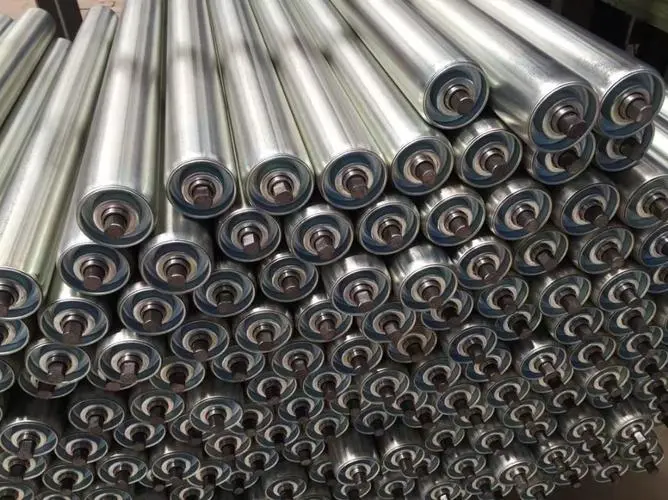
GRAM steel conveyor rollers have a cylindrical body, bearings near the ends and projecting shaft interfaces. The support drawing needs to define how those interfaces are retained. Neither a body photograph nor an overall length alone identifies every locating relationship.
Keep the belt-contacting body length distinguishable from dimensions describing the shaft and ends. If a support bracket is being retained, its actual receiving interface is part of the review. If new brackets are expected, identify their supply scope instead of assuming they accompany a roller quotation.
Troughing support geometry is not a capacity certificate
A section can show how an assembly is arranged without proving its suitability for the conveyed load. Keep the geometry and duty requirements connected but distinguishable. A plant changing the feed should describe that change alongside the retained cross-section, rather than use an unchanged belt width as proof that the old support selection remains adequate.
Manufacturer descriptions of carrying troughing arrangements distinguish roller combinations and the frames that hold them. That general distinction helps establish the review scope. It does not authorize borrowing another manufacturer’s angles, load ratings or standard classifications for a GRAM assembly.
| Information in the section | Separate acceptance question |
|---|---|
| Working contacts and roller locations | Does the complete arrangement suit the actual retained belt and duty? |
| Shaft and bracket relationships | Which interfaces are retained and which supplied parts are new? |
| Current support shape | Has a change in belt construction or loading been reviewed? |
A drawing with all three rows completed is still a project record, not a universal guarantee. The accepted supplier proposal should identify the actual supplied construction and the basis on which its use is approved. Where evidence is missing, leave the corresponding requirement open.
Loading-zone rings change the working support surface
GRAM’s rubber-ring impact rollers provide a different belt-contacting construction from a plain steel cylinder. If a troughing position lies under incoming material, record whether the accepted proposal uses those ringed surfaces. Their working shape belongs to the cross-section review as well as the individual component description.
Do not substitute an underlying steel body diameter for the outside working surface of a ringed assembly. The engineer needs the accepted complete roller definition. Likewise, an impact label does not establish a numerical impact capacity or automatically approve the surrounding frame.
Where an ordinary carrying position and a loading position share similar supports, preserve their duty distinction in the supplier order. The plant should not receive a mixture of plain and ringed components with no identified destination. Agree the supplied assembly and its position before consolidating the commercial quantities.
Suspended garlands require a different support boundary
GRAM carrying garlands use connected rollers suspended as a group. That arrangement cannot be represented accurately by a loose-roller drawing alone. The linked group and its retained or proposed suspension relationships belong to the engineering boundary.
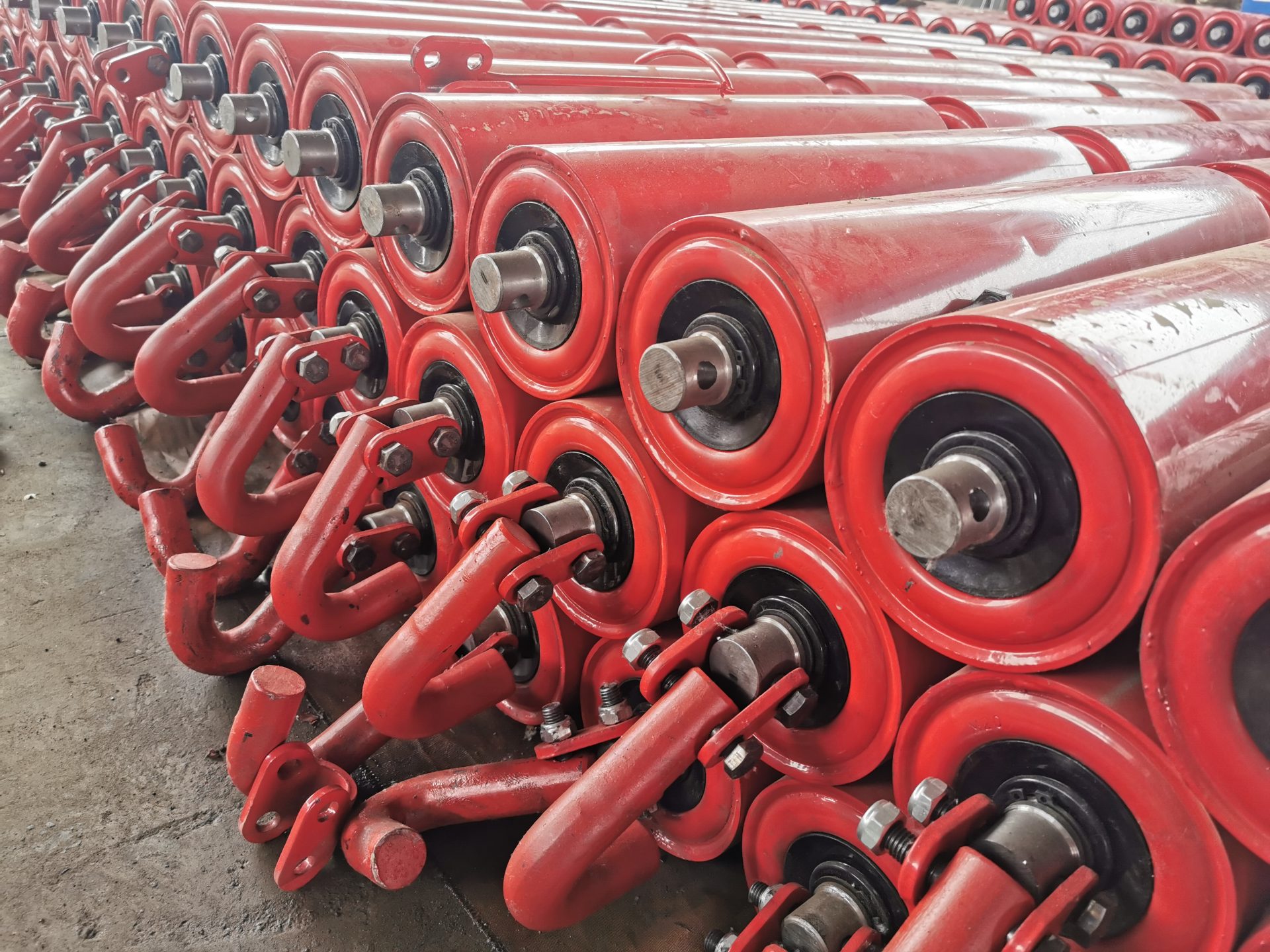
If a buyer compares a rigid station with a suspended group, compare complete proposals for the same intended belt duty. A component price that excludes connections or supporting hardware should not be treated as the total cost of a replacement station. Ask what each offer actually includes, and which retained equipment it relies on.
The suspension arrangement also changes the meaning of a static section drawing. The project should define the accepted operating envelope where that is relevant. This is a request for the responsible engineering review, not an installation instruction or an assertion of a universal permissible movement.
A different fabric belt can reopen the troughing review
GRAM’s fabric conveyor belt route separates the reinforcing carcass from the rubber covers. If the proposed belt build changes, assess its relationship to the retained support shape. A replacement of the same nominal width is not necessarily identical in every construction feature relevant to the equipment.
For a plant keeping its frames while changing the belt, supply the accepted new build with the current station record. The roller supplier should know whether it is offering a component for unchanged duty or participating in a revised support proposal. Do not let an old belt sample quietly become the specification for a different replacement construction.
The fabric belt and retained pulley discussion addresses the belt’s equipment route beyond the carrying section. Both reviews belong in the same project, but neither replaces the other. A belt accepted at the pulleys still needs its intended carrying support, while a defined troughing section does not settle the pulley compatibility question.
If a supplier proposes changing the number or arrangement of rollers, record that as a change to the support proposal rather than a simple part substitution. The retained brackets, working contacts and belt build may all be affected. Accept the revised complete arrangement before purchasing its components.
Release the troughing order against the current drawing revision
A belt replacement project can leave two section drawings in circulation: the original support arrangement and a proposed arrangement for the new fabric build. State which drawing the roller order uses. If a contractor orders against the first while the belt supplier assumes the second, both parties can deliver components that match their own documents yet leave an unresolved project interface. Link the accepted belt build and support revision before releasing either affected order.
For a partial station replacement, distinguish dimensions being reproduced from geometry being reconsidered. A worn centre roller may need an accepted dimensional replacement while the project leaves the existing wing arrangement unchanged. That is a narrower task than approving a new troughing configuration. The proposal should say which task it addresses, and the engineer should keep the unchanged retained arrangement identifiable. Do not require a component supplier to infer a redesign from a vague request for improved support.
At a loading position, a drawing that shows the working surface of rubber rings should also identify the complete roller reference used to obtain that surface. A change in ringed construction can affect the contact definition even if the bracket arrangement remains. Preserve the changed reference and review the resulting section, instead of copying the old contact line onto the revised component drawing.
The order should identify the accepted section, the supplied component or assembly scope and the duty information attached to it. Mark which existing supports remain. Where separate parties provide rollers, frames and belts, the project needs a clear point at which their interfaces are accepted together.
Receiving information should preserve that revision and the component references. A package of rollers can be dimensionally plausible yet belong to another accepted station. Agree how similar items will be distinguished for the actual delivery, without assuming an unpublished standard labelling or packing service.
Give the supplier a cross-section that explains the real belt support and an order that defines who supplies each part of it. That is a better basis for a retained-station replacement than treating width, troughing terminology and a catalogue photograph as a complete assembly specification.
Last Updated on October 3, 2026 by gramconveyor_admin


