
A Polyurethane Belt Scraper Supplier Needs the Residue Width at the Head Pulley

A wide belt does not necessarily arrive at the head pulley with residue across its full width. On a washed-aggregate conveyor, the remaining material may occupy a central band; a changing feed may move that band sideways. A polyurethane belt scraper supplier needs that residue pattern before the working blade is selected. GRAM’s polyurethane conveyor cleaner assemblies provide the product route, but the proposed blade coverage must relate to the actual material reaching the cleaning position.
Give the polyurethane belt scraper supplier the residue pattern at discharge
Identify where residue remains on the carrying surface after the main load leaves the belt. Describe its approximate distribution using existing site observations, approved photographs or maintenance records. A general description such as “wet stone” tells the supplier something about the material but does not identify the cross-belt region the proposed blade must address.
For a washed-aggregate plant with a narrow central residue band, the inquiry should distinguish belt width from the affected region. The blade proposal also needs the actual mounting and belt relationship. The buyer should not select a narrower or wider blade on the residue photograph alone, because the assembly must still fit its intended cleaning position and approved operating conditions.
A changing feed can move the residue band across the belt
A plant alternating material streams may have more than one normal residue pattern. Preserve those differences in the supplier discussion. A blade selected against the cleanest or narrowest observed band may not answer the condition that occurs during another scheduled production run.
This is an operating-envelope question, not a reason to invent a universal extra width. Give the GRAM supplier the relevant streams and observations, then require the proposed working coverage to address the accepted duty. Where the actual material path is not established, keep that uncertainty visible rather than replacing it with the nominal belt width.
Edge residue requires a separate belt-surface review
Material near an edge should not be treated as permission to extend blade contact beyond the belt’s accepted contact boundary. GRAM’s rubber conveyor belts provide the actual belt surface and edge condition to be reviewed with the cleaner. The belt and scraper remain separate supplied items with a shared contact interface.
If the belt has existing edge damage or repeatedly moves sideways at discharge, include that condition in the inquiry. Choosing a blade width does not determine whether the damaged surface or moving edge is acceptable for the proposed contact. The engineering review should keep those questions separate from the simple measurement of residue width.
Polyurethane scraper blade width is different from assembly width
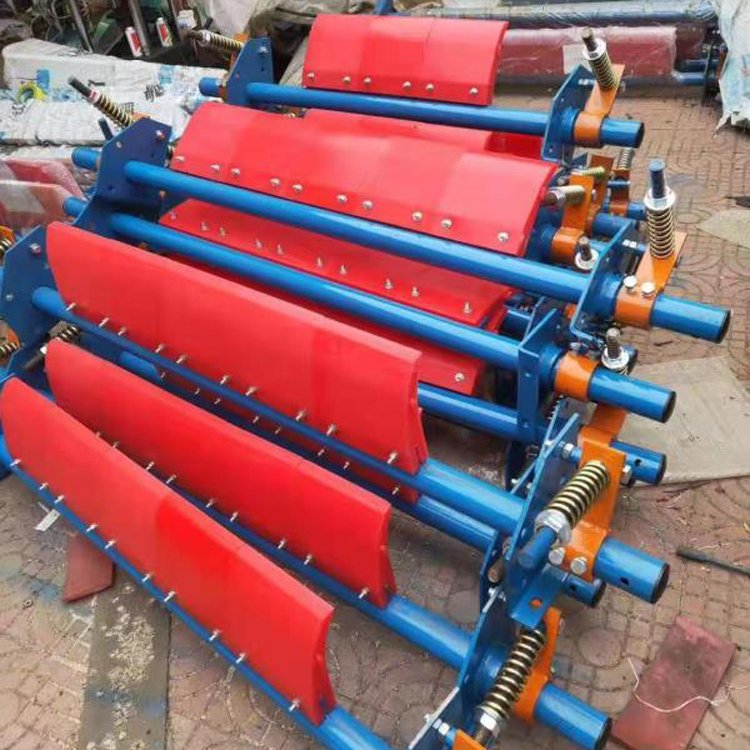
GRAM’s cleaner photographs show a polyurethane blade attached to a transverse support, with mounting brackets and adjustment elements. The visible blade and the wider supporting hardware perform different roles. A quotation should identify the working blade span separately from the complete assembly’s installation dimensions.
A buyer replacing a cleaner on an existing conveyor should be able to connect each quoted width to a physical part or working region. Otherwise, two offers may appear comparable while one describes the blade and another describes the mounting span. That ambiguity can survive until delivery even when both quotations use the same unit of measurement.
For the proposed blade, ask that the accepted drawing identify where its working span begins and ends relative to the supporting assembly. The receiving team can then compare an identifiable component with the agreed offer. A measurement across the complete transverse support should not be recorded as the blade span merely because it is easier to take from the delivered package.
If the plant expects more than one normal residue band, retain those conditions beside the accepted coverage description. This keeps a future replacement inquiry tied to the intended cleaning duty, rather than allowing a faded width label to become the only surviving basis for selecting another blade.
| Width description | What it identifies | Why the buyer needs it |
|---|---|---|
| Belt width | The nominal belt envelope | Defines the belt being assessed |
| Residue region | The material remaining at the cleaning position | Describes the working coverage question |
| Blade and support dimensions | The offered cleaner components | Resolves contact and installation separately |
The blade attachment should remain identifiable in the offer
The continuous blade and its support are visible in GRAM’s cleaner images, but appearance alone does not establish interchangeability with a retained assembly. Identify whether the order concerns a complete cleaner or a replacement component and require the actual proposed attachment to be described. Colour is not a reliable model or material specification.
For a distributor receiving a request for a “red scraper of the same width,” the useful response is to separate the working span, support interface and actual duty. The purchaser needs an identifiable replacement offer, not an assumption that similarly coloured blades use the same compound, attachment or adjustment arrangement.
Evaluate blade contact across the residue region without inventing a pressure setting
GRAM’s cleaner range describes direct belt contact and adjustable pressure arrangements. That establishes the type of cleaning action being discussed, but it does not provide an accepted adjustment value for every conveyor. Keep the selected blade, its support and the proposed contact arrangement together in the supplier’s application review.
A residue band that remains at one side may prompt a request for additional pressure. Do not assume the same adjustment is appropriate across the whole working span. The supplier should assess the observed contact condition and offered assembly, using its applicable instructions and the accepted belt information. This article does not prescribe a spring setting or an intervention on running equipment.
Uneven blade wear and uneven residue are different observations
A worn blade can help explain the contact history, while a residue photograph describes what remained on the belt at that moment. Present both with their circumstances. A buyer should not treat the wear shape as a guaranteed map of the normal material path, especially if the feed, belt condition or cleaner arrangement changed during the blade’s service.
Where the GRAM proposal replaces the complete cleaner, describe which retained supports and belt conditions were used in the selection. Where it replaces only a component, identify the retained assembly and the replacement’s compatibility boundary. These two orders can use similar photographs while requiring different acceptance information.
Cleaner coverage and belt tracking should be assessed together at the head pulley
A material path that moves relative to the blade complicates the coverage decision. GRAM’s self-aligning idlers provide a separate centering route, not a feature of the polyurethane scraper. If a tracking proposal accompanies the cleaner order, define what belt position is expected at the cleaner and which equipment is responsible for that position.
The scraper should not be expected to establish the belt centreline simply because its blade spans the visible residue. Likewise, a centering assembly should not be expected to remove carryback. The purchaser needs two defined functions if both products are included, with the scraper coverage assessed against the belt condition that the accepted arrangement is intended to provide.
This becomes particularly relevant when a plant orders several accessories during one outage. GRAM’s conveyor accessories range includes distinct product routes, but a combined project reference does not make their functions interchangeable. Keep each assembly connected to its own accepted drawing and duty.
Steel return rollers reveal what passes beyond the scraper
Inspecting the records for retained return supports can help the buyer describe residue that continues beyond discharge. GRAM’s steel conveyor rollers have their own cylindrical working bodies, bearing ends and shaft interfaces. Deposits on those bodies are an operating observation, not evidence that the scraper has been correctly sized or adjusted.
For a buyer replacing both cleaner equipment and affected return rollers, separate the roller dimensions from the observed deposits. The replacement roller needs its accepted original geometry; the scraper review needs the residue condition that reaches the return route. Combining those two descriptions into one “dirty roller problem” makes both supply decisions less precise.
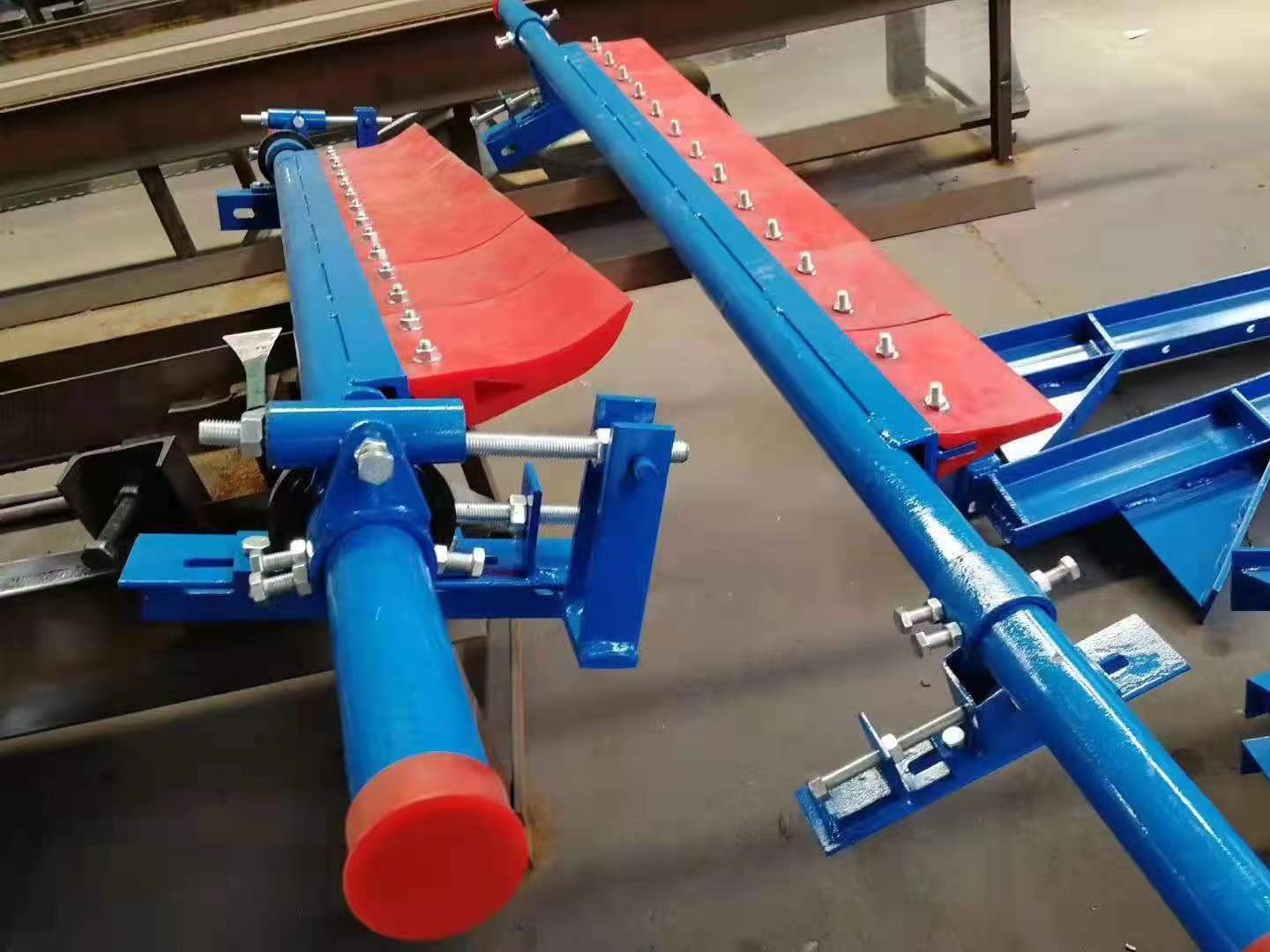
Preserve the component distinction when agreeing delivery identification. The cleaner assembly, any separately supplied replacement blade, and the steel support replacements should be identifiable against their own order references. Do not assume a particular protective package or replacement-component supply scope from a photograph; have the actual supplied items described in the offer.
Approve the scraper offer against the widest relevant operating condition
General selection guidance from Flexco treats material path as a cleaner-selection input. Use that principle to improve the inquiry, without transferring another manufacturer’s blade dimensions or ratings. The GRAM proposal still requires its own identified assembly and accepted application details.
Splice passage remains another compatibility question, explained separately in the cleaner replacement and splice discussion. Resolve it alongside the coverage decision rather than allowing either question to replace the other. A blade can cover the observed residue while still needing a separate review of the belt and retained mounting arrangement.
Approve a working blade span that is tied to the relevant production streams, an identifiable cleaner assembly and the belt position expected at discharge. Keep uncertain feed conditions or edge-contact questions visible until they are resolved. The receiving team should then be able to understand why that blade was supplied, rather than knowing only that its width matches a number copied from the old order.
Last Updated on October 3, 2026 by gramconveyor_admin


