
Ask a Sand and Gravel Rubber Conveyor Belt Supplier About the Washed Product

Washed gravel arrives with a different combination of water and fines from dry screened stone. A contractor choosing a sand and gravel rubber conveyor belt supplier should provide the material condition at loading, the retained conveyor dimensions and the way residue leaves the belt. GRAM’s rubber conveyor belt range explicitly includes sand and gravel handling. Start there, then compare EP, NN and steel-cord construction against the actual mechanical duty.
The first purchase decision is not simply how thick the belt should be. Identify the required reinforcement, cover duty, pulley arrangement and finished delivery form. Moisture is an operating condition to describe, not proof that a particular belt construction is suitable for every wet installation. A replacement should fit the conveyor and the washed product together.
A sand and gravel rubber conveyor belt supplier needs the wet product description
Record whether the conveyor receives freely draining gravel, damp sand or a mixture with fine material. Explain where the product is loaded and how its condition changes along the route. A brief label such as aggregate does not establish the contact, contamination and cleaning requirements that matter for the offer.
Washed sand can create a different return-side condition from dry stone
A wash plant retaining its existing conveyor may see more residue returning after discharge when the sand moisture changes. Record that condition before selecting the replacement belt. A cover chosen for abrasion still needs to be evaluated with the actual material and cleaning arrangement; it should not be expected to eliminate carryback by itself.
The supplier also needs to know whether the wet condition is normal or associated with an occasional drainage upset. Define the credible range rather than providing only the easiest operating case. The offered rubber compound and construction should be identified for that range without an unsupported promise of wet grip or universal residue release.
Gravel entry should be assessed for abrasion and loading damage separately
A contractor replacing an outdoor gravel belt should distinguish general cover wear from cuts or damage near the loading point. Describe the observed pattern and the material entry arrangement. Adding cover thickness is not a complete response if the retained loading support or chute creates an unresolved mechanical condition.
GRAM’s load-zone support route uses longitudinal bars and inclined side support regions. It is relevant to a separate review of belt support at entry. The belt supplier enquiry should identify the support expected beneath the new belt rather than assume a different belt construction will correct the loading arrangement.

Sand and gravel belt construction should match the retained conveyor
GRAM offers EP rubber belts, NN rubber belts and steel-cord belts. These names identify different reinforcement routes. They should not be used interchangeably in a quotation merely because all can appear in bulk-material conveying.
| GRAM reinforcement route | Published construction distinction | Question for the gravel conveyor |
|---|---|---|
| EP | Polyester warp and nylon weft | Does the offered construction meet the conveyor’s approved tension and flexibility requirements? |
| NN | Nylon in warp and weft | Is the complete proposed belt appropriate for the retained pulleys and take-up arrangement? |
| Steel cord | Longitudinal steel reinforcement cords | Does the duty justify this route, with a compatible splice and conveyor design? |
EP and NN descriptions do not establish a complete belt specification
The fabric construction is one part of the belt. The offered width, reinforcement specification, cover arrangement and finished length still need to be declared. Give the supplier the retained conveyor requirements rather than asking it to select a generic EP or NN belt from the material name alone.
A buyer replacing an old fabric belt should identify its actual construction where possible. If the original markings are unclear, obtain the equipment specification or a suitable assessment of the sample. Do not treat a black rubber surface as evidence of the internal reinforcement. The delivered belt needs an identifiable construction record.
Steel-cord reinforcement is a mechanical route, not a wet-service approval
The GRAM steel-cord range discusses heavy and long-distance conveying. Its longitudinal reinforcement can be relevant where the approved conveyor duty calls for it. That does not make steel cord the automatic answer to washed material or establish the suitable rubber cover for the exposure.
Have the conveyor designer confirm the required reinforcement and splice arrangement. A change from fabric to steel cord can involve requirements beyond the material name. Keep that engineering assessment separate from the cover’s abrasion or wet-material behavior.
Compare rubber cover evidence against the actual sand and gravel
The cover is the belt’s working surface and must be assessed for the required service. Describe the abrasive material, any sharp fragments and credible contamination. Ask what compound is actually offered and which relevant information supports the selection. A generic abrasion-resistant label does not establish a particular test result.
Dunlop’s conveyor belt range literature separates reinforcement and cover options for different duties. That distinction is useful professional background. Its grades, test values and claims remain specific to Dunlop products; they should not be assigned to a GRAM belt.
If a project requires a specified test method or cover grade, put that requirement in the enquiry and obtain the offered belt’s matching documentation. Compare results only when the method and material being assessed are clear. Do not combine a cover result from one product with a reinforcement description from another to create an apparent complete specification.
Outdoor gravel replacement needs a defined length and delivery form
The finished belt requirement should distinguish an open length from a completed loop or another agreed supply form. State how the new belt will be joined and who owns that work. A stock roll description cannot establish the installed length or the approved splice for the conveyor.
Include the route through which the belt will reach the installation location. If handling constraints affect the delivered section size or package, discuss them before production. Ask the supplier to identify the proposed packing and delivery arrangement for the actual belt; do not assume a standard reel size or available lifting service.
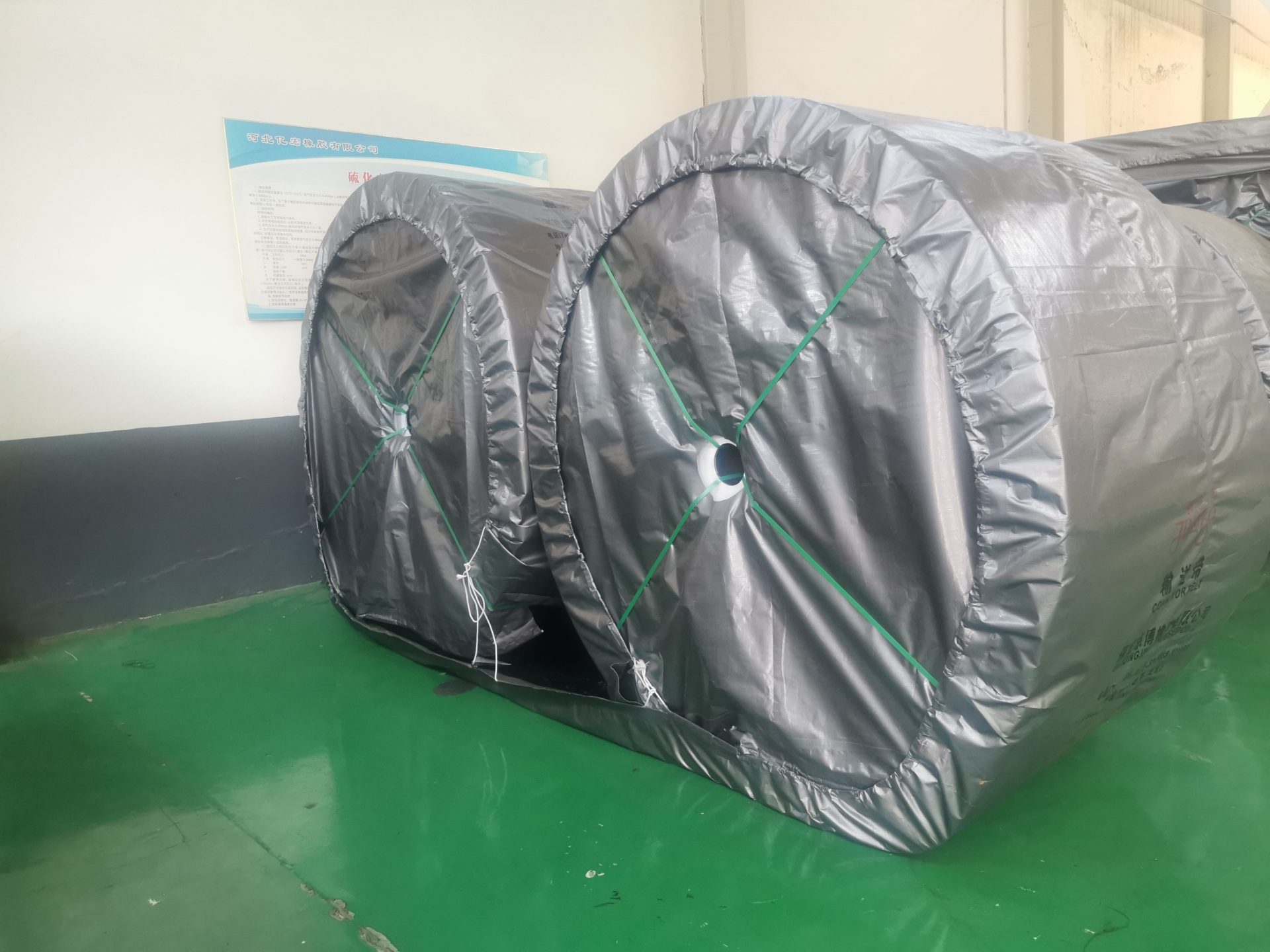
Wet-line belt receiving should preserve the construction identification
Compare the supplied identification with the approved width, length, reinforcement and cover arrangement. Inspect the edges and working surfaces for visible damage, and retain any supplied handling instructions. If the packaging prevents examination of the complete surface, agree the staged inspection before the belt is installed.
Keep the belt protected during outdoor storage according to the supplier’s instructions. The fact that it will carry washed gravel is not a reason to leave its packaging and identification exposed unnecessarily. Separate any damaged delivery for review before the shutdown installation begins.
Use the gravel line’s operating condition when the belt is reordered
Washed gravel enquiries should state what reaches the belt after drainage
Measure or describe the material condition at the conveyor’s actual loading point, rather than copying the wash circuit’s general description. Some routes receive material after a drainage stage; others receive a wetter stream. The supplier needs the condition that the cover and cleaning arrangement will encounter. Keep any uncertain moisture information clearly identified so it can be resolved during selection.
A contractor should also identify whether the replacement belt is part of a wider transfer repair. If the chute, support or cleaning equipment changes, the expected new operating condition may differ from the old belt’s history. Give the supplier the intended arrangement and separate it from observations made before the repair. That prevents an offer being evaluated against two incompatible process descriptions.
Fabric belt joining must be coordinated with the chosen carcass
An EP or NN purchase should identify the proposed joining approach and the documentation needed by the party performing it. The fabric name alone does not define the complete belt or an approved splice. Ask for the offered construction details and have the joining arrangement assessed against the conveyor’s requirements before the final delivery length is agreed.
If a completed loop is required, preserve that boundary in the order. If an open length will be joined at site, identify the retained equipment and the installation responsibility. Neither arrangement should be inferred from a roll photograph. A finished length that omits the agreed joining requirements can create a problem even when the supplied rubber and reinforcement are correctly described.
For a distributor, retain the customer’s approved reinforcement and cover arrangement with the wet-material description. A repeat order should not substitute a differently constructed black rubber belt solely because it has the same width. Compare any proposed alternative against the original mechanical requirements and the current sand or gravel condition.
The aggregate screen-discharge guide is relevant where loading and downstream product conditions change. A sand and gravel replacement should retain its own moisture and residue information rather than reuse a dry aggregate description.
If a wash circuit, screen product or cleaning arrangement changes after the original belt was selected, update the next enquiry. The mounting and route dimensions may stay valid while the cover duty changes. Keep the operating description with the approved belt construction so that a repeat purchase is based on the current process.
For this order, give the supplier the washed material condition and the retained conveyor specification together. Select the reinforcement through the mechanical requirements, assess the cover for the actual material and identify the delivery and joining form. Those decisions provide a sound basis for comparing offers without treating every black rubber belt as a suitable wet-gravel replacement.
Last Updated on October 3, 2026 by gramconveyor_admin


