
Specify the Ringed Working Profile to a Rubber Ring Impact Rollers Manufacturer

A quotation describes a roller diameter, but the replacement is covered with rubber rings. Does the number describe the underlying body or the working surface that will contact the belt? A rubber ring impact rollers manufacturer should resolve that distinction before a contractor approves the assembly. Start with GRAM’s impact roller route, identify the proposed ringed surface, and keep the underlying body and mounting ends distinguishable in the actual offer.
The rings are not an optional descriptive detail. They form part of the working construction selected for the intended loading duty. At the same time, their outside appearance does not define every internal component or establish the acceptance of the retained support arrangement.
The rubber ring impact roller offer should define the working profile
Ask the supplier to identify the dimensions and arrangement that describe the ringed belt-contacting surface. Keep them separate from dimensions concerning the core body and shaft. A short description such as “same diameter” can conceal which physical surface is being reproduced.
For a contractor retaining the brackets, the mounting ends remain important even when the immediate concern is the rings. The accepted assembly should connect the ringed profile, underlying roller and end interfaces. Approving one part does not settle the other parts of the supplied unit.
Outside ring diameter is not the underlying steel diameter
The ringed surface lies outside the roller body. Preserve the actual reference used by the drawing or supplier description. Do not substitute a body diameter for the working diameter in the retained support review, or compare two values that identify different parts of the assembly.
Where a sample’s rings are worn, the visible outside diameter may not establish the original accepted profile. Identify the sample’s condition and seek the relevant original or proposed construction information. The manufacturer should offer a defined working profile rather than invent a nominal value from a damaged surface.
The ringed span belongs with the intended belt contact
Identify how the proposed rings occupy the working body. The supplier’s actual arrangement should make clear what surface is offered across the roller and which dimensions describe it. A photograph of several rubber rings does not define every ring width, spacing or retained relationship.
A buyer should not assume a universal acceptable gap or ring count from a general impact description. If the retained assembly has an accepted arrangement, provide that record. If the proposal changes it, keep the revision explicit for the project review.
Ring retention is an offered construction detail, not an assumed method
Ask how the actual ringed working arrangement is defined in the supplied assembly. The answer should identify the proposed construction. Do not infer a bonding, moulding or retention process from the fact that the rings appear fixed in a catalogue photograph.
Where an offer concerns only separate rings rather than complete rollers, make that scope explicit. GRAM’s visible roller route is not proof that every individual ring or rebuilding service is supplied. A component proposal and a complete manufactured assembly are different purchases.
Underlying roller construction still matters beneath the rubber rings
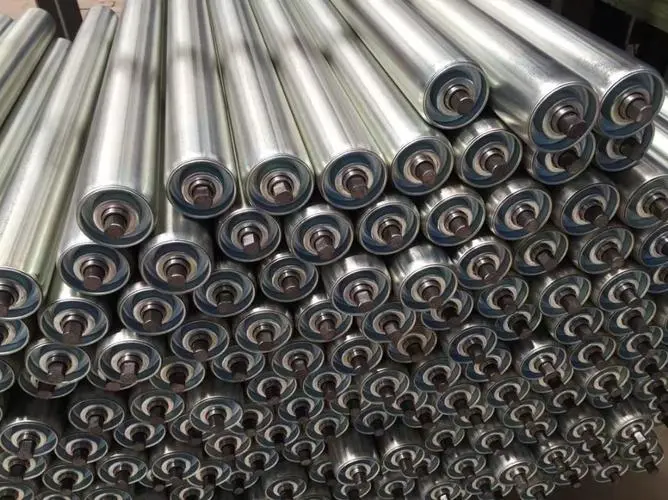
GRAM steel rollers use a cylindrical body rotating around a central axle, bearings toward the ends and projecting shaft interfaces. Those construction relationships remain relevant when evaluating a ringed unit. Rubber on the outside does not remove the body’s support and end requirements.
| Assembly part | Meaning in the offer |
|---|---|
| Rubber-ring working surface | The contact profile actually proposed for the belt |
| Underlying body | The roller construction beneath that surface |
| Bearing ends and shaft interfaces | The rotating assembly and its relationship to retained supports |
For the buyer, the table is a way to compare information, not a design calculation. The supplier needs to identify the actual selected assembly and its applicable duty basis. A correct-looking ring photograph cannot supply a missing body rating or a mounting definition.
Primary impact roller descriptions distinguish rubber-ring surfaces and steel cores. That general construction principle is useful context. The manufacturer’s named series and capacity claims do not describe a GRAM unit.
A rubber ring impact rollers manufacturer needs a clear sample role
State whether the removed roller is an accepted construction to reproduce or evidence of an operating problem. Those roles can differ. A worn assembly may show the retained shaft interfaces while no longer showing the original working profile accurately.
A contractor should preserve any available original assembly record with the sample. Mark uncertainties instead of turning wear into a nominal specification. If the buyer accepts a newly proposed profile, keep that proposal distinguishable from the construction represented by the removed unit.
Consider a replacement enquiry containing a shaft-end sketch from one roller and ring photographs from another. The manufacturer should not be expected to combine them into an assumed complete assembly. Identify the intended relationship, or ask for a clearly defined new proposal for the retained equipment.
For a distributor passing samples between the customer and supplier, preserve which component each photograph or dimension concerns. A single item reference should connect the agreed working surface and complete roller. That prevents the final customer from receiving a hybrid description that no party actually accepted.
Ringed rollers in a suspended group have an additional assembly boundary
GRAM carrying garlands use linked rollers in a suspended group. Where a ringed proposal forms part of that arrangement, identify both the individual roller construction and the connected group scope. A loose impact roller is not automatically interchangeable with a component of every garland.
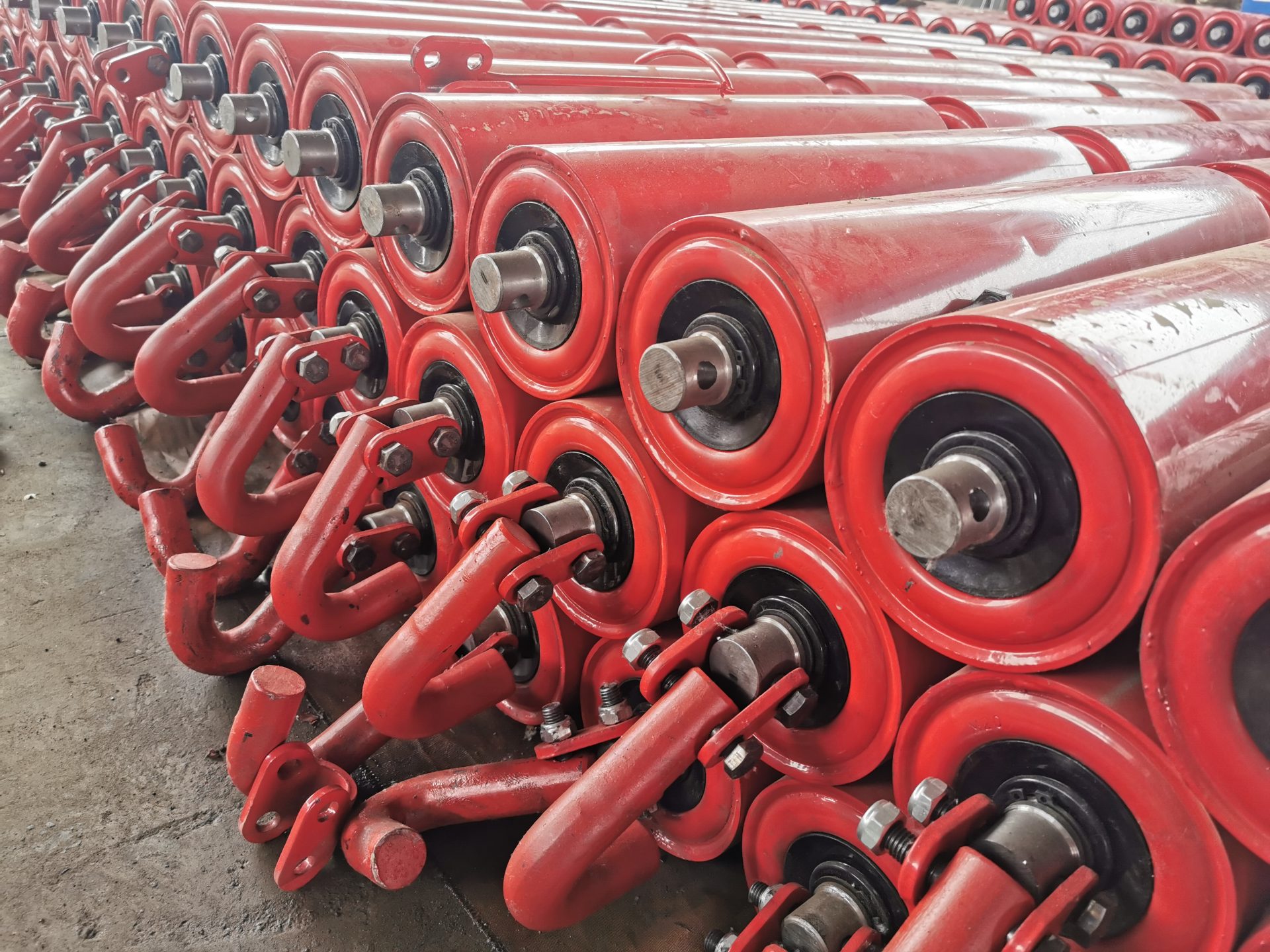
Ask whether the offered assembly replaces one component or the complete connected group. Keep the retained links and supports distinguishable from supplied parts. Do not assume that surrounding hardware shown in an illustration is included in the price.
If the ringed arrangement changes within a retained group, the project should review the actual revised assembly. An unchanged connection dimension does not establish that every working-surface change has been accepted. The supplier’s proposal needs one identifiable current construction.
Impact beds are a different support proposal from ringed rollers
The GRAM impact bed route shows longitudinal support bars and inclined supporting regions. This is a distinct support construction, rather than a roller with a different cover. Compare complete alternatives for the actual loading duty if the project considers a support change.
The material landing-zone discussion helps describe that duty. Here the buyer’s additional task is defining the ringed assembly accurately. A more precise working profile does not, by itself, establish that rollers or a bed are the accepted support solution.
GRAM’s mining belt route provides the conveyed-material context for many loading enquiries. The actual retained belt and incoming duty should remain recognizable in the support proposal. Do not invent an impact capacity from the application name.
Carry the accepted ringed construction into the manufactured order
Consider a manufacturer’s drawing that labels the body diameter but shows rubber rings without dimensioning their outside surface. The contractor can understand the internal roller size while still lacking the working-profile information needed for the retained belt support. Ask for the actual ringed construction to be defined. Do not add an assumed rubber thickness to the body value and present the result as the supplier’s accepted working diameter.
A second ambiguity arises when a removed sample and a current proposal use different ring arrangements. Preserve which reference describes the intended new assembly. The supplier should not be expected to reproduce a photograph of worn rings while following a different drawing unless the relationship has been resolved. Mark the accepted current profile and keep the sample as supporting evidence with its limitations.
For a distributor ordering several impact rollers, keep differences in working span or mounting interfaces with their respective item references. A combined quantity of ringed rollers can be commercially convenient without making all units identical. Agree how those selected assemblies will remain distinguishable in the delivered order, so the receiving team does not distribute them solely by the similar black rubber surfaces.
Before release, identify the current assembly reference, working profile, underlying body and mounting ends. Where the supplier revises the rings or body, retain that revision explicitly. A shared product-family name should not conceal a changed complete roller.
Ask for the actual evidence the supplier can provide for the selected construction and requirement. A material description alone should not be presented as a measured hardness, impact result or complete roller test. If those results are required and unavailable, keep the acceptance question open.
Agree how the ringed working surfaces and projecting ends will be protected in the proposed package for these assemblies. Keep delivery identification connected to the accepted item reference. Do not assume an unspecified packing method or treat a similar outside appearance as proof of the selected ring arrangement.
Approve the ringed profile and the complete roller as one identifiable proposal. That gives the manufacturer a clear assembly to supply and gives the receiving team a better basis than an ambiguous diameter beside a photograph of rubber rings.
Last Updated on October 3, 2026 by gramconveyor_admin


