
What a Polymer Conveyor Rollers Supplier Should Specify Beyond the Tube

A plastic working surface can remain intact while the roller stops turning. That is why an industrial buyer assessing a polymer conveyor rollers supplier should look beyond the tube material. For wet bulk handling, recycling or a coastal terminal, the useful question is how the complete roller deals with the load and the exposure around its ends. GRAM’s polymer roller range describes a machined polymer tube or solid bar, sealed precision bearings, non-contact rubber seals and metal end caps. Those parts should be evaluated together.
The polymer body may be relevant when corrosion of the working surface is a maintenance concern. It does not make every remaining part immune to water, chemicals or damage. Before changing from steel to a polymer construction, identify where the old roller failed and which part of the proposed assembly addresses that failure.
A Polymer Conveyor Rollers Supplier Should Identify the Complete Construction
The word polymer describes a broad material family. It does not identify a particular resin, reinforcement, bearing arrangement or end-cap material. A quotation that lists only a tube diameter and the word “plastic” leaves the buyer unable to assess the complete roller against a defined duty.
Machined Polymer Tubes and Solid Bars Are Different Starting Structures
GRAM’s published construction description allows a machined polymer tube or a solid bar. A hollow tube and a solid body are not the same geometry, even if their outside diameters match. Ask which structure is proposed and how the shaft and bearing arrangement relate to it. The order should identify the actual assembly rather than merge both possibilities into one material label.
For a long roller face, the body’s behavior under load deserves attention. For a shorter or differently supported roller, the same outside material may face a different structural requirement. The supplier should assess the proposed body with its support span, loading pattern and operating speed. Do not assume that a solid body is automatically preferable or that a hollow body is automatically adequate.
If the previous roller shows a persistent change in shape, distinguish surface wear from body deformation before specifying the replacement. A worn surface suggests a different investigation from a body that no longer presents the intended working geometry. Record the loading position and temperature exposure with that observation. The bearing-to-body connection also needs to remain appropriate for the proposed structure; selecting a polymer solely because it resists the carried material leaves that mechanical interface unexamined.
The working surface also needs to be considered against the carried material. Abrasive particles, sharp contamination and accumulated deposits create different wear mechanisms. Explain the actual exposure instead of asking for a universally wear-resistant polymer. The material and structure of the proposed roller must answer that particular operating condition.
Sealed Precision Bearings Remain Part of the Polymer Roller Order
The bearings provide rotation; they are not replaced by the polymer tube. GRAM identifies sealed precision bearings in its polymer assembly. Their suitability still depends on the proposed load, speed and conditions around the roller ends. A sound tube cannot compensate for a bearing arrangement that is unsuitable for the application.
A recycling maintenance buyer may find several rollers with little visible surface damage but poor rotation. That observation should lead to an examination of bearing condition and the contamination route, rather than an immediate demand for a harder tube. Record whether failures cluster beneath a chute, near washdown or along a particular return section. The location can help distinguish exposure from a general material problem.
Non-contact Seals and Metal End Caps Need Separate Exposure Checks
GRAM lists non-contact rubber seals and metal end caps as distinct elements of the polymer construction. That is a useful starting distinction: the tube’s resistance, the seal’s suitability and the end cap’s exposure are separate questions. A statement about the body material cannot answer all three.
Rubber Seals Must Match the Water and Chemical Contact
Describe how contamination reaches the ends of the roller. Rainfall, slurry splash, dusty material and cleaning water are different exposures. Also describe whether chemicals are present, how they contact the assembly and whether temperatures change during cleaning. Without that information, “wet conditions” is too broad to establish seal suitability.
For the rubber seal review, identify the actual cleaning agent and exposure pattern, including whether residue remains around the roller ends.
A non-contact arrangement can be part of a roller design, but the name alone does not establish a pressure-wash rating or permission to direct a jet at the bearing area. Obtain the proposed assembly’s cleaning and environmental limits. If the operator’s current cleaning practice exceeds them, changing the tube material leaves the same ingress risk in place.
Rulmeca’s composite roller description shows that body construction and sealing options are considered separately in a complete roller. Its resin formulations, seals and ratings belong to that manufacturer. The general lesson for a GRAM order is to name each relevant part and request confirmation for the actual exposure.
Metal End Caps Prevent a Blanket Corrosion-proof Claim
A polymer tube can reduce the area of metallic working surface while the assembly retains metal end caps and other metallic components. Identify those materials and where they will be exposed. If the original failure occurred at the roller ends, the tube change may address only a portion of the problem.
At a coastal terminal, a buyer may be comparing corroded steel shells with a proposed non-metallic shell. The comparison should also record shaft exposure, end-cap material and the bearing-end environment. There may be a sensible reason to change the shell, but that reason should not be extended into a guarantee that the complete assembly cannot corrode.
Rulmeca’s published metallic-to-non-metallic replacement example demonstrates that a material change can be evaluated for a specific corrosive environment. That project, its quantities and its construction belong to Rulmeca. It does not establish an equivalent GRAM installation; use the example only to understand why a replacement assessment needs both environmental and mechanical information.
GRAM’s steel roller family remains a relevant alternative where the proposed steel assembly matches the mechanical duty and environmental requirements. Evaluate the complete steel and polymer proposals for the same position. Comparing a specified polymer assembly with an unspecified “steel roller” creates a material comparison without a common technical basis.
Nylon Rollers and Other Polymer Rollers Are Not One Interchangeable Stock Item
GRAM offers nylon conveyor rollers separately from its broader polymer range. Nylon belongs to the polymer family, but the two names do not define identical products. A buyer should confirm the actual material and construction rather than accept either name as a complete substitute for the other.
A distributor combining replacement stock for several customers should preserve those distinctions. One customer may need a particular shaft interface and exposure limit; another may be replacing a different polymer construction. An outside diameter shared by both orders is not a reason to merge their stock references before interchangeability has been established.
Polymer Roller Material Names Need Product-specific Limits
Request the material identification, operating limits and relevant compatibility information for the proposed roller. Do not copy another manufacturer’s chemical table or assume that every polymer behaves similarly in moisture and temperature. The buyer’s approval should refer to the supplied assembly, not to a generic description of plastic.
GRAM’s HDPE conveyor roller article explains another material route. It is useful for the terminology, but it does not establish that a particular roller in the polymer range uses that material. Confirm the construction before transferring an HDPE-specific requirement into the order.
Electrical behavior also needs its own evidence when the application requires it. Do not treat a non-metallic body as proof of either electrical insulation for the complete assembly or a suitable static-dissipation characteristic. If the site has a hazardous-area requirement, the approved product documentation must address it. General polymer advantages are not an underground or hazardous-area approval.
Quiet Rotation Is a Roller Requirement, Not a Noise Reduction Guarantee
The polymer range describes smooth, quiet rotation, and GRAM also offers a silent roller conveyor range. These descriptions identify product routes worth assessing where noise is a concern. They do not provide a measured reduction for a specific installation or establish that a tube change will solve every source of conveyor noise.
A noisy conveyor can have damaged bearings, poorly supported components or material impact as well as noise associated with the roller body. Describe when the sound occurs and which position produces it. A repeatable observation under a defined duty is more useful than a request for the quietest material without an agreed comparison.
If a sound-level criterion is part of the project, agree how it will be measured and which operating conditions apply. Keep the requirement attached to the complete assembly and the intended conveyor position. Do not write a numerical improvement into the purchase description unless the proposed product and test basis support it.
Loading Impact Can Require a Different Roller Family
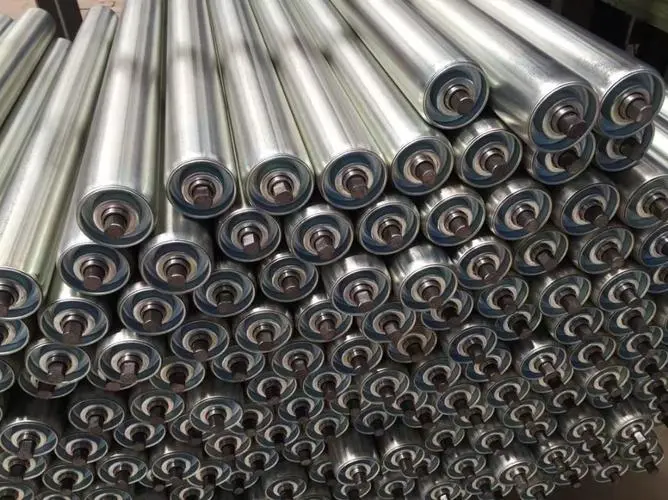
A polymer body proposed for ordinary carrying duty should not automatically be assigned to the material landing zone. GRAM’s impact roller range addresses a different support duty through a ringed impact construction. The material landing pattern and load should determine whether an impact assembly is required.
A terminal operator may have corrosion along the carrying run and repeated damage directly below the transfer chute. Those observations can justify two different component decisions. Assess the polymer assembly for the carrying exposure, while the transfer-point support is evaluated for impact. Buying one body material for every station can conceal that distinction.
The proposed impact roller still needs an agreed installed diameter, shaft arrangement and support geometry. A polymer carrying roller and a rubber-ring impact roller can both be non-metallic at the working surface without performing the same job. The construction and duty, rather than the surface appearance, establish which family belongs at each position.
Keep the Polymer Roller Construction Intact Through Receipt and Storage
The receiving check should connect the delivered roller to the agreed body structure, bearing and seal arrangement. Record the product reference and drawing revision so a later spare order does not quietly change a tube into a solid body or substitute a different end assembly. Where inspection evidence is required, specify which construction features it must establish.
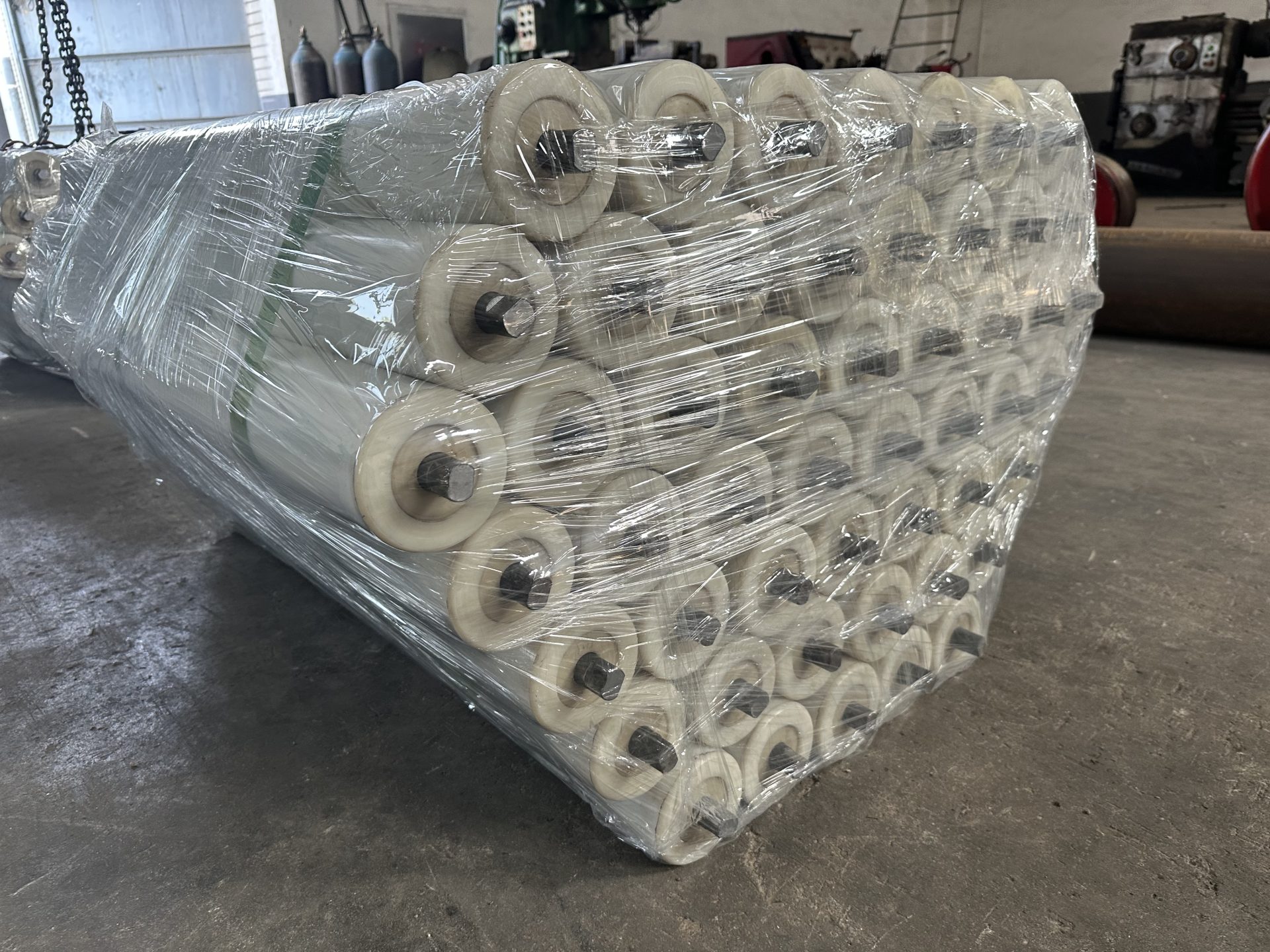
Transport protection should preserve the working surface and the roller ends. Agree how the polymer bodies will be supported and how the end caps and shaft interfaces will be protected against damage. The packing arrangement should follow the supplied roller geometry; no photograph of a bundled shipment establishes a universal packing method for all polymer orders.
At receipt, do not treat smooth hand rotation as proof of performance under the operating load. It can be one agreed preliminary check, alongside identification and visible condition, but the acceptance basis must address the actual application. Confirm the relevant inspection method and limits before delivery rather than inventing a pass criterion beside the unloaded shipment.
Once the shell, seals, bearings and remaining metal parts have been identified, the material change becomes a defensible decision. If only the polymer tube has an established compatibility basis, keep the rest of the assembly open for review. The goal is a roller that addresses the site’s exposure as a complete unit, not a corrosion-resistant surface surrounding an unresolved failure path.
Last Updated on October 2, 2026 by gramconveyor_admin


