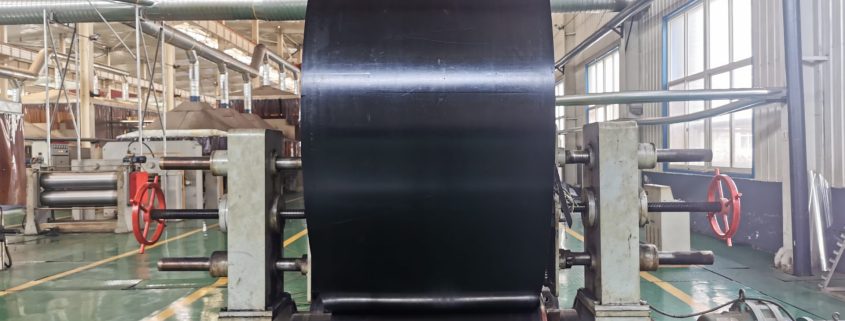
A production change can leave the conveyor mechanically unchanged while altering what touches its belt. A different feed, process residue or cleaning exposure may require a different cover decision even when the old belt width still fits. An industrial rubber conveyor belt supplier should receive the actual material and contact conditions first. GRAM’s rubber belt range is the starting route for describing that duty; its reinforcing and specialist-cover options should then be evaluated as parts of the complete offered belt.
For manufacturers, engineering buyers and distributors, “industrial rubber” is too broad to release an order. Identify the conveyed material, what else reaches the belt, where contact occurs and which equipment remains. A familiar material name is useful context, but it is not evidence that an unspecified cover suits the changed process.
Describe process contact before comparing industrial rubber belt offers
The carried product may not be the only exposure. State whether process residues, incidental oils or cleaning agents actually contact the proposed belt. Distinguish normal operation from occasional events, and identify which belt surface is involved. The supplier needs the real contact description rather than a list of every substance used somewhere in the plant.
A manufacturer replacing a belt after a feed change should tell the supplier what changed. The old belt sample can identify its construction and wear condition, but it does not automatically define a suitable cover for the new material. Preserve the difference between reproducing an old belt and selecting a replacement for revised duty.
The carrying cover sees the material presented to the conveyor
The carrying surface needs a cover decision suited to the actual feed. If the product contains a substance relevant to rubber compatibility, provide that information with the offer request. Do not infer suitability from the fact that the belt is black, reinforced or described as heavy duty.
Where a process specification gives a mixture rather than a single substance, preserve the relevant mixture information for the supplier’s review. A general product-family description cannot establish compatibility with every concentration or combination. The accepted offer should identify the exposure it addresses and any unresolved requirement.
The lower cover has its own retained-equipment contact
The pulley-side surface runs against the retained conveyor components. Keep its construction distinguishable from the carrying cover, especially when the process change affects only one side. A thicker carrying cover is not an automatic solution to a lower-surface contact problem.
The discussion of the quoted EP thickness build explains why total thickness alone can conceal layer allocation. Use the offered upper cover, reinforcing carcass and lower cover description to identify the complete build rather than treating one outside measurement as the full specification.
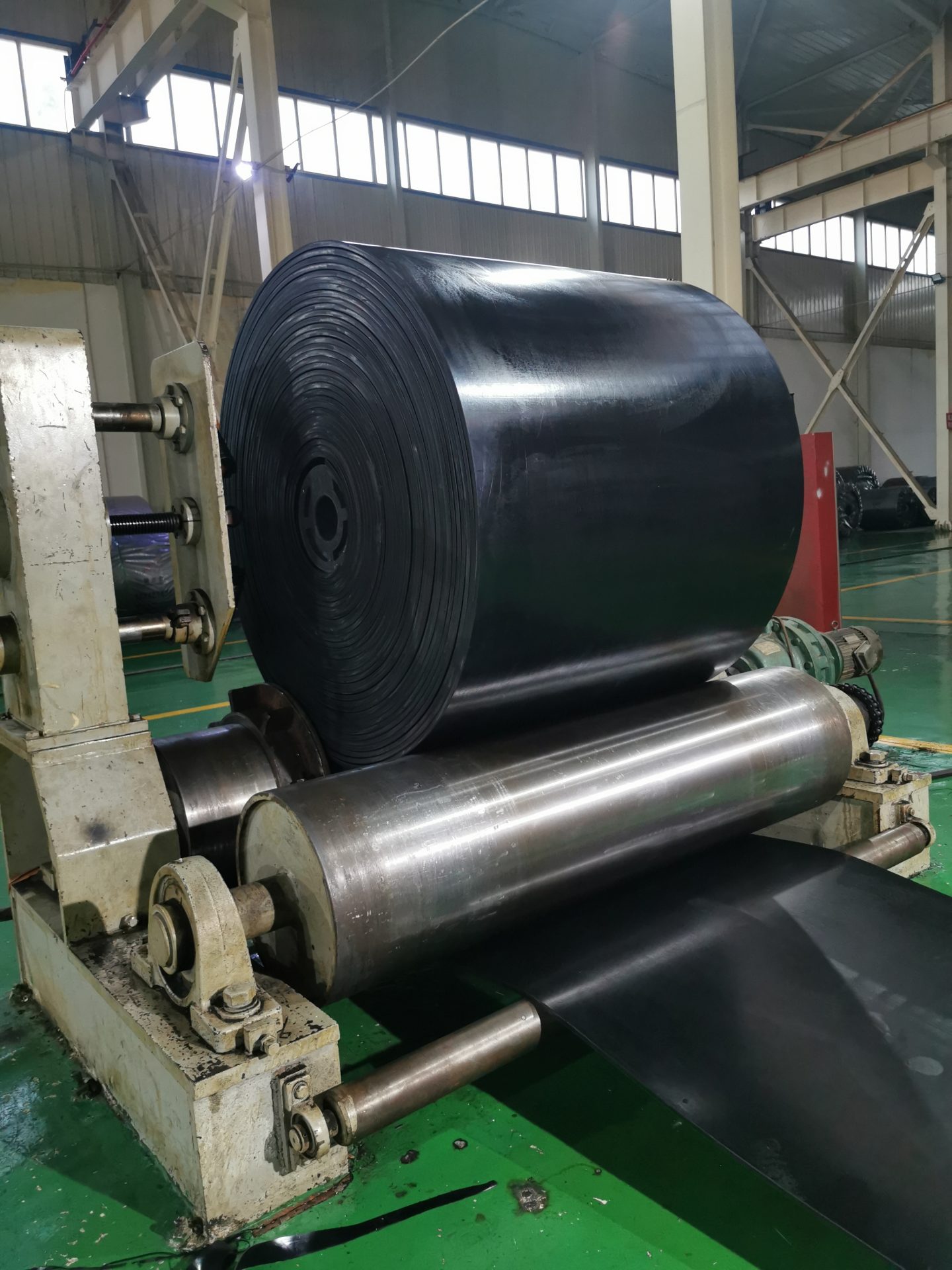
An industrial rubber conveyor belt supplier should keep reinforcement separate
Rubber covers and reinforcement answer different construction questions. GRAM describes fabric and steel-reinforced routes within its rubber belt range. The reinforcing arrangement does not establish the cover’s resistance to every material that the belt might carry.
EP identifies polyester and nylon directions, not a cover grade
GRAM EP rubber belts use polyester in the longitudinal warp and nylon in the transverse weft. Preserve that reinforcing identity when comparing proposals. An EP label does not specify every cover property, ply build or finished belt rating.
If the supplier keeps EP reinforcement while changing the cover proposal, record both parts of the revision. The buyer should be able to see what remains and what changes. A shared EP name is not a reason to accept two differently described complete constructions as the same product.
NN describes another fabric arrangement within the rubber build
GRAM NN rubber belts use nylon in both longitudinal and transverse fabric directions. That differs from the EP declaration even where the outside belt dimensions are similar. The buyer still needs the accepted covers and complete construction for the intended process.
A distributor supplying two industrial customers should not use a common roll width to collapse their reinforcing and exposure requirements into one stock description. Keep the actual accepted builds recognizable. Similar handling equipment or external appearance does not establish equivalent operating duty.

Heat and flame requirements need explicit product boundaries
Specialist requirements should identify the actual duty and proposed complete belt. The presence of separate heat and flame-related routes on a supplier’s website does not prove that one unspecified belt combines every property. Keep the required combination visible in the accepted proposal.
An HR proposal should identify the relevant hot-material duty
GRAM’s HR rubber belt route names hot-material applications including clinker, coke and sinter. Use it to describe the intended exposure. The buyer still needs the supplier’s accepted construction and applicable operating basis; a general application name does not supply a verified temperature limit for the order.
If a production line alternates between ordinary feed and hot product, provide both conditions. Do not select only the familiar cold duty in the offer request. Conversely, an HR description does not settle an unrelated oil or chemical exposure merely because the product is a specialist belt.
A flame-related offer is not an automatic site approval
The GRAM flame-retardant rubber belt route addresses a separate safety-related requirement. The actual specified test or approval basis must remain explicit for the project. A product name alone should not be presented as proof that a particular facility requirement has been met.
This matters when a buyer requests several properties in one line item. Heat, fire-related behaviour and material compatibility should not be merged into an unsupported claim that the proposed cover addresses them all. Accept the actual identified construction against the actual requirements.
Oil and chemical descriptions require the actual substance information
An external manufacturer’s oil-resistance guidance explains that different oil sources and chemicals can create different rubber compatibility questions. This is useful general background. Its proprietary compounds, test results and combined-property products are not GRAM specifications.
For the industrial buyer, the practical consequence is to provide the substance information that the supplier needs to evaluate the offered cover. Avoid accepting a broad resistance word without its intended exposure basis. If the supplier cannot establish the requested suitability, keep it unresolved or consider a clearly identified alternative.
A cleaning process deserves the same care. Describe actual belt contact where it occurs, instead of assuming that a process chemical used nearby reaches the belt. This helps the supplier assess the relevant condition and avoids expanding the purchase into an unnecessary generic resistance claim.
Keep revised feed conditions attached to the accepted belt offer
Consider a distributor supplying equal-width belts to two factories. One customer carries ordinary dry material; the other reports a process residue that reaches the carrying surface. The width may allow the rolls to share handling equipment, but it does not make the cover decisions interchangeable. Separate their accepted exposure descriptions and construction references in the supplier order. Do not use a convenient combined purchase description to remove a requirement that only one customer has.
A plant can also change the lower-surface contact without changing the carried product. If residue now reaches return supports or pulleys, describe that actual contact to the supplier and retain the lower-cover requirement in the replacement proposal. Merely repeating the unchanged feed name would omit the changed condition. Identify where the residue reaches the belt and which retained equipment is involved; avoid diagnosing the material’s effect on rubber without supporting compatibility information.
Where a combined requirement remains uncertain, ask for an offer that clearly states the accepted exposure and its limitations. A narrower, documented proposal can be evaluated honestly. A broad assertion assembled from separate EP, HR and flame-related descriptions cannot substitute for the actual complete belt being offered. Keep unanswered cover questions visible until the responsible project review has accepted them.
When the plant changes the material after the initial quotation, ask whether the selected construction remains the accepted proposal. A commercial revision that only changes quantity can overlook the altered cover duty. Preserve the revised material condition with the construction reference so the supplier and plant evaluate the same replacement.
For a distributor, the same distinction applies when an available roll is proposed instead of the originally selected belt. Identify the actual offered build and compare it with the customer’s accepted exposure and equipment requirements. Availability alone does not establish equivalence.
The order should retain the actual exposure basis, cover description, reinforcing identity and equipment relationship. Agree how the delivered identification connects to that build. Packaging and dispatch details belong to the selected roll and actual order; they should not be copied from an unrelated industrial belt offer.
Give the supplier the changed process before approving the changed belt. An accepted industrial replacement is a specific construction for identified contact conditions, not an unrestricted interpretation of the words “rubber conveyor belt.”