
Before Choosing a Conveyor Belt Manufacturer, Decide Who Owns the Installed Belt Specification

The belt arrives on time, but the installer cannot release it for fitting. The purchase order says rubber conveyor belt; the installation team needs an agreed reinforcement, cover construction and joining arrangement. For contractors and industrial buyers choosing a conveyor belt manufacturer, preventing this gap starts with one controlled installed specification. GRAM’s rubber belt range and fabric constructions provide useful starting routes. Decide first which construction the project requires and which information must accompany the supplied belt. Buying the belt does not, by itself, establish who will install or join it.
The conveyor belt manufacturer’s offer should refer to one installation revision
A proposal is difficult to approve when the buyer, installer and plant engineer are working from different descriptions. The manufacturer may be pricing a defined belt while the installer expects dimensions or joining materials from an earlier revision. Connect the offer to the actual conveyor and a dated specification before treating the commercial description as complete.
For a contractor replacing a plant belt, the plant normally holds information about the retained conveyor. The contractor may coordinate purchasing while a separate team performs the site work. Assign responsibility for confirming the construction and interfaces instead of allowing every party to assume someone else has checked them. This is a project arrangement to agree, rather than a service commitment inferred from a product range.
Keep the agreed width, length basis, reinforcement designation and cover details together. A cover change should not become an unrecorded carcass change. A roll-length adjustment should not silently change the installed endless length. The order can be concise, but the terms must refer to the same physical belt.
Separate fabric and steel-cord conveyor belt manufacturing routes
GRAM lists both textile and steel-cord reinforcement. These are construction decisions with consequences for the installation information. They are not interchangeable labels for a strong rubber belt. Select the reinforcement route before reviewing a proposal’s remaining scope.
EP fabric identifies polyester warp and nylon weft
The EP rubber belt offering describes polyester yarns along the belt and nylon yarns across it. Its construction separates the upper rubber cover, textile carcass and lower rubber cover. Those distinctions allow a buyer to identify what is being specified: the reinforcement arrangement, the material-contacting surface and the surface running over conveyor components.
A proposal saying only EP leaves further questions open. The actual reinforcement designation, ply arrangement, dimensions and cover specification still need to be stated for the order. Do not fill those gaps with an example from another installation. A textile family name explains the construction route; it does not establish the acceptable tension or pulley requirements of the offered belt.
NN reinforcement is a different fabric proposal
GRAM’s NN rubber belting uses nylon in both longitudinal and transverse fabric directions. An installer receiving an NN proposal should therefore see that construction identified directly, even when the previous purchase used EP. Matching the belt width alone does not make the two proposals equivalent.
Where the conveyor and its adjustment equipment remain, a construction substitution requires engineering review against those retained interfaces. Obtain the proposed belt’s actual construction information and define who accepts the change. Avoid an instruction such as equivalent nylon belt when the buyer means a specific reinforcement arrangement.
Steel-cord belting requires its own joining information
The steel-cord route identifies longitudinal steel reinforcement within the belt. For an order using this construction, the installation team needs information applicable to that proposed belt and its joint. A textile joining assumption cannot simply follow the purchase into a steel-cord replacement.

The purchasing decision here concerns document ownership. Identify who provides the applicable joining information, who reviews it and who supplies any separately ordered joining materials. Do not interpret a belt product description as confirmation that a site crew, tools or joint materials are included.
Upper and lower belt covers belong in the approved supply description
Both faces of a rubber belt matter, although they have different contacts. The upper face meets the carried material; the lower face interacts with the conveyor. Martin Engineering’s cover explanation provides background on this distinction. It does not provide a GRAM cover grade or an acceptance result for a proposed belt.
For a distributor supplying a replacement through a contractor, keeping the cover descriptions attached to the order prevents an apparently simple substitution from becoming a site dispute. If the customer requests a different material-contacting cover, preserve the original lower-cover requirement unless the responsible engineer approves a revision. The two surfaces should not disappear into one total-thickness description.
Use the GRAM rubber and fabric routes to discuss reinforcement and cover combinations, then obtain the proposed construction in writing. If a special exposure is involved, define it separately. A standard rubber description is not sufficient evidence of oil, heat, chemical or fire suitability.
Define whether the belt shipment is a roll or an installed-length supply
The delivered object must be clear before packing and delivery are planned. A belt roll and an endless belt are different objects for an installer to receive. State the supplied form, length basis and any agreed allowance in the order rather than assuming a roll photograph explains the delivery arrangement.
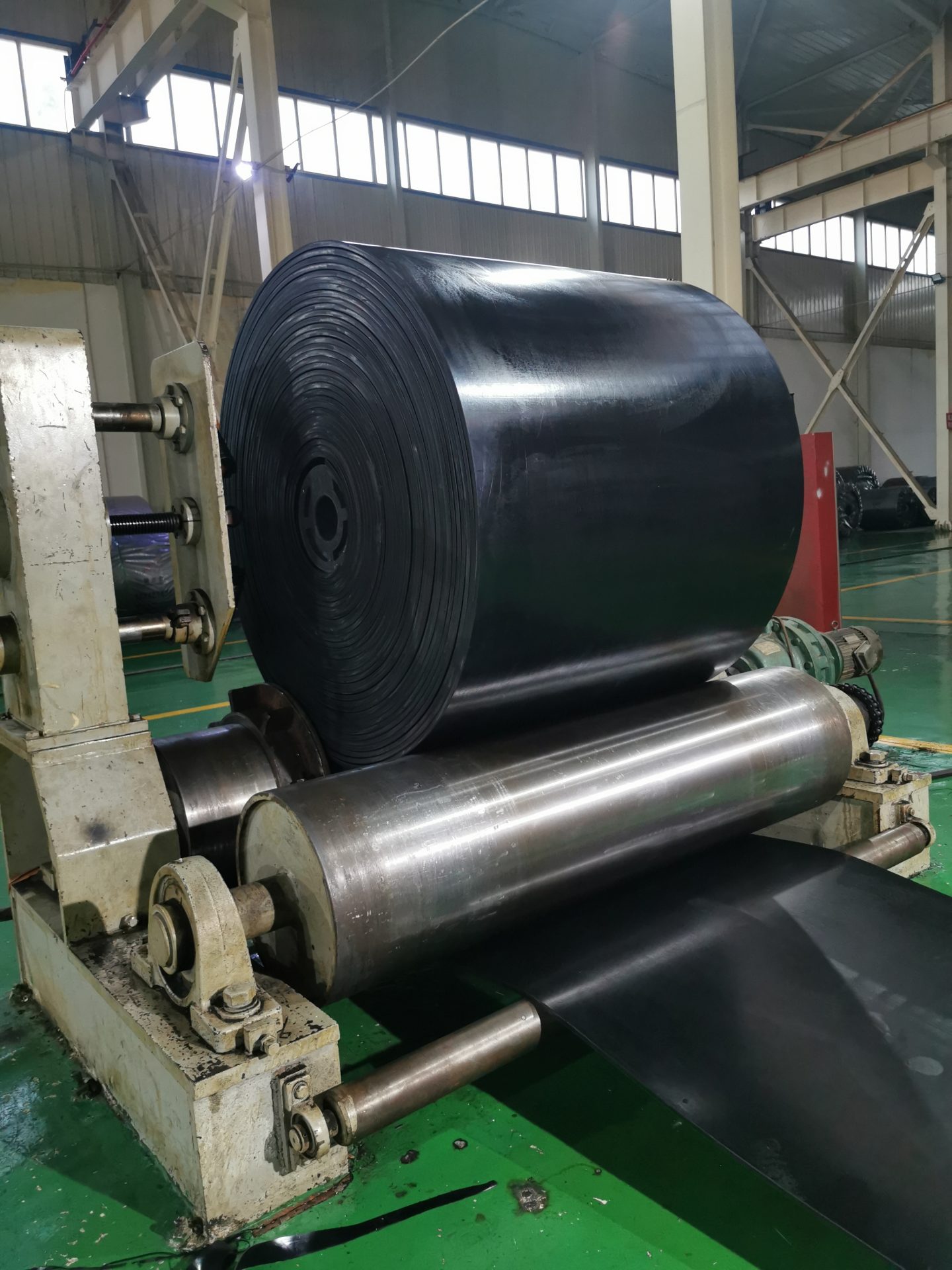
For a roll order, the installer must know how that length relates to the intended joint and final installed belt. For an agreed endless supply, confirm the finished length definition and how the site will fit the belt. These are different project decisions; neither should be inferred from the term manufacturer.
Packaging instructions should then protect the identified belt object. Ask for the roll or finished belt to remain traceable to its construction record, and agree handling information applicable to its actual mass and form. Do not invent lifting points or a roll orientation from an illustration. Delivery timing should include the information the installer needs to release the belt, not just the arrival of the physical goods.
A split belt delivery needs separately identified installation lengths
Where a project plans to receive more than one roll, define how each supplied length belongs to the installation. A total quantity on the purchase order may be commercially sufficient but leave the installer uncertain about the intended divisions. The construction record should remain attached to each identified length, particularly if the project includes both textile and steel-cord belts.
Ask the installer to confirm the proposed division before the supplier commits the supply arrangement. If a change introduces an additional joint or alters the installation sequence, have that consequence assessed explicitly. Do not approve a split merely because the total ordered length remains unchanged. The manufacturer’s proposal should identify what is supplied; the installer should confirm that its planned work matches that object.
For a fabric order with a revised upper cover but retained EP carcass, keep those two details together on the length allocation. For a separately ordered steel-cord belt, keep its own construction and joining information apart. Receiving multiple rolls together should not turn separate approved constructions into one anonymous rubber-belt quantity. Agree this identification as an order requirement rather than assume any particular standard package or stock arrangement.
The retained conveyor still controls belt acceptance
A complete supply description does not prove mechanical compatibility with the retained machine. Pulley arrangements, support geometry and adjustment limits remain installation constraints. The retained-pulley discussion examines that separate fabric-belt decision. Use it where the proposed construction must work with existing conveyor components.
Before awarding the belt order, put the offer, construction revision and installer requirements beside one another. Release the purchase when they describe the same belt and the unpriced site work has an owner. If one party expects a finished joint while another is supplying only a roll, settle that difference while the order can still be changed.
Last Updated on October 2, 2026 by gramconveyor_admin


