
A Belt Conveyor Return Rollers Supplier Needs to Know What Comes Back After Discharge
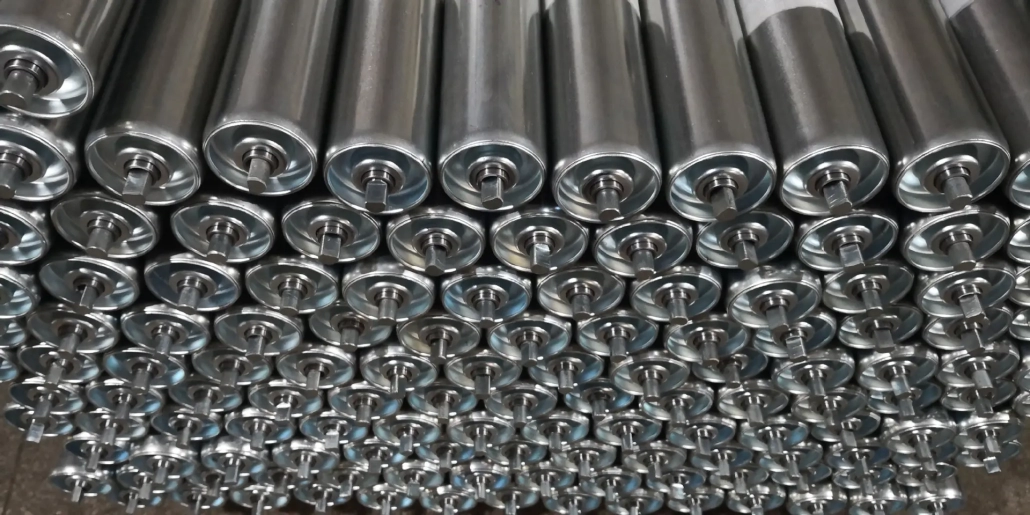
An empty belt is not always a clean belt. Material left after discharge can reach the return route, while the roller itself supports a belt with a particular construction and weight. Tell the belt conveyor return rollers supplier what comes back before ordering a replacement. Start with GRAM’s roller range, then review the steel or polymer assembly against the actual return contact, support arrangement and contamination. A carrying-roller description is not a complete return-side requirement for maintenance or engineering buyers.
A belt conveyor return rollers supplier needs the post-discharge condition
Describe the belt after its intended material discharge. State whether it returns with little visible residue, adhering fine material or another condition observed by the plant. Keep the normal condition separate from a recent upset, because an equipment replacement should not disguise an unresolved change elsewhere in the process.
The roller contacts a particular belt face on the installed return route
Establish which surface contacts the proposed return roller in the actual arrangement. The carried material contacts the belt’s upper cover during transport, but the return geometry must be identified rather than assumed from a loose roller. Drawings or a properly obtained site record should show the roller position and the contact surface.
Identify the actual return-contact face before comparing roller bodies. The contact condition can include belt rubber, adhering material or an altered surface profile; a generic “empty return” description leaves those differences hidden.
For a wet-material conveyor depositing residue after discharge, trace where that residue meets the return support. The buyer needs to know whether the condition affects the proposed roller’s working surface, surrounding components or both. An unexplained dirty roller photograph can help locate the issue, but it does not identify the material or prove the source.
Adhering residue is different from a clean belt’s support weight
The return roller supports the belt even when no intended load is being carried. Describe the belt construction and the return station arrangement separately from the residue. If the plant changes the belt to a different reinforcement or cover build, the return-support assessment should not remain tied to the earlier construction by default.
An operator replacing a belt may focus on the loaded carrying run while retaining the return rollers. Provide the new belt information to the responsible reviewer. The fact that the old return station remains physically in place does not establish that its previous duty assumptions still describe the belt that will be installed.
Plain steel return rollers need an honest description of the working surface
GRAM’s steel roller images show cylindrical bodies with bearing ends and projecting shaft interfaces. For a plain steel proposal, identify the actual working diameter and the installed support arrangement. Do not infer a cleaning action, coating or rubber-ring pattern from a general steel roller offer.
Deposits can obscure the intended roller profile
A deposit on the roller body can make its observed contact profile different from the underlying component. Describe that condition separately from the original dimensions. A measurement across deposited material is not necessarily the nominal roller diameter the supplier should manufacture.
The maintenance team should investigate the condition using the site’s equipment instructions and isolation procedures. Purchasing can then distinguish the replacement component from any cleaning or process action. Ordering an apparently larger body without resolving what was measured can introduce a new geometry error rather than address residue.
Where the original drawing is available, use it to establish the intended assembly and record the current condition separately. If the original construction cannot be established, keep the uncertain dimension visible for review. The supplier should not be asked to reproduce a residue-covered contact surface as though it were an intentional roller design.
A polymer return proposal does not replace the carryback decision
GRAM’s polymer construction describes a body with precision bearings, non-contact rubber sealing and metal end caps. Compare those elements with the environment and the complete return duty. Changing the body material is a component decision; it does not establish that material remaining on the belt will disappear.

Sealing details should be tied to the contamination at the bearing end
The working surface and the bearing region can encounter different conditions. Tell the supplier where water, fine material or other contamination appears at the actual station. A non-contact sealing description identifies a construction feature, but it is not a universal ingress guarantee for every return-side exposure.
For a conveyor whose material remains mostly on the centre of the belt, do not assume that the roller’s ends experience the same contamination pattern. The inquiry should describe the region affected. That allows the supplier to address the complete assembly without turning a broad waterproof claim into an unqualified promise.
Similarly, a polymer alternative needs its own shaft and bearing acceptance. A body that looks similar to a steel roller should not be considered interchangeable until the installed geometry and duty are reviewed. The comparison belongs to complete offered components, not only to two material names.
Cleaning belongs at its actual discharge contact, not inside the roller label
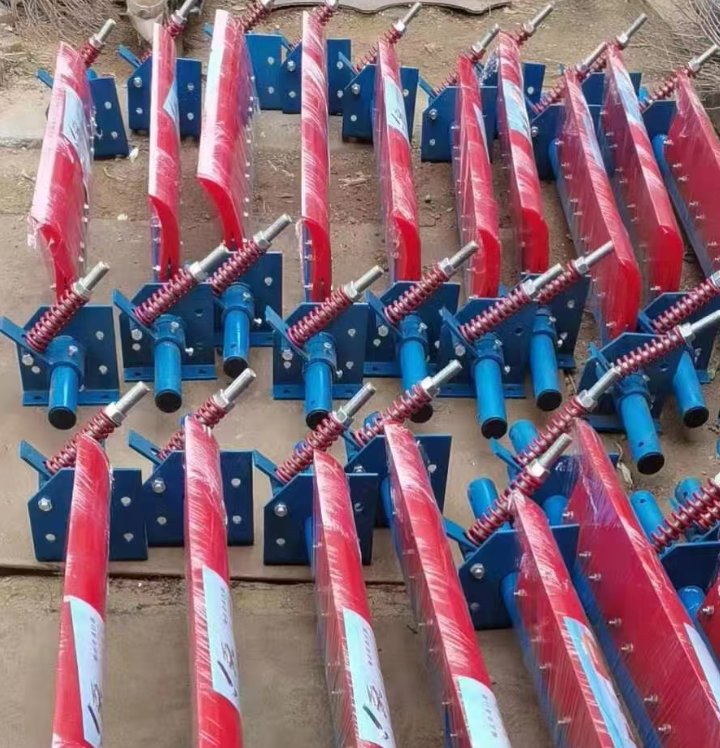
GRAM’s polyurethane cleaning route uses blade and support assemblies. Existing photographs show blades carried on transverse shafts with brackets and adjustment components. If return residue motivates the replacement, consider whether the cleaning arrangement also needs assessment; keep that scope separate from the return-roller order.
The cleaner proposal needs the remaining material and installation space
Identify the adhering material, the belt construction and the space available for the proposed assembly. A supplier needs to know where the cleaner would act and how it would be mounted. A blade photograph alone does not define a complete installation or demonstrate effective removal of the particular residue.
Do not compensate for an unidentified residue problem through an improvised pressure change. The site should use the applicable equipment instructions and a qualified assessment. Purchasing should request the complete offered assembly and the information needed to judge its suitability, while keeping any performance acceptance tied to defined conditions.
If the cleaning proposal changes, review the expected return condition with the roller supplier. A roller accepted on the assumption of a particular discharge arrangement should not be treated as having been assessed for a different arrangement without clarification. Neither supplier should be left responsible for an operating condition the inquiry omitted.
Return tracking and return cleaning are separate purchasing questions
A belt that moves laterally on the return route requires investigation of its cause and contact arrangement. GRAM’s self-aligning support route is a separate assembly choice. A proposal for that support should not be used to avoid establishing whether deposits, retained geometry or another condition contributes to the problem.
Industry suppliers separate roller, frame and cleaner resources; Rulmeca’s documentation centre illustrates these different component scopes. It does not provide a rating or a correction guarantee for GRAM’s return support. The project needs an assessment of its own arrangement and the actual proposed assembly.
If a self-aligning arrangement is considered, identify its movement envelope and retained structure. If a cleaner is considered, identify its contact and mounting space. The two decisions can belong to the same maintenance project, but they should not be collapsed into a purchase line claiming that a particular roller will both clean and correct every return condition.
A recurring deposit pattern needs a return-route location
Identify where deposits begin and whether the same pattern continues at later return stations. A local condition immediately after discharge can lead to a different investigation from material appearing farther along the route. Give the supplier the proposed roller location and the observed condition there, rather than present the worst photograph from elsewhere as its assumed duty.
If the plant has changed the carried material or discharge arrangement, relate the timing of that change to the return observations. This does not prove a cause, but it helps the responsible maintenance team decide what to investigate. Purchasing should avoid a definite diagnosis when the evidence establishes only a location and a change in condition.
The component proposal should answer the condition the plant expects after any separate corrective work. If the cleaner assessment is still unresolved, identify that uncertainty instead of give the roller supplier an unexplained clean-belt assumption. Where the site needs acceptance for the existing residue condition, describe it explicitly and obtain the appropriate assembly review.
Receive the return assemblies against their intended installation positions
A supply containing carrying and return rollers should identify those positions clearly. Similar visible bodies do not prove identical face length, shaft arrangement or accepted duty. Keep the return components connected to the relevant drawing rather than put every roller of a similar diameter into one installation group.
Handling protection should address the actual projecting shafts, bearing ends and working surfaces supplied. Preserve identification through unpacking so the receiving team can match the complete assembly to the intended station. If a shaft interface is visibly damaged, follow the agreed disposition before installation instead of assuming that the body’s sound appearance makes the roller acceptable.
The existing flat return roller discussion provides product background. The purchase decision here is narrower: what this belt brings back, how that condition meets the roller and which separate cleaning or support work is required.
Approve the return roller when the belt construction, actual contact and station duty are understood. Where residue continues, define who is addressing the discharge and cleaning condition alongside the component order. An empty-belt description is useful only when it also explains what remains on the belt after the material has left.
Last Updated on October 3, 2026 by gramconveyor_admin


