
Moving Between Mine Environments: Questions for a Mining Conveyor Belt Supplier

The belt worked on an exposed surface conveyor, so the purchasing team wants to use the same construction on a new underground line. That is a new application decision, even if the ordered width stays the same. A mining conveyor belt supplier needs the destination, operating exposure and acceptance requirements before approving the change. GRAM’s mining conveyor belt range is the starting point; its separate reinforcement and cover families help organize the proposal, but a mining label does not approve every mine environment.
For an engineering contractor or mine procurement team, the first task is to distinguish what the new site changes from what the retained conveyor keeps. Fire-risk acceptance, material contact, moisture exposure and equipment compatibility are separate questions. A belt that answers one of them still needs evidence for the others.
A Mining Conveyor Belt Supplier Should Compare the Two Operating Environments Explicitly
Describe the existing and proposed installations separately. “Mining service” is too broad to reveal whether the belt will operate outdoors, beneath a cover, through a tunnel or in an underground working. Identify the conveyed material and how it reaches the belt, as well as the surrounding conditions and the site’s technical acceptance process.
Outdoor Rain and Wet Material Are Different Exposure Paths
On a surface handling conveyor, water can arrive with the material or from the weather. Those paths may affect different parts of the belt and its supporting equipment. Tell the supplier whether wet material sits on the carrying cover, rain reaches both faces or a covered section limits direct exposure. Do not reduce every condition to a single “waterproof belt” request.
A mine buyer comparing two surface routes should also identify changes in material condition. A belt transporting relatively dry screened material does not automatically have the same duty as one receiving wet fines from another process. The material’s contact with the covers, its tendency to remain on the belt and the retained cleaning arrangement belong in the proposed application description.
GRAM’s rubber conveyor belts provide the broader cover-and-reinforcement route. Ask for the actual offered construction against the identified exposure. Do not infer every compound’s suitability from the fact that its surface is rubber, or from a photograph showing another belt in an outdoor installation.
An Underground Destination Adds Its Own Acceptance Boundary
The underground project’s responsible technical team should specify what evidence is needed for the proposed belt in that location. Obtain those requirements before comparing commercial offers. A general product description, an existing surface installation or a fire-related marketing term is not a substitute for application-specific acceptance.
GRAM lists an FR rubber belt family. That is a route to discuss a fire-related cover requirement, not a declaration that every FR construction has a particular underground approval. The order must identify the offered belt and the evidence the destination requires before the buyer treats the proposal as suitable.
For an example of why the destination matters, the MSHA Approval and Certification Center describes approval work for specified underground mining products in the United States. Its role does not establish a common worldwide requirement or prove approval of a GRAM belt. Use the applicable authority and project requirements for the actual destination.
Keep Mining Belt Reinforcement Separate from Cover and Site Acceptance
A reinforcement name explains part of the load-bearing construction. It does not settle all material, environmental or application acceptance questions. When the project moves between mine environments, retain those separate decisions in the offer rather than allowing one impressive construction description to answer everything.
Steel-cord Reinforcement Does Not Identify a Fire-approved Cover
GRAM’s steel-cord conveyor belt route uses steel reinforcement along the belt. The longitudinal construction, its joining requirements and compatibility with the machine need to be agreed as part of the proposed replacement. They remain distinct from the rubber cover’s performance and the site’s acceptance evidence.
If an engineering team prefers steel cord for a particular conveyor duty, that choice should appear as a reinforcement decision with its own supporting proposal. It should not silently turn into an assumption about fire behaviour, moisture exposure or local approval. Ask whether the complete offered belt satisfies each requirement, not whether steel itself sounds appropriate for mining.

EP Fabric Needs a Complete Construction for the New Conveyor Duty
The EP belt family combines polyester in the longitudinal fabric direction with nylon across the belt. GRAM describes an upper rubber cover, the fabric carcass and a lower rubber cover. That gives the buyer a construction route, but the family name does not establish every ply arrangement, cover compound or permissible operating condition.
A contractor retaining the conveyor’s pulleys should obtain the actual offered textile construction rather than copying the EP abbreviation from an old purchase order. Changes in the carcass, covers or joining method can require a fresh compatibility review. The mine environment and the retained machine both need to be addressed in the same approved offer.
For a purchasing group trying to standardize several mine belts, a common fabric family can simplify the conversation without proving interchangeability. Two constructions may share EP reinforcement while serving different material exposures or installations. Preserve the construction identity and accepted destination instead of treating the family name as a fleet-wide spare approval.
Separate the proposed cover on each face when the mine duty changes. The carrying face meets the feed, while the lower face follows the conveyor’s retained contacts. A wetter material stream and a different return arrangement are not necessarily addressed by the same modification. Ask for the complete two-face construction in the offered belt record, so a change justified for the material is not assumed to resolve every lower-surface contact.
The joining arrangement also travels with the reinforcement choice. If a relocated conveyor will be joined under different site arrangements, confirm the approved method and the documents required by that joining team. An old construction name without its joint information leaves a gap between the purchased roll and the usable installation. Do not substitute an informal sample demonstration for the actual proposed belt’s joining requirements.
Relocating a Mine Conveyor Can Preserve the Machine While Changing the Duty
A moved conveyor creates two different information sets: the equipment being retained and the application it will enter. Document both. The belt proposal needs the retained geometry and operating duty, while the new site’s exposure and acceptance conditions determine what else must be confirmed.
Retained machine: identify its pulley arrangement, belt-support configuration, tensioning system, installation length and joining provisions from the actual equipment record.
Changed destination: identify the new material condition, surrounding exposure, cleaning duty and project-specific acceptance evidence before approving the belt construction.
These are information categories, not a universal design calculation. A move can also involve altered conveyor length, support positions or operating settings. Name those changes explicitly. If the project modifies them, the proposal should not continue describing the conveyor as unchanged just because its main frame was reused.
Imagine a contractor moving a surface handling line beneath a new enclosure. Direct rainfall may change, but wet feed material may remain. Access for inspection and cleaning can also differ. The belt selection should follow the actual exposures and contacts, rather than assume that enclosure alone makes the old construction suitable for the new duty.
In another project, the conveyor moves underground while much of its mechanical equipment remains. Retained pulleys do not remove the new destination’s acceptance requirement. Conversely, a proposal addressing the destination’s fire-related evidence does not automatically establish compatibility with those pulleys. Both approvals need to refer to the same complete offered belt.
Temporary storage between delivery and relocation should remain part of the project plan. Tell the handling team which roll belongs to which accepted destination, what construction it contains and which documents must accompany it. If protective wrapping is opened for an agreed inspection, retain that identity and restore protection in line with the supplied instructions. The fact that a roll will later enter an enclosed mine installation does not describe how it may be stored outside beforehand.
For a relocated line with changes to cleaning equipment, define which belt face the proposed cleaner will contact and what surface it expects. A change in covers or profile can affect that interface independently of the mine’s acceptance decision. The supplier’s belt proposal and the cleaning proposal should use the same construction description rather than assume that all accepted mine belts present an identical working surface.
Compare Supplier Documents Against the Destination Named in the Order
The offer should state the intended application clearly enough that the receiving and engineering teams know what has been assessed. A broad reference to mine use can conceal a critical difference between the buyer’s request and the supplier’s proposal. Resolve that difference before treating the commercial line as technically agreed.
A Fire-related Description Must Remain Tied to the Offered Belt
If fire-related evidence is required, identify the proposed construction and ask how the supplied documents relate to it. Do not accept a document for another belt family merely because both are described as FR. The responsible project reviewer should evaluate the actual evidence against the actual destination requirements.
Where an offered alternative changes the cover, reinforcement or another relevant construction detail, ask whether the acceptance evidence still covers that alternative. A familiar supplier name does not settle this boundary. Keep a change unapproved until the responsible reviewer has resolved its consequence for the project.
The existing underground flame-retardant belt discussion gives further context for a fire-risk conversation. It should accompany, rather than replace, the destination’s requirements and the documentation for the belt actually being offered.
Receiving Labels Should Distinguish Surface and Underground Project Allocations
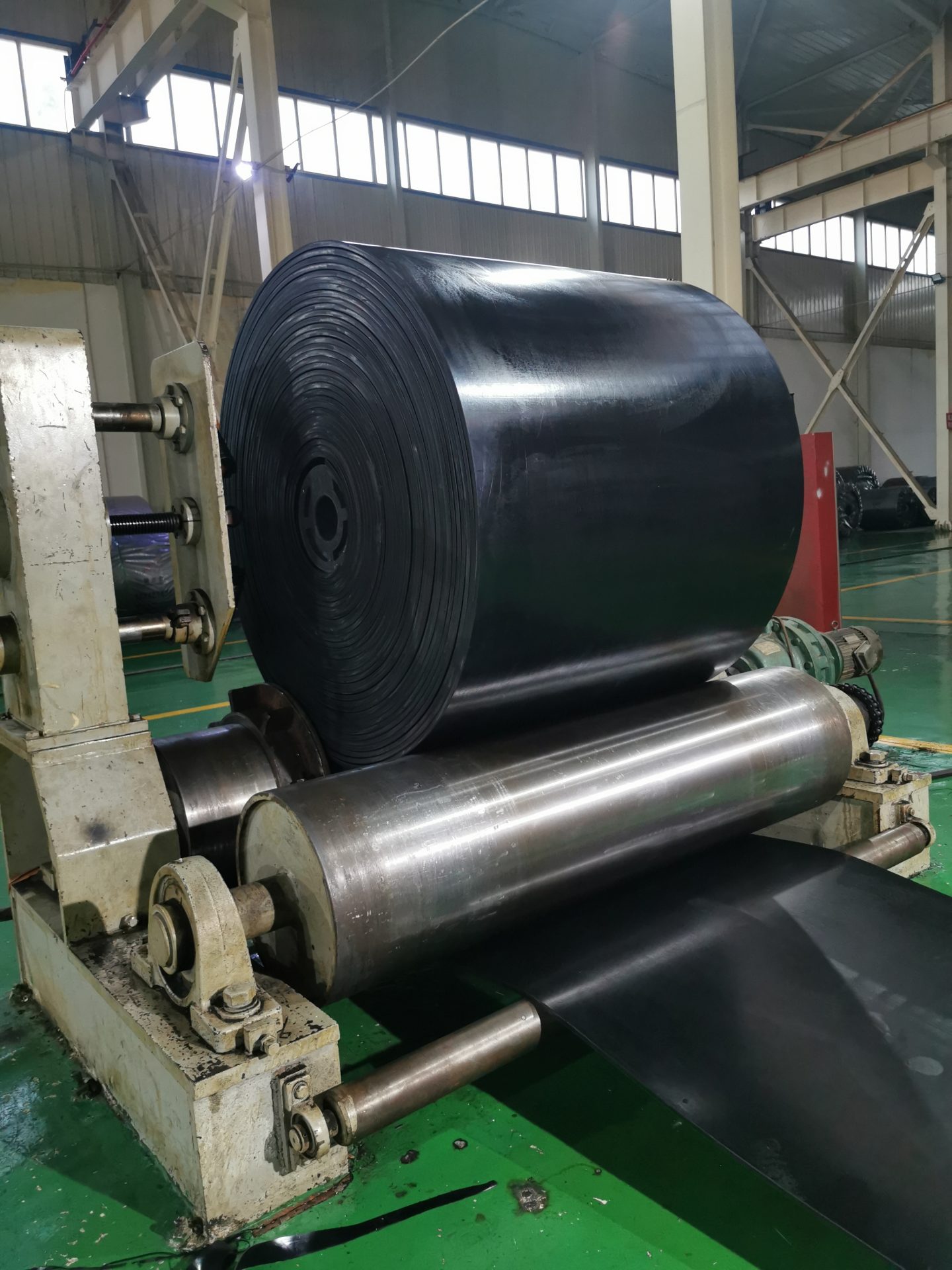
If one consignment contains belts for several mine installations, identify the construction and destination of each roll in the agreed supply documents. The rolls can look alike while belonging to different accepted duties. A transport label should let the receiver retrieve that technical record without guessing from width or wrapping.
Plan storage and movement from each roll’s real handling instructions and mass. An underground destination may involve a different transport route from the delivery yard to the installation, but this article does not presume that GRAM supplies a particular underground transport package. Agree the roll’s dimensions, handling boundary and protection requirements with the parties responsible for that route.
Keep installation and joining responsibilities visible as well. Supplying the belt does not, by itself, establish who performs the joining operation or confirms the retained equipment. The order should distinguish the supplied construction, required technical documents and any separately agreed site work so that an unfamiliar destination does not expose a missing responsibility at installation.
If an offered roll was originally identified for a surface project, do not erase that allocation simply because another project has an urgent demand. Record the proposed reassignment and obtain the new application’s review. This protects both purchases: the original project does not lose an approved spare without a recorded decision, and the underground project does not receive a belt supported only by the surface order’s paperwork.
A mine purchasing group can standardize its request format before standardizing its belt construction. Use the same way of describing destination, exposure, retained equipment and evidence across projects, then allow the approved belt to differ where the duty differs. Release a common construction only when the technical review supports both installations; if it supports only one, keep the other mine order separate.
Last Updated on October 2, 2026 by gramconveyor_admin


