
A Flame Retardant Conveyor Belt Supplier Should Connect the Test Report to the Belt You Order

A fire-test report may look complete while referring to a belt different from the one in the quotation. That matters when reinforcement, covers or the commercial designation change during purchasing. For a mine operator or contractor selecting a flame retardant conveyor belt supplier, the first decision is whether the evidence can be connected to the proposed finished construction and the destination’s acceptance requirement. GRAM offers FR rubber belting and a mining belt route. Use them to start the construction discussion; an FR label alone does not establish a passed test or approval for your site.
Connect the flame retardant conveyor belt supplier’s report to the offer
A useful evidence review begins with identity. The report needs to be understandable in relation to the belt being offered, rather than simply mention fire resistance. Ask for the connection between the tested sample description, the offered construction and the proposed order reference.
- Tested object: what belt or sample is identified in the report?
- Offered object: which finished construction is the supplier proposing?
- Ordered object: how will the delivered belt remain identifiable against that accepted proposal?
For a contractor receiving documents through a distributor, the names may differ across the quotation and laboratory paperwork. A different name is not automatically evidence of a different belt, but the relationship must be explained. Likewise, the same trade name does not prove that every construction sold under it is represented by one report.
A fire-test sample description should identify the relevant construction
Review the sample description before relying on the result. Check which construction details it identifies and which remain unclear. If the order requires a textile carcass but the document identifies another reinforcement, ask for applicable evidence or a technically justified connection that the responsible reviewer can assess.
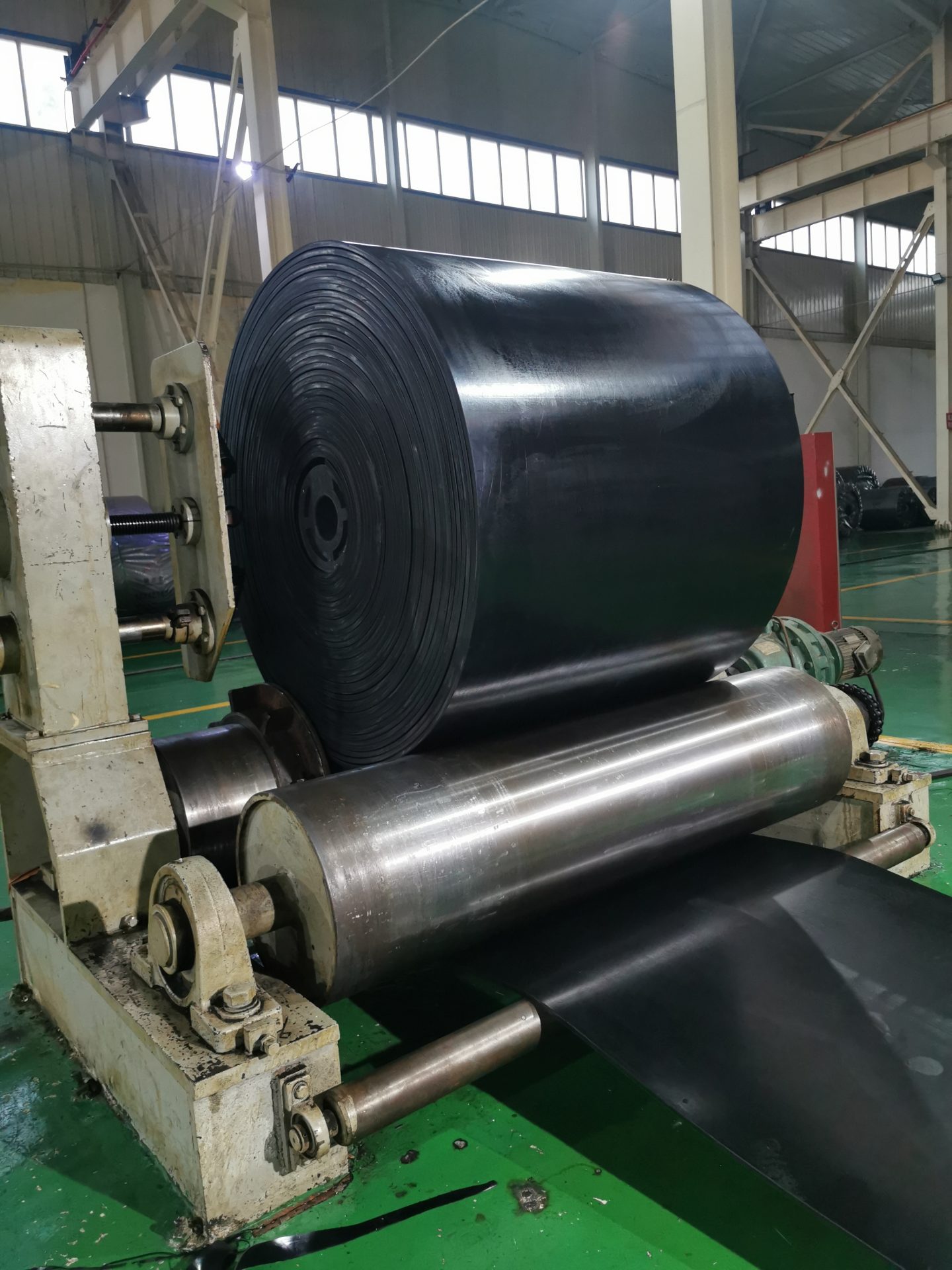
GRAM’s fabric belt offering describes layered construction with upper cover, textile carcass and lower cover. Those separate parts help the buyer ask precise identity questions. Do not assume that changing one layer leaves the applicability of a document unchanged.
Read the fire-test scope before accepting a flame-retardant belt
The named method tells the reviewer what was assessed. Its scope should be read alongside the report result and the site’s requirement. A laboratory assessment and permission to operate a particular conveyor are separate decisions.
The public description of ISO 340:2022 concerns a small-scale assessment of belt response to an ignition flame and covers textile and steel-cord belts. This describes the method’s scope; it is not evidence that a GRAM product has passed it. It also does not, by itself, establish approval for a particular mine or conveyor installation.
The named fire method must answer the site’s requirement
If the site specifies a particular test or acceptance document, identify that requirement before comparing supplier submissions. A buyer should not replace it with a familiar standard name merely because the quotation includes one. Ask the responsible site reviewer to decide whether the submitted method and result answer the actual requirement.
Keep other required properties separate. If the project also calls for electrical, temperature or other performance evidence, a flame-response report is not a substitute for those documents. Do not read an unstated property into the FR description, and do not assume that a broad mining application statement closes a destination-specific acceptance question.
A reinforcement change can reopen the FR belt evidence review
Construction substitutions during tendering are a common point at which document identity becomes unclear. The buyer may accept an apparently equivalent reinforcement to solve a mechanical requirement while continuing to attach the original fire paperwork. Treat the revised belt as a revised proposal until the evidence relationship is resolved.
EP yarn directions belong in the textile-belt proposal
GRAM’s EP rubber belt route describes polyester along the belt and nylon across it. An EP designation therefore identifies a textile arrangement, not a fire classification. When that arrangement is proposed with an FR cover, the finished construction and its supporting evidence must still be connected.
For a mine buyer adjusting a textile order after the mechanical review, retain the earlier accepted document and record exactly what changed. Ask whether the revised offered construction is represented by the available evidence. Where the answer is uncertain, do not let a mechanical approval silently become a fire acceptance.
Steel-cord reinforcement is not a fire certificate
The steel-cord construction uses longitudinal steel reinforcement. Its structural description does not establish the flame behavior of the surrounding rubber or the finished belt. Obtain evidence applicable to the proposed construction rather than carry a textile assumption into a steel-cord offer.

Joining arrangements also deserve separate review where the site’s acceptance includes them. Ask the responsible engineer what information is needed for the installed joint and whether the proposal supplies it. Do not assume that a belt sample report represents every joining material or field method that might be used.
A report excerpt may leave the tested FR construction unclear
A short certificate page or cropped report can omit the sample description and limitations needed for a purchasing decision. Request the relevant complete document or an explanation of the missing identity information. A buyer should not infer that absent details have already been checked by the laboratory or another project participant.
For a fabric FR proposal, connect the described carcass and cover arrangement to the evidence submitted. For a steel-cord proposal, preserve that construction’s identity separately. If the supplier explains that one report covers a range of constructions, ask for the basis and the range to be identified for the responsible site reviewer. Do not independently expand the coverage of a report beyond what its applicable evidence supports.
An older report is not automatically unacceptable solely because of its date. The purchaser still needs to know whether it concerns the current offered construction and satisfies the site’s document requirements. Equally, a recent report on another sample does not solve the identity mismatch. Date, sample identity and applicability are distinct review questions; none should be allowed to stand in for the others.
An unresolved FR document link needs a written order decision
If applicable evidence is unavailable, decide with the responsible project reviewer whether to hold the purchase, obtain additional assessment or consider another documented construction. Record the missing connection directly. Avoid marking the belt accepted while leaving a note that someone will check the report after delivery. That moves an unresolved purchasing condition into the installation window, when changing the supplied object can be much harder.
Keep report identity intact through the delivered belt order
An evidence review has limited value if the delivered object cannot be related to the accepted proposal. Agree the order reference, construction description and identifying records before shipment. At receipt, compare those records with the actual supplied belt and resolve an unexplained substitution before release for installation.
If multiple constructions arrive together, keep their documents separately associated with their rolls. A shared shipment description such as FR belts is too broad when the orders differ in reinforcement or covers. Agree identification that survives receipt and movement to the intended conveyor. This is a traceability condition for the order, not a claim about GRAM’s standard labeling or packaging.
The mine-environment comparison addresses the separate question of a changed destination or operating exposure. Revisit it when an otherwise familiar belt is proposed for a new mine environment. Here, the narrower question remains whether the offered belt, evidence and order identify the same construction.
Leave a clear hold point when the sample identity or acceptance scope is unresolved. A supplier can clarify the document relationship, propose applicable evidence or revise the offer. Approving the belt because the report has a laboratory heading would leave the actual construction question unanswered.
Last Updated on October 2, 2026 by gramconveyor_admin


