
A Gravity Conveyor Rollers Supplier Should Start with the Smallest Carton Base
The smallest carton base can decide whether a gravity transfer works reliably, even when the heaviest carton receives most of the purchasing attention. A warehouse or workshop selecting a gravity conveyor rollers supplier should define the load base, support arrangement and stopping conditions before choosing a roller material. GRAM’s heavy-duty roller conveyor range describes gravity conveying as movement on a decline rather than through a powered drive. Begin with that equipment route and the actual products being handled.
The first decision is whether an unpowered transfer is suitable for the process at all. A roller can provide support and free rotation, but it does not establish the conveyor’s speed control, stopping arrangement or safe operating method. Those belong to the equipment design. Provide the supplier with the mounting dimensions and load conditions after that boundary is clear.
A gravity conveyor rollers supplier needs the load base, not only its weight
A long rigid crate and a short flexible carton can present different support problems at the same mass. The roller layout must support the product where its base actually contacts the conveyor. Describe the smallest base, any uneven areas and whether the load changes shape during handling. The nominal carton dimensions may not describe its effective contact region.
Small carton bases need continuous support through the transfer
A warehouse handling mixed small cartons should identify the most difficult base to move through the roller section. It may be a short carton, a sagging base or an item with feet that contact only part of the roller width. Have the conveyor designer evaluate the support arrangement using that actual load. Do not select spacing from an unrelated product photograph.
The replacement roller’s diameter and working length must belong to that support layout. GRAM’s steel roller listings include a 1.5-inch diameter roller and a 10-inch-long roller description. These are real listed dimensions, but they do not prescribe the correct spacing or mounting span for every carton conveyor. Use the actual frame drawing and offered assembly dimensions.
Uneven crate bases can concentrate the roller contact
A workshop moving crates may have a substantial load supported through a limited number of contact areas. Tell the supplier where the crate meets the rollers, not merely its total mass. The appropriate assembly must be assessed against that contact and movement condition. A broad heavy-duty description is not a substitute for a defined roller duty.
If the crates have protrusions or damaged base members, determine whether they are acceptable for the conveyor before ordering replacements. A roller material change cannot establish that an unsuitable or unstable load base will travel safely. The conveyor owner should address the product condition as part of the handling arrangement.
Gravity conveyor roller selection must include the stopping point
Gravity movement needs a controlled route and a defined destination. Identify where the load enters, where an operator receives it and what prevents an uncontrolled movement beyond the intended section. Do not assume an unpowered conveyor is inherently self-limiting. The roller purchase should follow an approved equipment arrangement rather than attempt to establish one through a material choice.
Running resistance should be evaluated with the intended load
A roller that turns easily by hand may behave differently beneath a loaded carton or crate. The offered bearing and assembly construction should therefore be considered against the actual load, not judged only while unloaded. Ask how the complete roller is specified for the intended service, and obtain the relevant product information rather than assigning a universal starting-force value.
When the customer already has a functioning gravity section, compare the replacement against its approved dimensions and load arrangement. If the replacement changes the running behavior substantially, the conveyor owner should review that effect before returning the section to use. Do not alter the slope to compensate without the equipment designer’s approval.
Compare GRAM steel, nylon and quiet roller routes for unit loads
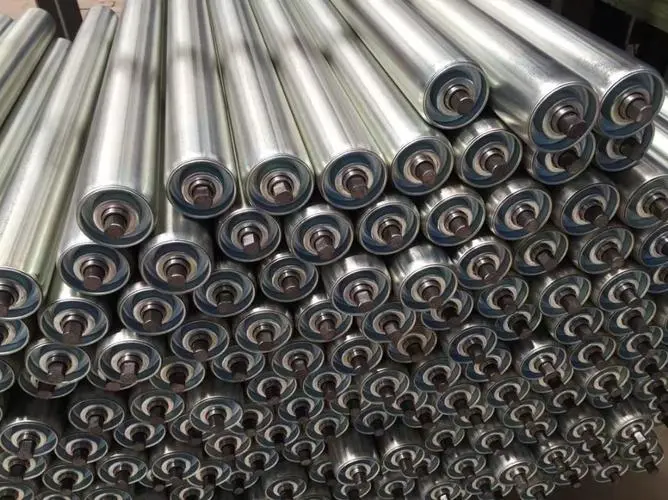
Steel is a relevant body route where the approved load and assembly construction call for it. The steel range describes bearing ends and shaft interfaces as well as material choices. The exact mounting arrangement matters as much as the tube material when a customer needs a replacement that fits existing side frames.
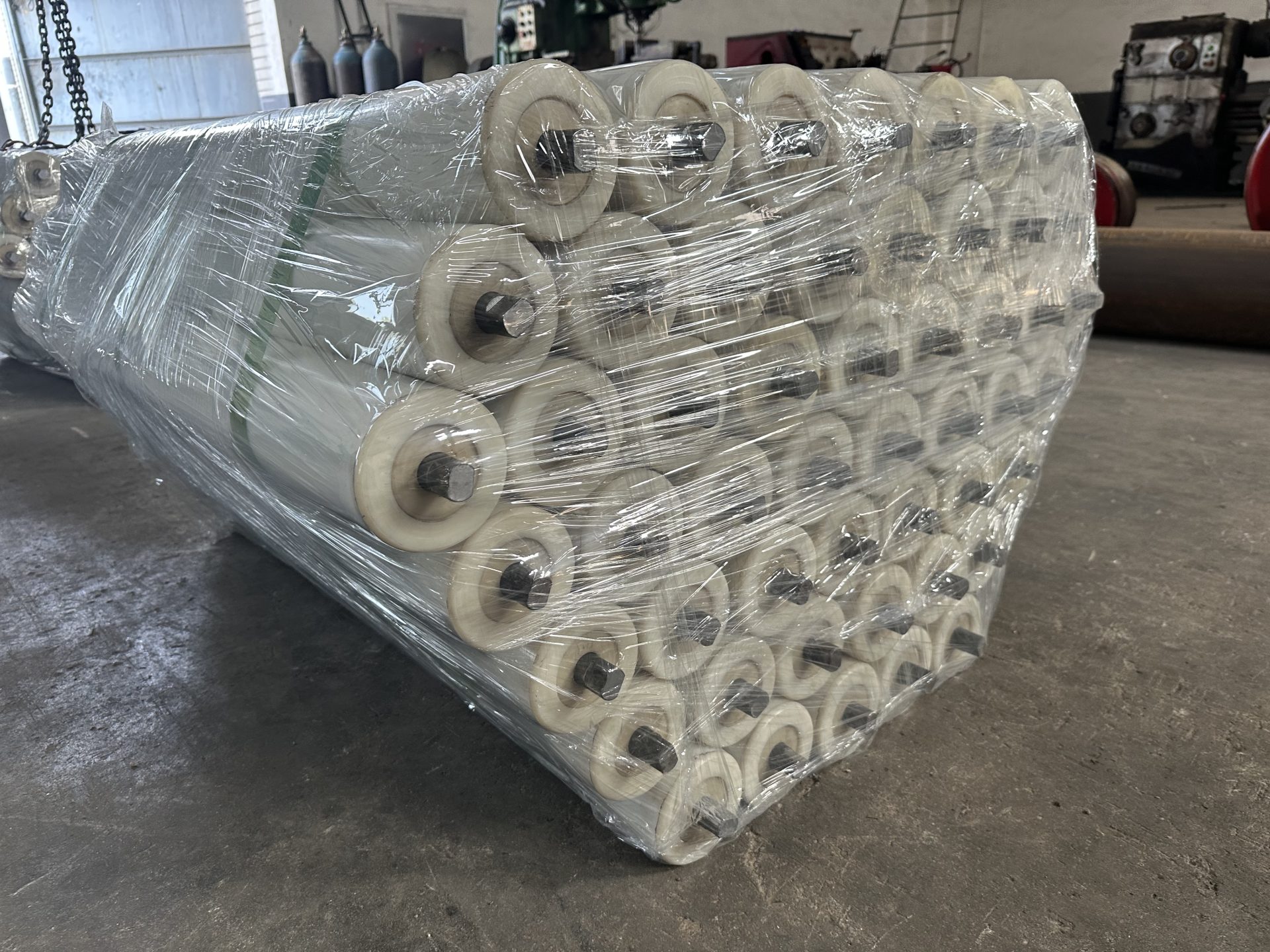
GRAM’s nylon roller range provides an alternative material route. It may deserve consideration where the customer’s product-contact or environmental requirements motivate it, but the offered assembly still needs its own load and mounting assessment. Nylon should not be treated as automatically equivalent to a steel roller of similar visible size.
The quiet roller conveying route is relevant when the operating area is sensitive to noise. Ask what construction is offered for the actual load and conveyor. No measured sound reduction should be assumed from the product family name, especially when noise may come from the load base, frame or adjacent handling equipment.
The main roller range describes rubber-coated steel rollers as well. A coated surface can change product contact, but it does not turn a gravity section into a powered one or establish its stopping behavior. Evaluate the contact requirement separately from the equipment’s movement control.
Preserve the gravity roller mounting arrangement during replacement
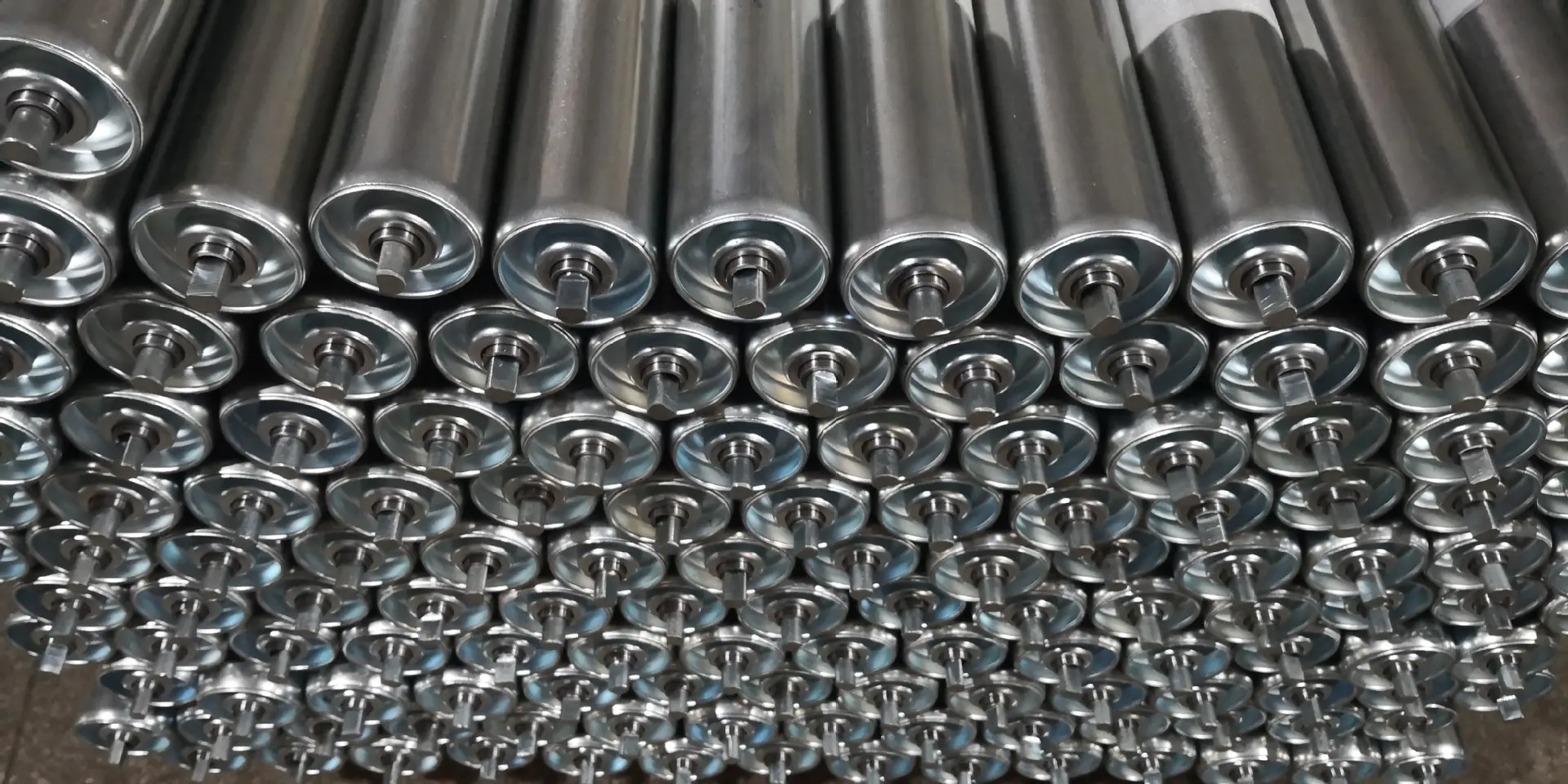
The replacement should match the frame mounting span and shaft-end form. A nominal working length does not define the entire assembly. Record where the shaft is retained and whether the installation uses a round, hex or spring-loaded arrangement. GRAM’s main range discusses these shaft choices, while the specific offered dimensions require confirmation.
Spring-loaded shafts need proper engagement after insertion
A spring-loaded shaft can help a roller fit between fixed frames, but it must seat correctly in the working position. Follow the equipment’s approved isolation and installation procedure, then verify the intended engagement and free rotation. Do not treat ease of insertion as proof that the replacement is retained correctly.
For a distributor supplying urgent replacements, keep the shaft-end description with the body dimensions. Two rollers may support a similar carton width while fitting different retaining openings. The replacement roller assembly discussion helps identify the supplied unit and the retained equipment interfaces.
Keep powered and curved conveyor assumptions out of a straight gravity order
A grooved or sprocket roller may belong to a driven conveyor, depending on the design. A tapered roller introduces a curved load-path question. GRAM lists these variants within the steel range, but their presence does not make them interchangeable with a plain free-running replacement. Specify the actual movement method and geometry in the purchase enquiry.
Rolcon’s conveyor roller products distinguishes gravity rollers from driven and other replacement options. That external classification is useful for understanding the function being purchased. Its product dimensions, bearing choices and capacities remain its own and should not be treated as available GRAM configurations.
If the project requires a conversion from gravity to powered movement, have the conveyor designer establish the complete design requirements. Replacing selected rollers with driven variants does not resolve the transmission, guarding or operating-control requirements. Keep that engineering project separate from an ordinary spare-roller order.
Review gravity roller load changes before receiving replacements
A gravity section should be reviewed when the package mix changes
A warehouse may keep the same conveyor while introducing a smaller carton or changing its base material. The old roller specification may still fit the frame, but the product support and movement need a fresh assessment. Give the supplier the new load condition and ask the conveyor designer whether the retained arrangement remains appropriate. An identical replacement does not prove suitability for a changed package.
For a receiving station operated by hand, include how the worker places and removes the load. A carton that travels acceptably after careful alignment may behave differently when the actual process allows an uneven entry. That is a handling and equipment-design question. The roller material should be selected after the intended operating method is understood, not used to hide a process that depends on an unrealistic placement condition.
Outdoor or intermittently wet gravity transfers also need an environmental description. Water, dust and temperature can affect the offered body and end construction. Ask the supplier to identify the proposed assembly for that exposure rather than extending a dry warehouse roller’s specification to every location. Keep the mounting drawing constant during the comparison so that material and environmental suitability can be evaluated clearly.
If a trial is required, have the equipment owner define a controlled method using the representative loads and approved stopping arrangement. Avoid assigning a universal incline, force or spacing from a generic guide. The trial should evaluate the proposed roller within the actual conveyor design and retain the site’s guarding and isolation requirements.
Inspect the delivered working surfaces and shaft ends for damage, and compare the assembly with the approved drawing. Check rotation and any specified retaining feature according to the supplier’s instructions. If an acceptance test under a representative load is required, agree its method beforehand rather than improvising a moving-load trial at delivery.
Ask for packages identified by the conveyor section, material route and mounting arrangement. Protect projecting shafts and finished surfaces from contact damage during transit. This is useful for a warehouse that receives several similar replacement sizes: the crew should not have to guess which shaft form belongs to a particular frame during the repair.
Use the smallest difficult load base to establish support, and the complete process to establish movement control. Then ask the gravity roller supplier for an assembly that fits that approved arrangement. If the support and stopping questions remain unresolved, selecting a tube material or bearing option is premature.
Last Updated on October 3, 2026 by gramconveyor_admin


