
Choosing a Nylon Conveyor Belt Supplier When Take-up Travel Is Limited

The old belt has been shortened twice, and the screw take-up is approaching the end of its travel. Ordering another belt under the same broad description may repeat the problem. For an aggregate operator, maintenance buyer or distributor comparing a nylon conveyor belt supplier, the first decision is whether the proposed carcass can work within the conveyor’s available adjustment space. Start with GRAM’s nylon conveyor belts and NN rubber belts, then compare the actual construction with the existing tensioning arrangement.
Nylon reinforcement can be useful where flexibility and impact accommodation matter. Those qualities do not mean that any nylon belt will fit every take-up. The order needs a clear description of the carcass, the intended duty and the adjustment available after installation. Treating “nylon belt” as a complete specification leaves the most important replacement question unanswered.
Show the Nylon Conveyor Belt Supplier the Remaining Take-up Movement
Give the supplier and responsible conveyor engineer the usable take-up travel, not just the distance between pulley centers. A tensioning device may have a substantial total movement while offering little adjustment from the intended installation position. The mechanical limit, access constraints and starting position all affect how much useful movement remains.
A quarry maintenance team may have a serviceable conveyor frame but a take-up that cannot simply be extended because a walkway or structure occupies the space behind it. In that situation, the replacement belt must be assessed against the real installation. A general claim of belt flexibility does not resolve the lack of adjustment, and a shorter ordered belt is not automatically a safe solution.
Screw Take-up Travel Is Different from Belt Extension
The movement of the take-up changes the belt path through the conveyor. Its mechanical travel and the change in total belt path length are therefore different quantities. The relationship depends on the arrangement. Have the engineer establish it from the actual conveyor rather than copying an adjustment percentage from an unrelated machine.
Record the current take-up position, the intended position with the new belt and the remaining usable movement. Include the method used to establish belt length and any allowance required for the approved joining method. If the old belt has been shortened, its present length may no longer represent the original conveyor requirement.
It is also worth recording when the previous adjustments were made. Movement concentrated shortly after installation raises a different question from gradual adjustment over a long service period. The record should describe the observation without assuming its cause. Together with the original construction and tensioning information, it allows the engineer to assess whether the next order needs a different carcass response or whether installation length and tensioning practice need attention.
Gravity Take-up Movement Needs a Conveyor-specific Review
A gravity arrangement responds differently from a screw take-up. Available movement, counterweight arrangement and operating limits belong to the conveyor design. The belt supplier needs that context to evaluate the proposed construction. A product brochure cannot establish the correct counterweight or acceptable operating position for the installed system.
When a belt order changes reinforcement type, involve the engineer before adjusting the tensioning system. Do not add weight or increase screw tension to compensate for an unexplained fit problem. Such changes can affect other components and leave the belt operating outside the intended design basis.
NN and EP Conveyor Belts Answer Different Adjustment Questions
GRAM’s NN family uses nylon reinforcement in both fabric directions, while its EP rubber belt family combines polyester in the longitudinal warp with nylon in the transverse weft. That construction distinction is more useful than comparing the names “nylon” and “polyester” without identifying where each fiber is used.
| The replacement question | NN carcass route | EP carcass route |
|---|---|---|
| What carries longitudinal tension? | Nylon warp; request the proposed belt’s elongation information. | Polyester warp; evaluate its longitudinal behavior for the conveyor. |
| What is the transverse reinforcement? | Nylon weft, assessed with the complete ply construction. | Nylon weft combined with the polyester warp. |
| Why might the buyer investigate it? | Flexibility and loading conditions are important to the application. | Longitudinal adjustment requirements may favor a different carcass response. |
| What remains unresolved by the family name? | Actual strength, ply construction, cover grade and operating elongation. | Actual strength, ply construction, cover grade and operating elongation. |
The table describes the routes to evaluate; it does not supply a rating for a particular GRAM belt. INABEC’s fabric-belt explanation provides an independent manufacturer reference for the distinction between NN and EP reinforcement. Its individual constructions and performance values should not be transferred to a GRAM order.
Elastic Recovery and Permanent Textile Belt Elongation Are Not the Same
A belt can move under load and recover when that load changes. It can also develop a lasting change in length. Those behaviors have different implications for tensioning and future adjustment. Asking only for “low stretch” may produce an answer that addresses one behavior while the buyer is concerned about the other.
Describe whether the concern is movement during operation, repeated adjustment after installation or the loss of remaining take-up travel over time. Then request the proposed belt’s relevant construction and test information. Fenner Dunlop’s discussion of belt elongation is useful background for making that distinction; its product-specific performance is not a promise for this supply.
An NN belt should not be rejected simply because a different installation required frequent adjustment. An EP belt should not be accepted solely because its family is associated with lower longitudinal elongation. The proposed construction, the duty and the available movement must be evaluated together.
Wet Aggregate Transfer Requires More than a Nylon Carcass Label
A wet transfer conveyor exposes the belt to moisture, material fines and repeated loading. The nylon reinforcement is only one part of the belt. The rubber covers, edges, joining details and condition of the loading support also influence whether the replacement is suitable. GRAM’s fabric conveyor belt range gives a broader starting point when the carcass construction still needs to be settled.
A distributor handling a request for “the same nylon belt” may receive only a photograph of the worn surface. That photograph cannot reliably identify the reinforcement, the original cover thickness or the complete ply structure. Ask for the previous construction record or arrange a belt-specific assessment before treating the photograph as a repeat-order specification.
Rubber Covers and Textile Plies Have Separate Functions
The carcass provides reinforcement; the covers protect it and interact with material and conveyor components. A thicker-looking rubber surface does not establish a stronger textile carcass. Equally, an additional fabric ply does not prove that the proposed belt will bend and trough correctly on the existing installation.
Confirm the proposed ply construction, total thickness, top and bottom cover requirements and belt edge arrangement. Keep these details associated with the belt strength and the conveyor’s pulley and troughing requirements. A change to one part of the construction should be reviewed for its effect on the complete belt, rather than accepted as an isolated upgrade.
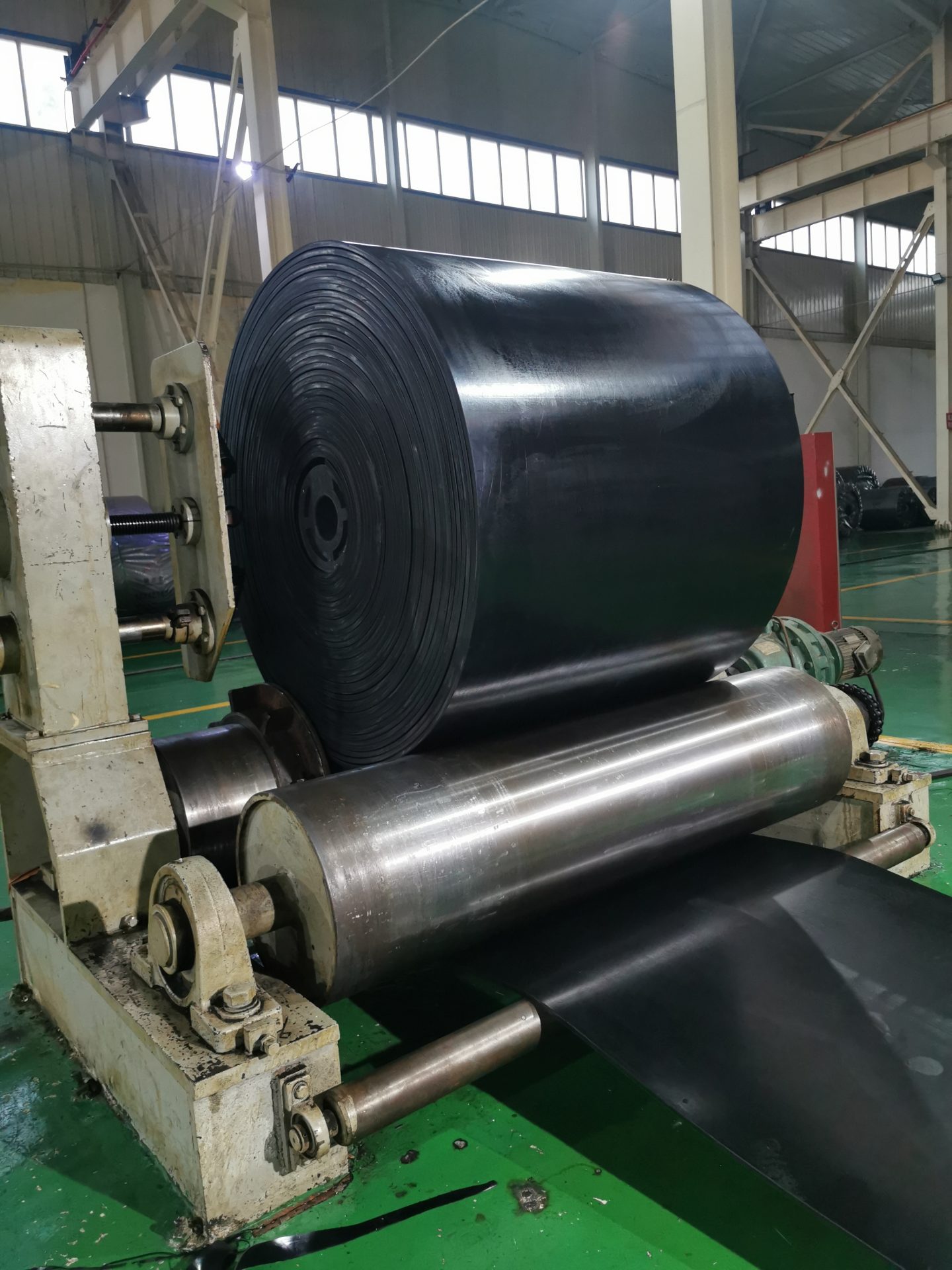
Do not assume that a nylon carcass makes the entire belt waterproof or suitable for every chemical exposure. Describe the actual water contact, cleaning practice and carried material so the appropriate belt construction can be evaluated. If a special resistance is required, obtain evidence for that proposed belt rather than relying on a general statement about the fiber.
At an outdoor transfer, intermittent rainfall and continuously wet material should be described separately. Note whether water can reach damaged edges or an exposed carcass, and whether the old belt shows deterioration around the joint. Those observations help define what needs investigation; they are not a laboratory result or proof that moisture caused the take-up problem. The purchase should address the confirmed exposure while the maintenance assessment establishes the source of the observed damage.
Loading-zone Impact Must Be Separated from Take-up Problems
A belt damaged at the transfer point may need better support rather than a different reinforcement alone. GRAM supplies rubber-ring impact rollers for loading-zone duty. These components address how the incoming material is supported; they do not create additional take-up travel or establish the belt’s allowable tension.
Impact Rollers Support the Belt Where Material Lands
Identify the material landing area and check the support arrangement with the responsible engineer. A flexible belt still needs appropriate support beneath the incoming load. If an impact roller is damaged, seized or positioned incorrectly, changing the carcass can leave the original loading problem in place.
For a wet aggregate transfer, record where cuts, cover damage or edge wear occur. Damage concentrated beneath the chute is a different symptom from repeated shortening associated with exhausted adjustment. Separating those observations helps the buyer avoid asking the nylon supplier to solve two unrelated problems with one unspecified “heavy-duty” belt.
The belt and support decisions should remain coordinated. If the proposed carcass changes thickness or bending behavior, review its interaction with the support and pulleys. If the loading support changes, check the belt path and transition into the troughed run. Neither change should be treated as independent of the installed conveyor.
Make the Nylon Replacement Order Describe the Proposed Belt
The order should identify the construction actually being purchased, rather than repeat the worn belt’s nickname. GRAM’s nylon belt specification discussion helps organize the terminology, but the purchase needs belt-specific agreement on reinforcement, dimensions and operating requirements.
Ask which information will establish tensile behavior and elongation for the proposed textile belt. ISO 283:2023 describes a test method for full-thickness tensile strength and elongation at reference force and break. A reference to that method does not establish that a supplied GRAM belt has been tested; request the applicable evidence if the project requires it.
The distinction between elongation at reference force and elongation at break matters to the conversation. A breaking-point value is not a usable adjustment allowance for normal operation. The engineer should identify the relevant design information and acceptance criteria without turning a material test result into an unsupported take-up setting.
For repeat supply, associate the agreed construction with a clear order reference. If the supplier proposes a different ply arrangement or reinforcement because the previous construction is unavailable, require that change to be identified before dispatch. Similar outside dimensions should not conceal a change that affects the adjustment assessment.
When the order includes belts for several conveyors, keep each roll associated with its own take-up assessment. Two conveyors carrying the same aggregate may have different pulley arrangements and usable travel. Combining them into one stock description can erase the reason a particular carcass was selected. The distributor can still consolidate transport while preserving distinct construction references and installation destinations for the individual rolls.
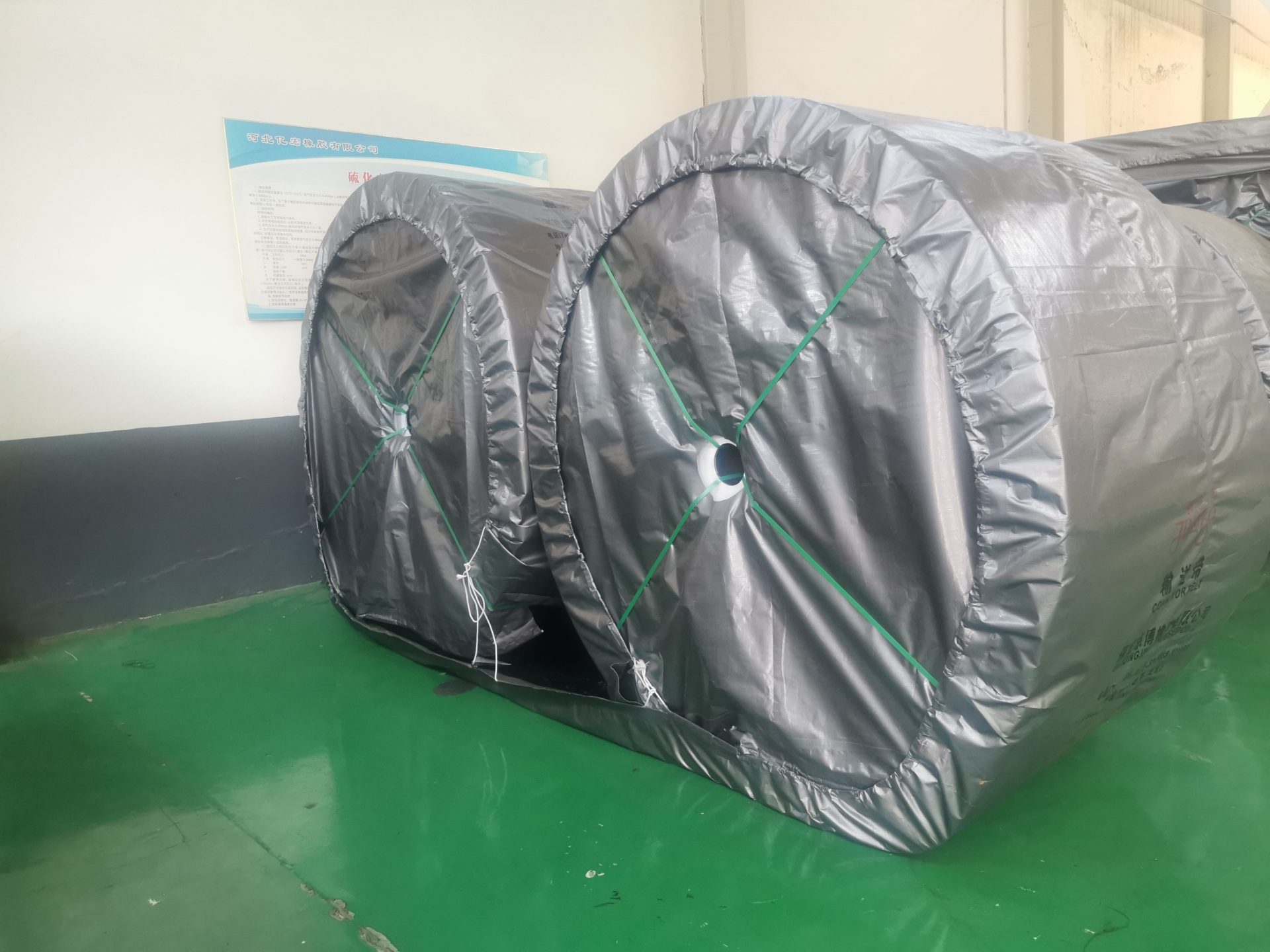
When arranging transport, preserve the roll identification and agree handling instructions for the supplied belt. The installer needs to connect the delivered roll to the approved length and construction, especially if several textile belts arrive together. Do not trim or rework the belt before the agreed joining allowance and installation length have been checked.
If usable take-up movement remains uncertain, settle that measurement before choosing between NN and EP. If movement is known but belt behavior is not, obtain the construction information needed to evaluate it. The useful replacement is the one that can operate within the conveyor’s real adjustment space while meeting its loading and cover requirements; a familiar material name alone cannot establish that fit.
Last Updated on October 2, 2026 by gramconveyor_admin


