
Agree the Finished Loop with a Replacement Rubber Conveyor Belt Supplier Before Setting Delivery Length

Two replacement offers can quote the same belt construction while describing different lengths: one refers to the finished installed loop, the other to open belting before the ends are joined. Resolve that difference with the replacement rubber conveyor belt supplier before approving either offer. GRAM’s rubber conveyor belt range provides the construction options; the inquiry also needs an accepted definition of the finished loop and the responsibility for the joining allowance.
A replacement rubber conveyor belt supplier needs an unambiguous length description
State what the requested length represents. A finished endless loop, an open supplied length and a measurement from a removed belt are not interchangeable descriptions. The supplier should be able to connect the quoted quantity to the buyer’s intended installed arrangement without guessing which meaning the purchasing team used.
A contractor comparing two offers should ask each supplier to identify its length basis before comparing prices. An apparent difference in supplied quantity can come from different joining assumptions, not only a different commercial rate. Keep the required construction and length definition together so the technical comparison remains meaningful.
- The accepted finished loop required for the conveyor.
- The open length proposed for delivery.
- The measured length or remaining piece of the old belt.
The order should identify the relationship between them through the responsible design, not treat the three labels as equivalent.
A removed belt measurement needs its operating context
The old belt can help identify the equipment and service history, but record what was measured. Its condition after removal may differ from the accepted original installation basis. The measurement should remain evidence for review rather than automatically become the finished replacement dimension.
A plant buyer copying a number from an old belt label should identify whether it referred to the supplied roll, a finished loop or a later replacement piece. That distinction is especially useful when the previous order documents are incomplete. The GRAM proposal needs a current accepted length basis, not an unexplained historical quantity.
If the removed belt has already been divided into several pieces, identify what remains available for measurement. A surviving section is not evidence of the complete original loop, and a label attached to one section may describe a different stage of the old supply. Preserve those limits when passing the evidence to the supplier. The accepted replacement length should come from the current conveyor review, with the old pieces used only for the information they can reliably provide.
Photographs of exposed reinforcement can help identify whether the old construction was fabric or steel-cord, but they do not determine the new joining allowance. Keep construction identification and finished-loop definition as related, separate tasks within the replacement inquiry.
The rubber belt construction belongs with the joining assumption
GRAM offers rubber-covered belt routes with different reinforcing constructions. The covers and reinforcement form the actual belt being joined and installed. A quotation should identify that construction before the buyer accepts any relationship between the open supplied length and finished loop.
This does not mean the purchaser should invent a joining method or add a standard extra length. The responsible conveyor and joining design must define the accepted relationship for the actual belt. Keep that responsibility explicit in the inquiry, especially when separate parties supply the belting and carry out site joining.
EP belting needs an identified fabric construction
GRAM’s EP rubber belts use polyester yarns longitudinally and nylon yarns transversely. Preserve the accepted reinforcement specification and belt build alongside the finished-loop requirement. The fabric name describes a construction route; it does not supply a universal joining allowance.
If a buyer requests an EP replacement but the quotation leaves the actual offered build unresolved, the joining discussion is incomplete as well. Confirm the intended construction before treating the open supplied length as ready for order. An accepted width and an EP label alone do not identify every relevant layer or the approved joint design.
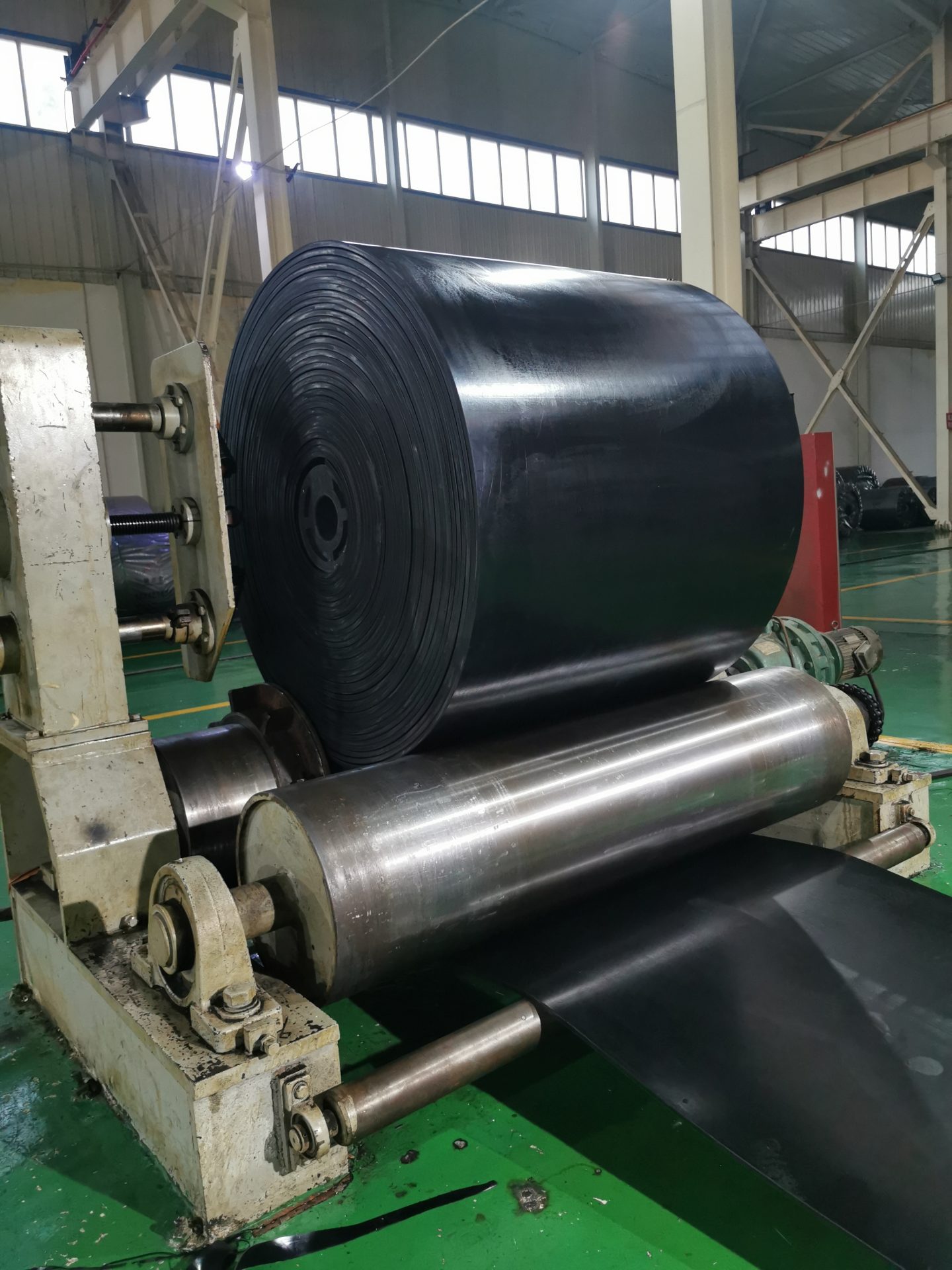
NN substitution should not retain an unexplained EP length allowance
GRAM’s NN rubber belt construction uses nylon in both fabric directions. If it is offered as an alternative to EP, identify the changed construction and obtain the corresponding joining and conveyor acceptance. Do not carry an unexplained allowance from the previous EP offer into the new purchase line.
The buyer should preserve the intended finished loop while the responsible parties assess the alternative. What changes is the accepted construction and its joining basis, not the meaning of the finished-loop requirement. This keeps the supplier, contractor and plant from approving different assumptions under the same replacement reference.
No numerical elongation or take-up setting follows from the NN name. Where the retained conveyor’s installation condition matters, include its accepted design information in the replacement review. The actual supplied construction must be assessed against that equipment rather than selected by fabric name and old measured length alone.
Fabric layers and steel cords require separate joining documents
GRAM’s fabric conveyor belts describe cover and reinforcing layers as parts of the belt build. Keep the actual offered structure identifiable in the accepted order. The finished-loop discussion should refer to the same structure that the supplier will deliver, rather than a generic fabric belt used as a placeholder.
If the responsible joining contractor needs construction information, identify who provides it and which accepted revision applies. The purchaser should not assume that a general catalogue description authorizes a specific site joint. The useful supply record connects the delivered belt to the actual design information used for the installation.
Steel-cord replacement is not another fabric joining allowance
GRAM’s steel-cord conveyor belts use a distinct reinforcement route with longitudinal steel cords. A steel-cord offer should retain its own construction and joining review. An allowance accepted for a textile belt is not a universal value that can be applied to a different reinforcing structure.
Where the buyer is comparing construction routes, keep each complete offer separate until the retained conveyor and joining arrangement are accepted. The commercial order should identify the selected belt and its approved length basis. A proposal should not combine the fabric construction from one alternative with the delivery length assumption from another.

Define who accepts the difference between supplied length and finished loop
The order should identify the party responsible for the accepted relationship between the two lengths. This may involve the supplier’s construction information and the project’s responsible joining design. Do not leave each party assuming that another has already approved an allowance.
The buyer also needs the supplied form described. An open roll, prepared ends or a finished loop would create different receiving and installation questions. No particular factory joining service or endless supply is implied by GRAM’s general belt range; the actual offer must confirm what will be delivered.
For a contractor receiving belting from a plant-selected supplier, preserve the approved construction and length basis in the handover. A delivery label containing one number should not become the only information available to the team responsible for producing the final installed loop.
Multiple delivered lengths create more than one joining boundary
If the project proposes more than one delivered length, describe the intended arrangement and have the responsible design assess its joining implications. Do not assume that dividing a delivery leaves the finished-loop relationship unchanged. The inquiry should preserve which construction and joining information applies to each accepted length.
This is a design and supply definition, not a recommendation to introduce extra joints. The actual route must be approved for the conveyor. The buyer’s role is to prevent a change in delivery form from passing through purchasing as if it were only an administrative split.
Receive the rubber belt against the approved supplied-length basis
The delivery documentation should identify the accepted construction and the length definition used for the delivered item. Confirm whether the recorded quantity describes the open supplied belt or another agreed form. The receiving team should not infer that the label describes the finished loop when the order uses a different basis.
Actual length acceptance, measurement conditions and allowable variation must follow the agreed order information. No universal measurement tolerance is appropriate here. Where a delivery differs from the accepted proposal, keep that difference visible before the item is released to the installation process.
Protect the identity of any separately delivered lengths through the agreed receiving arrangements. Confirm their order references and supplied form, with actual handling and protective details taken from the supplier’s delivery information. This concerns the specific replacement units, not a claim that every GRAM belt uses the same reel or package.
Release a replacement order that the joining team can interpret
Fenner Dunlop’s technical discussion of belt splicing describes the joint as the connection that creates the continuous loop. That general distinction helps explain why delivered belting and a finished loop need separate definitions. Its methods and performance claims are not GRAM specifications.
The discussion of rubber belt roll identity is useful when receiving or allocating replacements. Add the accepted length basis to that identity rather than treating a correctly labelled construction as a complete installation instruction.
Approve the selected belt with a clear finished-loop requirement, an identifiable supplied form and an accepted responsibility for their relationship. Keep construction changes and delivery splits visible until they have been reviewed. The next person handling the order should be able to understand which length was bought and how it relates to the conveyor, without guessing from the old belt lying nearby.
Last Updated on October 3, 2026 by gramconveyor_admin


