
What an HDPE Conveyor Rollers Supplier Needs to Know About a Wet Plant Retrofit

Water changes the roller replacement decision in a wash plant. A quarry operator looking for an HDPE conveyor rollers supplier needs a roller that fits the existing frame and survives the actual combination of spray, fines, loading and temperature. A corrosion-resistant shell is useful, but it does not establish the suitability of the bearings, shaft or complete assembly. Start with GRAM’s polymer roller range, then compare the offered construction with the steel rollers already installed.
The first information to provide is where the roller works: under the loaded carrying run, on the return side, beside a washing stage or downstream of a heated process. Record the shaft ends, mounting span and wet material conditions separately. Those details make it possible to discuss an actual replacement rather than an unspecified plastic alternative.
An HDPE conveyor rollers supplier needs the wash-water exposure map
A roller beside a spray bar faces a different exposure from one beneath damp aggregate after drainage. The former can receive repeated direct wetting; the latter may collect a paste of fines and moisture around the shaft ends. Describe whether the water comes from the process, rainfall, cleaning or several sources. Include where the deposits appear after a normal production shift.
A contractor replacing rusted steel rollers in a sand washing plant may reasonably consider a polymer body. However, visible shell corrosion and early bearing failure should not be treated as the same fault. If the roller body remains sound while the bearings seize, the replacement discussion must focus on the end assembly and contamination path. Changing the shell material alone can leave the original problem untouched.
HDPE bodies and protected bearing ends are separate decisions
GRAM describes polymer rollers with a machined tube or solid bar mounted on sealed precision bearings. The same range describes non-contact rubber seals and metal end caps, and discusses HDPE among the polymer materials. These are useful construction details, but the exact resin and arrangement must be confirmed for the offered roller. Do not assume every polymer roller in the range has an identical material specification.
Ask the supplier to identify what the wet fines can reach. The shell, bearing housing, seal and exposed shaft each have a different job. A drawing that shows only the outside diameter cannot answer whether a replacement will keep abrasive slurry away from the bearing. The description should connect the specified end protection with the actual contamination at that conveyor location.
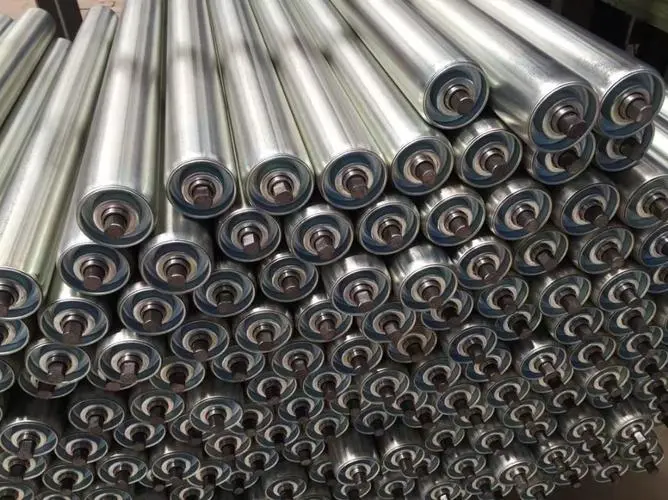
HDPE conveyor roller selection must preserve the frame interface
Material substitution should not silently alter the mounting span, shaft engagement or belt contact position. GRAM’s steel roller range provides the alternative body route; the main conveyor roller range explains shaft and bearing choices. Use those options to establish a common assembly drawing before comparing prices.
Shaft ends should match the wet plant’s existing brackets
Record the bearing-to-bearing body arrangement and the way the shaft is retained in the brackets. A shaft can appear compatible while its flats, projection or seating surfaces differ. If the contractor has to modify the brackets to fit the replacement, that becomes a conveyor alteration requiring its own approval. It should not be discovered when the shutdown has already begun.
Measure an unworn mounting interface where possible. A heavily corroded sample may no longer preserve the original seating dimensions. Compare several installed rollers or the equipment drawing rather than relying on the damaged example alone. Mark which measurements are verified and which still require confirmation so that the supplier can resolve them before production.
Carrying duty and return duty require different operating evidence
The loaded carrying run needs support appropriate to the material mass and belt geometry. A return roller instead meets the belt’s returning surface and any carryback that remains on it. A roller selected for one position should not automatically become the standard spare for both. Supply the operating position with the dimensions so the offered assembly can be evaluated in context.
A plant buying polymer replacements for restricted maintenance access should also compare complete assemblies. GRAM’s discussion of complete roller weight is useful for that separate handling question. A shell-only mass does not establish how the delivered roller will be handled, and a lighter assembly does not by itself prove equivalent loaded performance.
Keep heated transfers outside a simple wet-service assumption
A wet wash plant can still contain hot locations. Dryer discharge, hot returned material, radiant heat or an adjacent process may expose a roller to temperatures that differ from the general site conditions. Record the highest credible exposure at the roller, including periods when material accumulates or the conveyor stops. A corrosion-focused selection should not obscure this thermal requirement.
For example, a maintenance team may want one polymer spare across both an outdoor washing line and a conveyor close to a dryer. The common shaft size is useful, but it does not prove that the polymer construction suits both locations. Keep the heated position as a separate enquiry until the offered assembly’s temperature suitability has been documented.
Manufacturer literature from Rulmeca’s HDPE roller range illustrates why HDPE products must be understood as engineered assemblies. Its model-specific construction and performance statements belong to that manufacturer. They are a reference for the questions to ask, not a rating to transfer to a GRAM roller.
Compare polymer, nylon and impact rollers by the job at each location
GRAM’s nylon conveyor rollers offer another non-metal body route. Nylon and HDPE are different material choices; their names should remain explicit in the quotation. A request for a plastic roller is too broad if the purchase decision depends on the offered resin, body construction and environmental compatibility.
Steel remains a relevant comparison for loaded support and installations where the approved existing construction is already suitable. Polymer deserves consideration where the site’s wet or corrosive exposure motivates the change. Neither choice should be justified by a general statement that one material is always stronger, quieter or longer lasting. Compare the proposed assemblies against the same duty and frame dimensions.
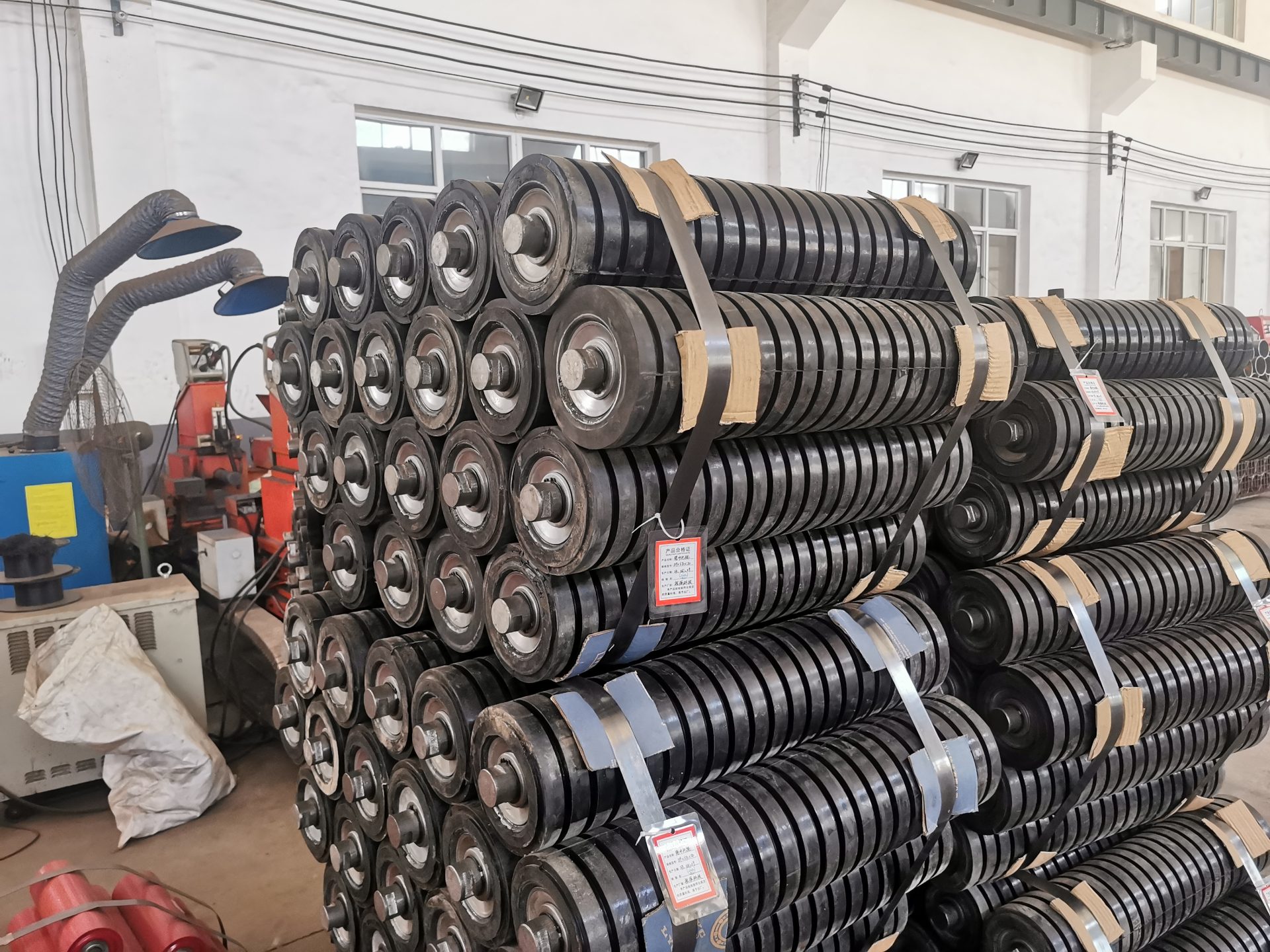
At the point where stone or another heavy feed lands, GRAM’s rubber-ring impact rollers have a different working construction. Their rubber rings distinguish them from a plain polymer carrying surface. If the original damage begins at a transfer, review the impact support and material trajectory before expecting a body-material change to solve it.
Wet-line inspection should check rotation and end protection together
Before installation, compare the delivered shaft ends with the approved drawing and inspect the body for distortion or damage. Check that the end components are seated as specified and that the roller rotates without obvious rubbing or binding. These checks are tied to the actual assembly; they do not substitute for an agreed load or contamination test.
If trial replacements are installed, keep the operating comparison narrow. Observe the same belt position, material condition and maintenance interval. Record whether deposits form at the ends and whether rotation changes. Avoid comparing a clean new polymer roller with a worn steel sample in a different location, because that would not isolate the reason for the change.
Declare wet-line exposure and protect the polymer replacements
Wash-water changes should be declared before the HDPE order is repeated
A wash plant may change its water circuit without changing the conveyor’s mechanical drawing. Recycled process water can carry a different solids content from clean incoming water, and cleaning additives can create another exposure. Tell the supplier which condition the replacement actually faces. A roller accepted beside a clean spray should not automatically be reassigned beneath concentrated wash residue because the frame size is identical.
Keep water exposure separate from the material resting on the belt. A roller can be shielded from the bulk load while still receiving runoff at its ends. Conversely, a wet material stream may drain away before reaching the replacement location. Sketch the roller position in relation to the spray and drainage points so the offered end construction can be assessed against the relevant path.
If the buyer wants a trial rather than a full changeover, choose a position with a documented exposure and an accessible comparison. Use the approved installation procedure and retain a compatible spare. The trial should answer a stated question, such as whether the offered end arrangement remains free-running under the existing fines accumulation, rather than being described as proof of the life of all HDPE rollers.
For a distributor, record that wet-duty description alongside the frame dimensions. Otherwise, a successful replacement on one customer’s outdoor transfer may later be supplied for another customer’s heated wash line under the same stock name. The resin declaration and operating boundary belong to the assembly record, not only to the first customer’s original enquiry.
Agree how the rollers will be supported during shipment so that shafts, end caps and polymer bodies are not loaded against one another. Request packaging identification by mounting span and position, especially if carrying and return assemblies arrive together. The agreed arrangement should reflect the roller shape and the site’s handling equipment; it is not a standard packing promise.
Keep the polymer rollers away from unnecessary heat while awaiting installation, and follow the offered product’s storage instructions. Do not leave a pallet beside a heated process simply because its destination is a wet conveyor. Separate any units with damaged end protection or visible body distortion before they enter the shutdown work area.
For the wet-line order, the useful approval package is a matched frame drawing, a declared polymer construction and an exposure description that includes both water and heat. Once those three agree, the buyer can compare the proposed HDPE route with steel or nylon on the same basis. If one remains unresolved, keep that conveyor position out of the blanket replacement order.
Last Updated on October 3, 2026 by gramconveyor_admin


