
Compare Complete and Partial Replacement Offers from a Suspended Garland Idlers Supplier
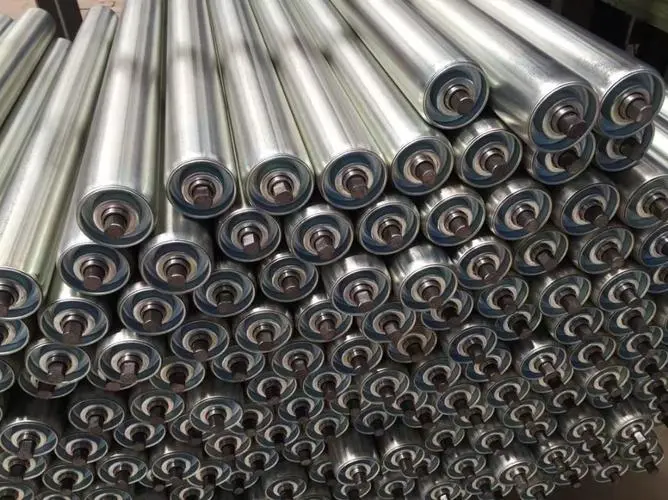
Two garland quotations can differ sharply in price because one covers a connected replacement group and the other covers only loose roller components. A suspended garland idlers supplier should make that distinction clear before a mine, contractor or distributor compares the offers. Begin with GRAM’s carrying garland range, identify the retained suspended group, and decide which parts of that group the order must replace.
A partial replacement can be appropriate when the retained components and interfaces have an accepted basis for continued use. A complete group proposal can be appropriate when the buyer needs one defined assembly instead of combining new components with an uncertain retained arrangement. Neither route is automatically the cheaper accepted solution once its full scope is understood.
A suspended garland offer should state what remains on the conveyor
List the parts that stay in the retained arrangement alongside the parts being supplied. GRAM describes garlands as several rollers linked together in a suspended chain-like group. A component order therefore relies on more retained relationships than the working body of one worn roller.
Identify the supplied roller and any connection parts included, then identify the retained group on which that proposal depends.
Identify the connected supplied assembly and the boundary between that group and the conveyor’s retained suspension or supports.
These descriptions prevent a supplier’s line item from being interpreted more broadly than intended. They are not a claim that GRAM includes every suspension accessory with every group. The actual quotation must establish the included hardware and any exclusions.
One garland roller still belongs to an identified connected group
A mine replacing a selected worn unit should identify its position and the accepted interfaces with adjacent components. A loose sample provides useful information, but it does not show every retained connection relationship. Include the group record or a clear current arrangement alongside it.
If the replacement proposal changes an interface that another component relies on, assess that change before accepting a partial order. The buyer should not assume that the original group remains unchanged simply because most of its rollers are retained. Keep the affected component boundary visible in the offer.
A complete suspended assembly is not the surrounding conveyor
A complete garland group can define the connected rollers being supplied while still relying on retained supporting equipment. State the boundary clearly. The buyer needs to know whether the offer includes only the linked group or also specified attachment components, and which existing supports are expected to receive it.
The separate garland suspension connection discussion helps define those interfaces. Here the purchasing question is the extent of replacement: which accepted components arrive together and which retained relationships the proposal depends on.
Garland roller construction belongs in the scope comparison
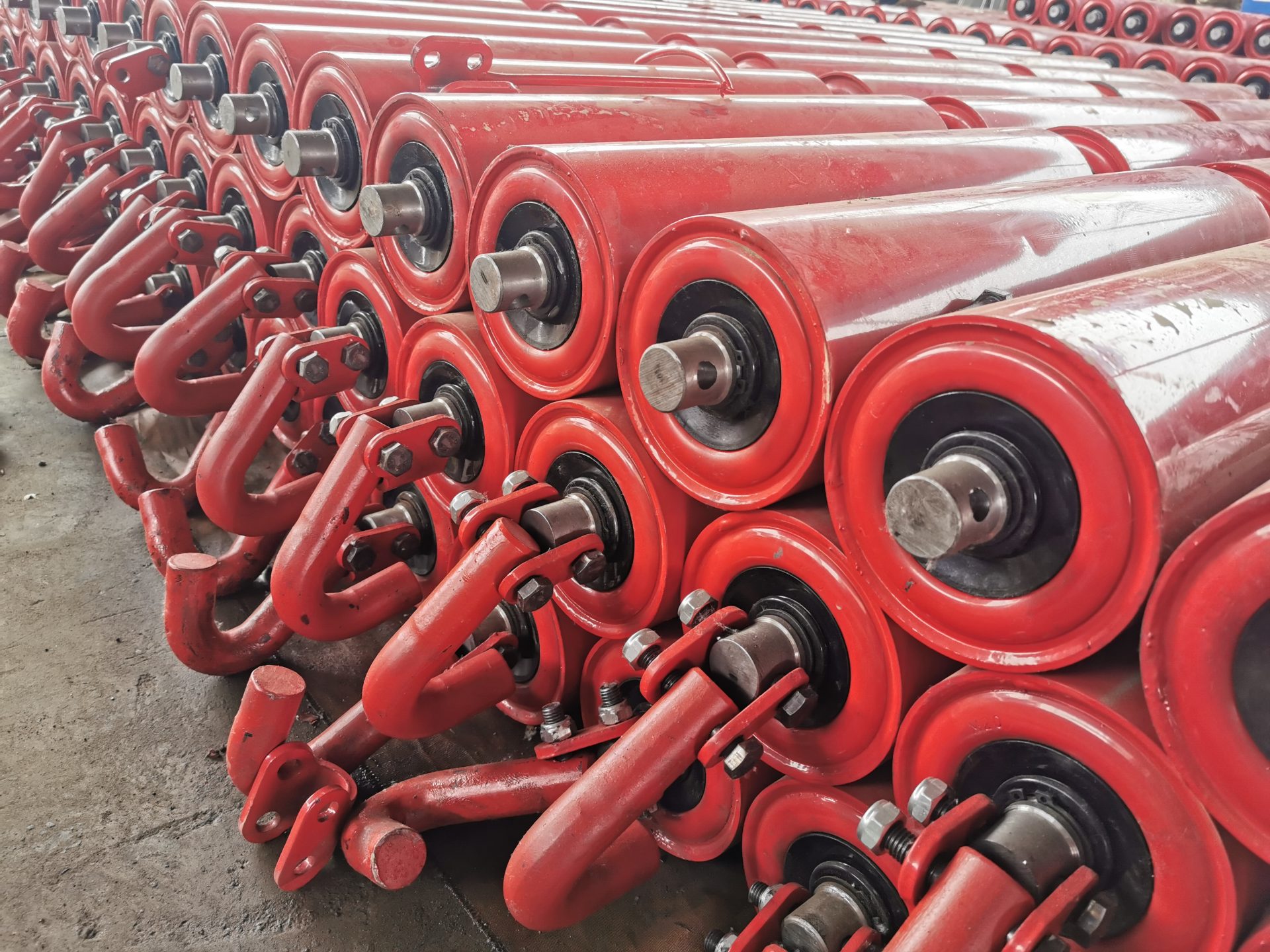
Two offers with the same stated number of rollers can still propose different working constructions. Keep the actual body material, end construction and working surface recognizable. A group count does not establish the capacity or suitability of every proposed component.
Steel bodies do not define every connection in a garland
GRAM steel rollers use a cylindrical body with bearings toward the ends and projecting shaft interfaces. Those details describe the roller assembly. The linked garland connection and suspension relationship still require their own definition in the group proposal.
For a distributor comparing a steel component price with a complete garland price, do not add assumed connection costs to create a fictitious equivalent package. Ask each supplier to identify the included scope for the same retained arrangement. Only then can the buyer compare like-for-like proposals.
Ringed impact rollers change the group being offered
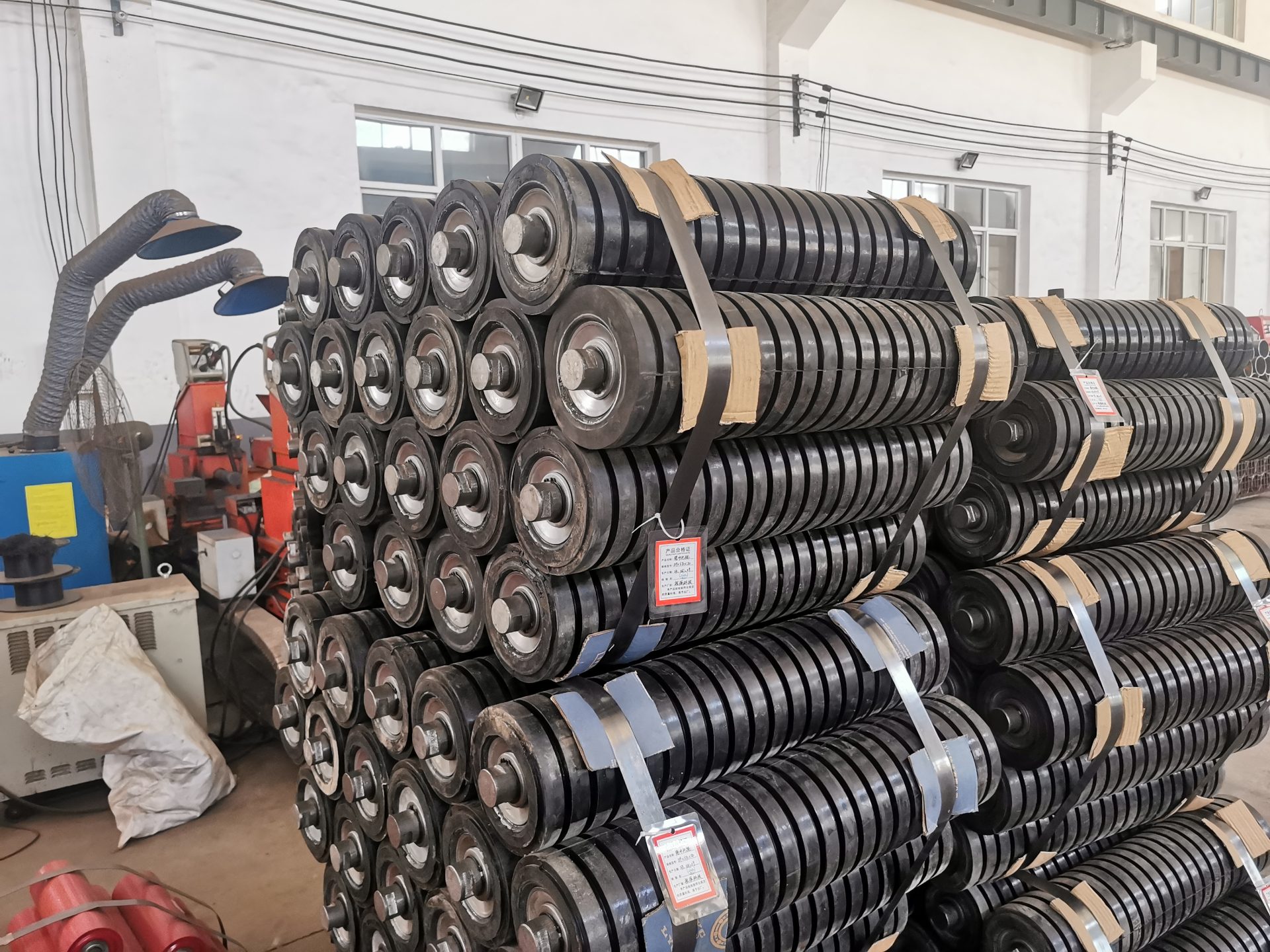
GRAM’s rubber-ring impact roller route is relevant where the proposed working surface addresses incoming material at a loading position. A ringed assembly and a plain steel assembly should remain separate constructions in the comparison. Their similar underlying body shape does not make them identical items.
If a mine’s selected loading group uses ringed working surfaces, preserve that requirement in both the component and complete-group proposals. The supplier should state which supplied rollers have the accepted construction. An impact description does not authorize a numerical load claim or establish the suitability of a changed surrounding support.
Polymer alternatives need their own complete assembly description
The GRAM polymer roller route describes a machined polymer tube or solid bar, sealed precision bearings, non-contact rubber seals and metal end caps. If that material route is considered for the intended arrangement, ask for the actual proposed roller and group interfaces. The general range description does not establish a universally interchangeable garland component.
A proposal that retains some steel components while changing others to polymer should identify the mixed arrangement as offered. Do not treat the polymer body alone as proof of the complete group’s environmental resistance or load acceptance. The accepted construction includes components beyond the polymer surface.
Count garland quantities in the unit the buyer actually needs
A request for ten “sets” can be ambiguous when one supplier counts connected groups and another counts individual rollers. Write the unit in words. Distinguish the number of complete assemblies, the number of component rollers and the number of separately supplied connection items.
For a contractor planning replacement at several positions, keep each required group identity alongside that unit. Aggregated quantities are useful commercially, but they should not conceal differences among the retained arrangements. If several positions are considered equivalent, that equivalence should be accepted explicitly.
The scope comparison should also identify whether a quoted spare is intended for a particular group or remains a proposal awaiting interface review. Otherwise a distributor can receive enough individual cylinders while still lacking the accepted parts needed to complete the customer’s arrangement.
External garland technical descriptions discuss configurable roller and attachment combinations. That general variability explains why the supply unit matters. Competitor configurations, maintenance claims and attachment systems are not automatically offered by GRAM.
Agree the delivered group and loose-part identification separately
When buying complete assemblies, agree how the delivery information identifies each supplied group. When buying components, agree how their references connect to the intended retained groups. Different scopes need different information even if both deliveries use the same transport arrangement.
Where separately packed connection items are included, identify them in the accepted offer and receiving information. A photograph with surrounding hardware does not establish that those items will arrive. Confirm the actual packing and supplied assembly form for the order rather than invent a standard export package.
GRAM’s conveyor accessories range is a route for discussing associated components. It is not evidence that every attachment shown or needed by the retained conveyor is included in a garland price. Keep accessories that form part of the actual supply recognizable as those specified items.
If the customer requires groups to be kept identifiable for different destinations, state that requirement before dispatch. The supplier can then address the actual delivery arrangement. This protects the accepted group distinctions without making an unsupported promise about stock, assembly service or lead time.
Approve a suspended replacement scope that the receiving team can recognize
Consider a contractor asking for two connected groups plus several loose rollers for existing spares. Those are two different supply units. The complete groups should retain their accepted assembly references; the loose rollers should retain the component and intended-group references that make them useful. A single total quantity labelled “garland rollers” makes it harder to confirm whether the dispatch contains complete assemblies or enough loose parts to reconstruct them. The accepted delivery form should follow the actual purchase decision.
A buyer should also distinguish a component proposed for replacement from a component approved to remain. The decision to retain existing links or suspension parts needs the project’s actual assessment. A supplier quotation that excludes new links does not establish that the old ones are acceptable. Where that assessment is unresolved, compare the partial replacement as a conditional proposal rather than a fully accepted alternative to a defined new group.
If the partial route depends on a retained connection that cannot be identified, request the missing interface information before ordering the component. Do not turn that uncertainty into a promise that a complete group will solve every support problem. The complete alternative still needs a defined boundary with the conveyor. Both routes become reviewable when their dependencies are visible.
Compare the accepted parts, retained interfaces and quantity units before comparing totals. A component-only offer with unresolved retained connections should not be presented as an accepted complete-group alternative. A complete-group offer should not quietly imply replacement of supporting equipment beyond its stated boundary.
For the mine, the useful choice is the proposal that describes the replacement it can actually accept. For the distributor, it is the proposal that can be passed to the customer without adding assumed hardware or compatibility. Keep that shared scope in the final order so the receiving team gets the same assembly that the buyer evaluated.
Last Updated on October 3, 2026 by gramconveyor_admin


