
Give Your Oil Resistant Conveyor Belt Supplier the Oil Source, Not Just the Damage Photo

An oily patch near a conveyor drive and oil distributed throughout the feed are different purchasing problems. The first may begin with an equipment leak; the second may be part of normal material duty. Before an industrial buyer asks an oil resistant conveyor belt supplier for a replacement, identify the oil and how it reaches the belt. GRAM’s belt range includes oil-resistant belting, while its rubber constructions provide fabric and steel-reinforced routes. Select an offered cover against the actual oil exposure, then confirm the reinforcement and retained conveyor separately.
An oil resistant conveyor belt supplier needs the source of contamination
Trace the oily contact before choosing a replacement compound. Ask whether oil arrives with the material, reaches the belt from equipment or is introduced during handling and cleaning. Record the actual product or material involved rather than describe every exposure as grease.
Oil-bearing feed should be described as normal belt duty
Where the conveyed material regularly contains oil or fat, give the supplier its identity, variability and contact conditions. GRAM’s belt offering discusses oil-bearing material and vegetable-oil processing contexts. Those application descriptions are a starting point for an inquiry; they do not establish the compatibility of every proposed cover with every oil.
For a plant handling oily material over a full shift, explain whether the oil is distributed throughout the feed or concentrated in occasional batches. Describe material retained on the belt after discharge as well. The offered construction needs to address the intended exposure, rather than an average description that hides a more demanding portion of the operating cycle.
A lubricant leak needs an equipment decision alongside the belt proposal
For a mineral-processing conveyor carrying normally dry material, a localized oily area can require a different investigation. Identify the equipment near the affected belt region and establish the contamination source through the plant’s maintenance assessment. A replacement cover does not remove a continuing leak.
If the lubricant is known, provide its identification and explain where it contacts the belt. Keep the belt proposal distinct from correction of the source. Ordering an oil-resistant construction may be appropriate for the duty the buyer needs assessed, but it should not conceal an unresolved equipment condition or become permission to leave that condition in place.
| Oil reaches the belt through | Information that changes the order |
|---|---|
| Regular carried material | Material identity, oil type, variability and contact during normal operation. |
| Equipment contamination | Actual lubricant, contact location and the separately agreed action on the source. |
Keep an unidentified fluid marked as unidentified until the plant can supply a reliable description. A photograph may locate the affected area, but it cannot establish the fluid’s chemistry. Guessing mineral oil from appearance can leave the cover assessment based on the wrong exposure.
Mineral oils and vegetable oils are not one universal cover requirement
The oil’s identity matters to a compound assessment. Fenner Dunlop’s technical discussion distinguishes mineral and vegetable or animal sources and describes oil-related swelling and distortion. This is background on the purchasing problem, not a GRAM test result or permission to transfer another manufacturer’s compound grades to this order.
GRAM’s range uses oil-resistance descriptions including MOR. Obtain the meaning of the designation in the actual offer and the proposed compound’s supporting information. A familiar abbreviation is not sufficient evidence that two manufacturers’ covers have the same formulation, tested behavior or accepted exposure.
Ask what the proposed oil-resistant cover was assessed against
Request the fluid or media identified in the applicable evidence and the conditions of assessment. Compare them with the described conveyor duty. If the supplier offers an assessment using a different fluid, have the responsible technical reviewer decide whether it answers the actual requirement rather than assuming all oil results are interchangeable.
Keep the proposed cover identity attached to that evidence. If the offer changes during price negotiation, check whether the revised compound still has the relevant support. Do not retain the favorable description from one proposal while accepting another rubber construction without clarifying the difference.
Upper-cover and underside oil contact lead to different questions
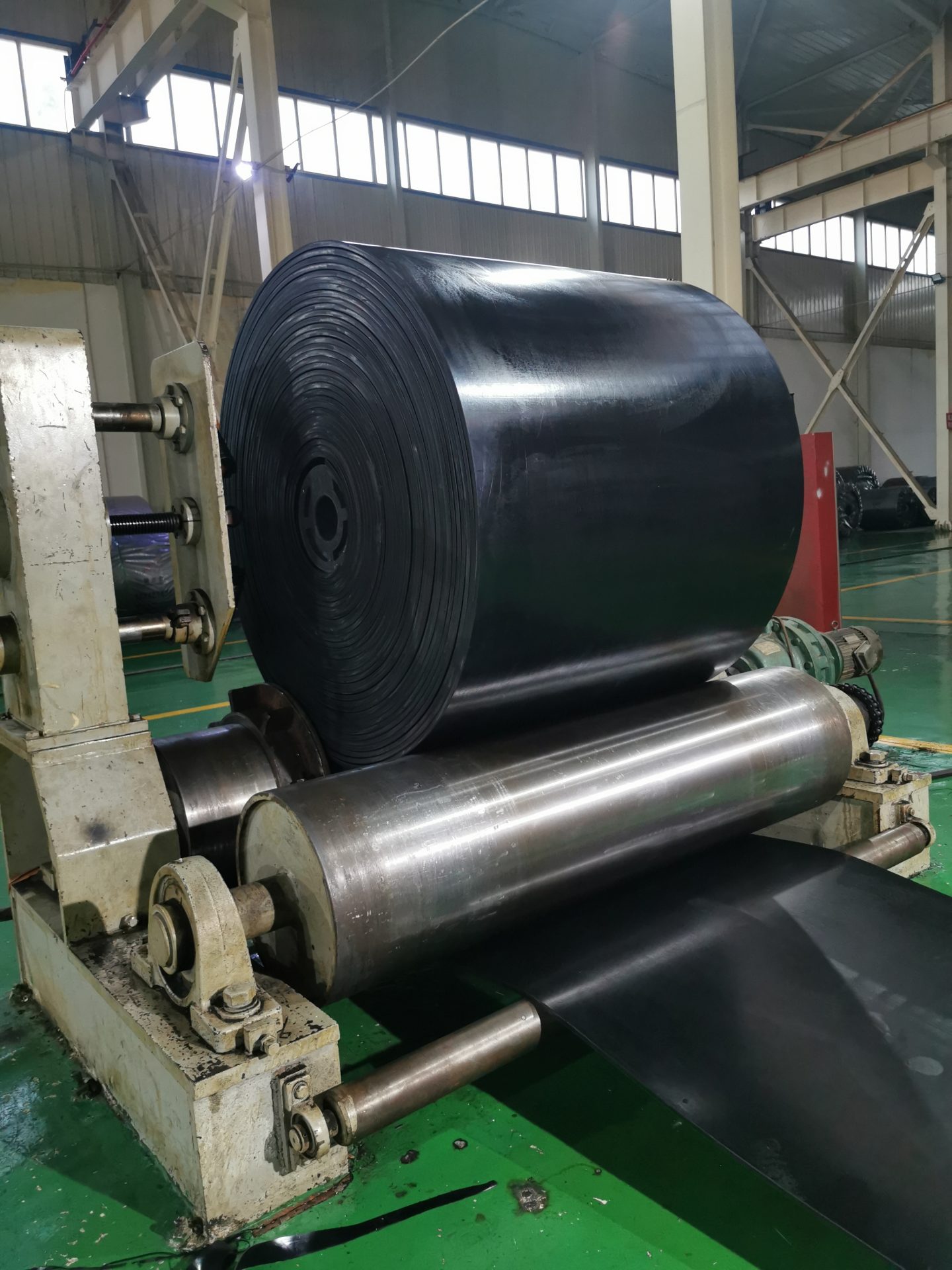
The two belt faces have different normal contacts. The upper surface carries material; the lower surface interacts with conveyor components. GRAM’s EP construction separates the upper cover, textile carcass and lower cover. Use that distinction when locating the fluid exposure and requesting the offered cover arrangement.
When oil arrives in the feed, describe the material-contacting face and any path by which residue reaches edges or other belt regions. When contamination comes from equipment, identify whether the underside or another area is involved. A request for an oil-resistant upper cover does not automatically define the lower-cover requirement.
Visible swelling should not become the replacement drawing
If the old belt has distorted, preserve its original accepted construction information where available. Record the present condition separately. Measuring an affected section can help document what happened, but that measurement is not necessarily the original belt dimension or the correct dimension for the retained conveyor.
A maintenance team should provide both the known ordered specification and the observed change, with uncertain details clearly identified. The damage-pattern discussion helps organize that evidence. It does not diagnose the fluid or establish that swelling caused every tracking problem seen on the conveyor.
Preserve the reinforcement decision when the oil-resistant cover changes
An oil-related cover revision and a reinforcement revision answer different questions. EP identifies polyester longitudinal yarns and nylon transverse yarns. That fabric arrangement does not establish the oil compatibility of the finished belt. State the proposed cover and reinforcement together, rather than treat a familiar EP name as a complete replacement specification.
If the retained conveyor uses a textile belt, keep its required construction and dimensions visible during the cover comparison. Have any proposed reinforcement change assessed against the existing machine. A cover intended for oily feed cannot justify an otherwise unreviewed change to the belt’s mechanical construction.
A steel-cord proposal still needs its own oil-exposure cover
GRAM’s steel-cord belting is a separate route with longitudinal steel reinforcement. Steel cords do not establish the suitability of the surrounding rubber for the identified oil. Ask for the finished construction to which the compound assessment applies.

Keep joining information aligned with the proposed construction as well. Do not assume that the previously used materials or instructions remain applicable after a cover or reinforcement revision. Identify who will review the joining proposal for the actual replacement belt.
Combined heat and oil duty needs a combined construction proposal
GRAM’s HR offering discusses heat and oil exposure. Where both occur, describe them together and request a defined operating envelope for the offered construction. A heat description and a separate oil description cannot be assembled into a guarantee by the buyer.
If the material supplier can change the feed’s oil content, tell the belt supplier which range of conditions the plant needs assessed. A proposal for one identified oily batch is not automatically acceptance for a later mixture. Keep the feed change visible to the person responsible for the rubber construction. Likewise, if the site replaces an equipment lubricant, compare the new fluid with the exposure description used for the belt order rather than assume the replacement has the same effect on its covers.
At receipt, connect the supplied roll to the accepted reinforcement and cover description. Preserve that identity through handling so the installation team receives the same construction that was assessed. Packaging arrangements should protect the supplied faces and edges and retain identification; no particular package standard or delivery interval is established by a general oil-resistant label.
The useful next order starts with the source: normal oil-bearing feed, an identified equipment fluid or a condition still under investigation. Ask the supplier to answer that exposure with a defined cover, while the plant separately addresses the contamination source and retained-machine fit. An unexplained oil-resistant abbreviation should not be the deciding line in the purchase.
Last Updated on October 2, 2026 by gramconveyor_admin


