
Tell Your Nylon Conveyor Rollers Supplier How the Roller Will Move Between Dry and Wet Service

The replacement roller fits in a dry workshop, but that is not the whole operating environment. An outdoor conveyor may expose it to rain, wet material and changing storage conditions. Industrial buyers discussing an order with a nylon conveyor rollers supplier should first define the nylon material and the conditions under which fit is accepted. GRAM’s nylon roller offering is the relevant starting route. Its general material description is not an identified nylon grade or a quantified wet-service dimensional result. Get those distinctions clear before accepting a replacement by its dry-store measurements alone.
A nylon conveyor rollers supplier needs more than the word nylon
Nylon identifies a material family, not a complete roller specification. The buyer needs to know which part is nylon, what material is proposed for it and how the complete assembly fits the intended conveyor. Different constructions should remain distinguishable even when they share a general nylon description.
GRAM lists nylon rollers separately from its wider polymer roller route. That is useful product navigation, but it does not establish that the materials or constructions are equivalent. Request the actual proposed grade and assembly drawing for the nylon order. Do not insert a familiar nylon grade into the purchase merely because it is common elsewhere.
A nylon roller body and a polyamide end cap are different objects
Identify the material’s location in the roller. GRAM’s silent roller description includes polyamide end caps, precision ball bearings and a polypropylene labyrinth cap. That is not evidence that its complete cylindrical body is nylon. An end-component material and a body-material description answer different questions.
A distributor receiving a request for nylon rollers should ask whether the customer means the working body, an end component or a previous supplier’s commercial family name. This clarification prevents an offer with a nylon component from being treated as the requested nylon working surface. It also keeps a unit-handling construction separate from a bulk belt-support proposal.
Dry-store and wet-service nylon roller measurements need a common basis
A dimension should be accompanied by the condition in which it was measured. For a proposed replacement moving from dry storage to wet service, tell the supplier about both environments and ask how the supplied material is to be evaluated. An unexplained change in condition can make a fit comparison difficult to interpret.
Ensinger’s material-selection information explains that moisture uptake in plastics depends on material and environmental conditions and can affect dimensions. This is general background. It provides neither a GRAM nylon grade nor a dimensional change to apply to a GRAM roller.
- Condition at receipt
- Record where the nylon assembly has been stored and the agreed condition for checking the proposed drawing dimensions.
- Condition on the conveyor
- Describe rain exposure, wet carried material and any cleaning routine relevant to the actual roller position.
- Condition for acceptance
- Agree with the supplier and responsible engineer which observations and measurements establish fit for that proposal.
Outdoor wetting should be described separately from immersion
Rain or damp feed does not describe the same exposure as continuous immersion. State what actually reaches the nylon roller and for how long, rather than using waterproof as a substitute for a duty description. Include any cleaning liquids separately; moisture behavior alone does not establish chemical compatibility.
For a maintenance buyer moving a familiar roller design from an indoor conveyor to an outdoor line, retain the original drawing but reopen the exposure discussion. A successful dry fit is useful evidence of that checked condition. It is not proof of unchanged dimensions, bearing protection or suitability through the new wet duty.
The nylon working face still needs the correct frame clearance
The proposed working-face length, shaft interfaces and complete assembly dimensions must match the intended installation. Ask how the material’s specified condition relates to those dimensions and tolerances. The engineer should establish the acceptable clearances for the actual frame rather than the buyer adding a generic moisture allowance.
Do not change a mounting dimension to compensate for an unknown material effect. First obtain the proposed material identity and the supplier’s dimensional basis. Where the answer is missing, record the unresolved fit question instead of assuming the same change applies to every nylon component.
Compare nylon, polymer and steel roller proposals without losing the duty
Alternative material routes can be useful when an exposure or fit question remains open. Compare complete proposals for the same conveyor role, however, rather than choosing a body material in isolation. GRAM’s nylon, polymer and steel offerings give the buyer different starting routes, not a universal order of suitability.

A polymer body does not establish the bearing-end exposure
The wider GRAM polymer description includes end caps, bearings and seals. Those components need their own identification when the conveyor’s wet duty is assessed. A corrosion-related description of a polymer body does not settle how water reaches the assembly ends or what the bearing arrangement can withstand.
The polymer assembly discussion explains that separate body-and-end review. For the nylon order, use the actual proposed assembly rather than transfer every polymer construction detail to it. A shared broad material category is not proof of identical seals or bearing components.
A steel roller alternative changes the material assessment
GRAM’s steel roller route is another option to discuss for the defined conveyor role. It changes the body-material question but does not remove the need to assess bearings, end protection and the actual wet exposure. A steel proposal also needs its own surface and construction details.
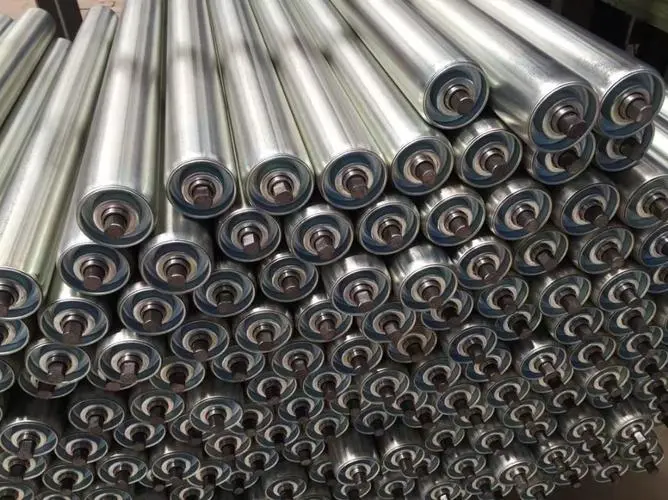
A purchaser should not turn a material substitution into an unreviewed assembly substitution. Keep the intended working position, dimensions and conveyor conditions fixed while comparing alternatives. If the new proposal changes the end arrangement or shaft interface, record that difference for the installation review.
Keep a nylon guide request separate from a carrying-roller order
GRAM also lists guide rollers. A guiding contact and a carrying position are different working roles. If a buyer asks for nylon because of a contact-surface concern, first identify the role and contact location before selecting a material route.
For a distributor stocking replacements, label the proposed nylon item by assembly and intended duty, not just by body diameter and material name. A guide assembly cannot be treated as a carrying spare merely because both are cylindrical. The drawing and installed role should remain linked to the item offered to the customer.
If the customer asks whether a polymer roller can replace the nylon request, answer with the actual proposed construction and the differences that need approval. If the customer asks for a guaranteed wet expansion value, obtain grade-specific evidence rather than borrow a number from a general material reference. These are two separate questions, and a photograph cannot answer either.
Agree the nylon acceptance condition before the replacement is released
Use a representative proposed assembly and an agreed evaluation plan where the site requires practical confirmation. The plan should identify the material, drawing revision, measurement condition and relevant conveyor exposure. Any conditioning method or test duration must come from appropriate technical agreement; there is no universal soaking recipe established by the product route.
Packaging and storage should preserve the intended inspection basis and protect the identified shaft and end components. Agree how the item will be stored before measurement and installation. Do not promise a moisture-controlled package or a standard storage interval when the actual supply arrangement has not specified one.
Release the nylon replacement when the supplier’s material identity, dimensional basis and the site’s fit decision refer to the same assembly. If the only information available is nylon roller, leave the wet-service acceptance question open. A precise proposal is more useful than a confident promise attached to an unidentified material.
Last Updated on October 2, 2026 by gramconveyor_admin


