
What a Heat Resistant Conveyor Belt Manufacturer Needs to Know About Your Hot-material Cycle

A clinker conveyor can carry hot fines across much of the belt while a few larger pieces create concentrated contact. One material-temperature figure does not describe both exposures. For cement, steel and other bulk-material plants discussing an order with a heat resistant conveyor belt manufacturer, first describe the material on the belt and how its contact changes through a complete operating cycle. GRAM’s HR rubber belting names clinker, coke, sinter and phosphate applications. Start there, but request a construction proposal for your actual heat duty rather than treating an application name as a temperature guarantee.
A heat resistant conveyor belt manufacturer needs the material distribution
The distribution of hot material changes what the proposed belt must be assessed against. A broad layer of fines and isolated coarse lumps may arrive from the same process, yet they present different contact patterns. Describe both in the inquiry, including their presence during normal running and process interruptions.
Hot clinker fines create a broad carrying-surface exposure
For a clinker line carrying a deep bed of fine material, describe the load depth, width of coverage and time the material remains on the belt. Record where the process temperature is measured. A reading upstream of a cooling stage is not automatically the temperature of material reaching the conveyor.
The GRAM HR route is relevant to discussing this hot-material duty. Its rubber-belt construction still needs a proposed upper cover, reinforcement and lower cover. A buyer should obtain the supplier’s defined operating limit for the offered construction and the conditions behind it. Do not assemble a new limit by combining separate general statements about hot material, rubber temperature and application grades.
Coarse hot lumps add local contact and loading questions
Coarse pieces make the hot-material description more specific. Record their approximate size distribution and how they enter the belt, alongside the temperature information. A small average fraction of large pieces can still matter when the belt receives them repeatedly at the same transfer.
For a steel plant discussing coke or sinter duty, the order should distinguish the thermal proposal from the mechanical loading proposal. A heat-resistant cover description does not settle the effect of a sharp or heavy piece landing on the conveyor. The selected rubber construction must be reviewed against both conditions, with actual reinforcement and support information available to the responsible engineer.
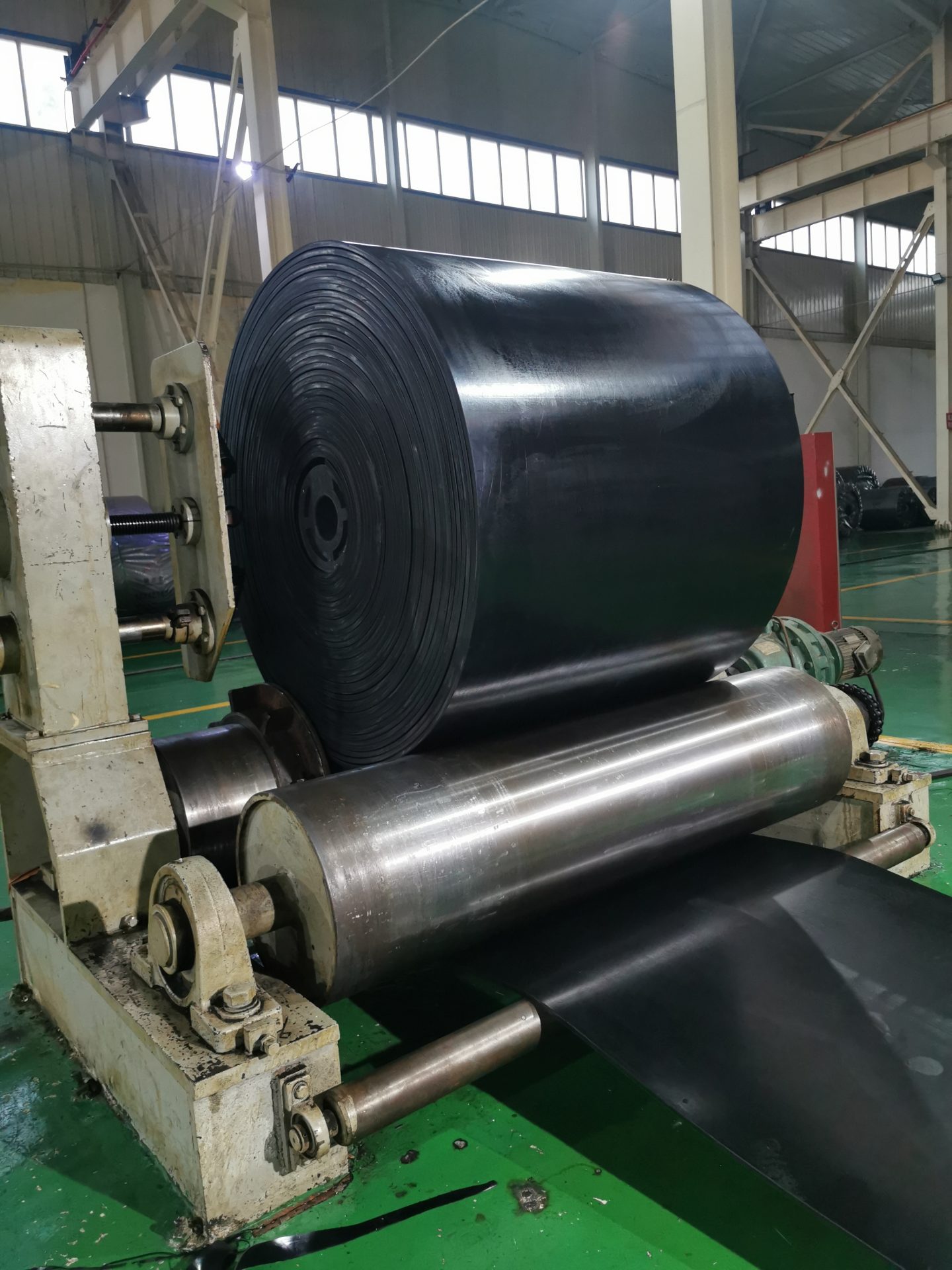
Continuous heat-resistant belt duty differs from a stopped hot load
A continuously moving belt follows a different exposure sequence from a belt stopped beneath retained hot material. Explain normal running, foreseeable stopping and restart conditions when requesting the HR proposal. The distinction is especially relevant when a process change alters cooling or causes longer interruptions.
At loading: describe the material temperature at this conveyor, the mix of fines and lumps and the area of belt covered.
Along the carrying run: describe travel time, repeated loading and any change in the material bed.
During a stop: tell the supplier whether hot material can remain on the belt and identify the condition the plant needs assessed.
A plant replacing a belt after changing a cooler should supply the changed process conditions, even if the conveyor dimensions remain unchanged. Reordering by the previous belt description alone leaves the new heat exposure outside the comparison. The GRAM HR offering is a route for the revised assessment, not proof that every construction in that route suits the changed process.
Separate normal hot-material temperatures from excursions
An occasional high reading needs its duration, location and operating context. A continuous temperature and a short excursion should not be presented as one undifferentiated maximum. Agree how the actual material measurements were obtained and what operating conditions the proposed belt is expected to withstand.
Require the offered HR construction to state the meaning of its limits. If the supplier’s figure refers to conveyed material, do not relabel it as a belt-surface limit. If the definition or supporting evidence is missing, hold the temperature acceptance open. Neither an attractive product name nor a thicker cover resolves an undefined exposure.
Review the heat-resistant belt beyond its upper cover
The complete belt needs to be considered because thermal duty is not only a surface description. Fenner Dunlop’s technical overview explains that heat can affect rubber and adhesion within the belt. That is general background; its product grades and performance figures do not describe GRAM belting.
GRAM’s rubber belt constructions separate the cover decision from the reinforcement route. An offered belt should therefore identify the complete construction to which its duty statement applies. Asking only for heat-resistant rubber can leave the buyer without an agreed carcass or lower-face specification.
EP and NN describe fabric arrangements rather than heat ratings
The EP offering uses polyester longitudinal yarns and nylon transverse yarns. The NN route uses nylon in both directions. Both are reinforcement descriptions; neither family name establishes the thermal capability of the proposed finished belt.
For a retained conveyor, ask which textile arrangement, ply construction and dimensions are proposed with the HR cover. Have the responsible engineer review that construction against the conveyor’s tension and bending requirements. A change intended to improve heat duty should not quietly introduce an unreviewed reinforcement substitution.
Steel-cord reinforcement needs its own thermal construction evidence
GRAM also lists steel-cord belting, with longitudinal steel reinforcement. The presence of steel cords is not sufficient proof of a finished belt’s heat capability. The cover, surrounding rubber and joining arrangement still belong to the construction that must be assessed.

Keep any thermal construction revision visible to the joining team. The buyer should obtain information applicable to the offered belt rather than rely on materials or instructions from the previous construction. No particular site-joining service or material kit should be assumed to accompany the belt unless included in the agreement.
The empty return interval is part of the described hot-duty cycle
After discharge, the belt returns to loading. Include the length and operating pattern of that interval in the information given to the supplier, alongside the carried-material exposure. Do not assume a particular cooling benefit from the return path; state the actual arrangement so the thermal proposal can be assessed against it.
If the plant plans to increase belt speed or shorten the route, record the changed cycle rather than leaving the original duty description in the order. Those changes can alter travel time and the frequency with which the same belt region reaches hot loading. The HR proposal needs the intended operating condition, not simply the name of the material transported.
Residual hot material after discharge also belongs in that description. If carryback remains on the belt, identify where it travels and whether the plant expects a cleaning change. Keep the cleaner assessment distinct from the heat-resistant belt construction. A new cleaner does not establish a new thermal limit for the rubber, just as an HR cover does not prove that a retained cleaner suits every revised construction.
Approve the hot-duty proposal against the revised process
Receiving inspection should connect the delivered belt to the construction approved for the described hot-material cycle. Check its identification against the proposal and resolve unexplained substitutions before installation. A visible rubber surface cannot verify a heat grade, and a generic certificate cannot identify an unstated construction.
If the existing belt is cracked, separated or otherwise damaged, retain the operating history and seek an appropriate engineering assessment. The damage-pattern discussion helps keep a replacement decision tied to observed evidence. It cannot diagnose whether heat, loading or another condition caused a specific failure.
For the next HR order, give the supplier the material distribution, measurement location and stopped-load condition together. Accept the thermal proposal only when its construction and duty definitions answer that process description. A number without those definitions leaves the hardest part of the hot-material decision unresolved.
Last Updated on October 2, 2026 by gramconveyor_admin


