Reading an Abrasion Resistant Conveyor Belt Supplier’s Wear Result Before Changing the Cover

Two rubber-cover wear figures cannot be compared usefully if the test basis is missing. A smaller number might describe less material loss, another method or a different reported quantity. Quarry and bulk-material buyers assessing an abrasion resistant conveyor belt supplier should establish what was measured before changing the cover specification. GRAM’s rubber belt range and EP constructions provide routes for that discussion. Bring the actual material and damage evidence as well: abrasion data alone will not settle a sharp-lump or loading-impact problem.
Make the abrasion resistant conveyor belt supplier’s numbers comparable
A result needs its method, reported quantity and sample identity. Request those details alongside the proposed cover description. Without them, the purchaser cannot know whether two figures describe the same kind of assessment or the rubber actually being offered.
For comparable volume-loss tests, lower loss indicates less rubber removed under that test. Fenner Dunlop’s wear discussion explains this interpretation and distinguishes wear mechanisms. It does not supply a test value for GRAM. No cover-loss number should be assigned to the proposed belt without its own applicable data.
| Evidence received for the cover | Comparison the buyer can make |
|---|---|
| Same method and quantity, identified proposed compounds | Compare the reported loss within that test basis; separately assess suitability for the material duty. |
| Bare numbers, different methods or unidentified samples | Request clarification before treating the values as equivalent performance evidence. |
A distributor comparing offers for a quarry should preserve the result’s stated units. Do not rewrite a mass-based figure as a volume-based figure or convert an unexplained number into a cover grade. If a customer specifies a particular test requirement, compare the submission against that requirement instead of selecting whichever figure appears smallest.
The abrasion sample should represent the offered cover
The connection between a sample and the proposed rubber matters as much as the number. Ask which cover compound the result identifies and whether that is the one in the offer. A test on another compound or an unspecified catalog example does not establish the performance of the ordered cover.
Keep the upper and lower cover descriptions distinct. GRAM’s EP construction separates those covers from its textile carcass. If the material-contacting cover is being revised for wear, identify that revision directly rather than replace the complete belt description with abrasion resistant rubber.
Abrasion-resistant belt selection changes when sharp material cuts the cover
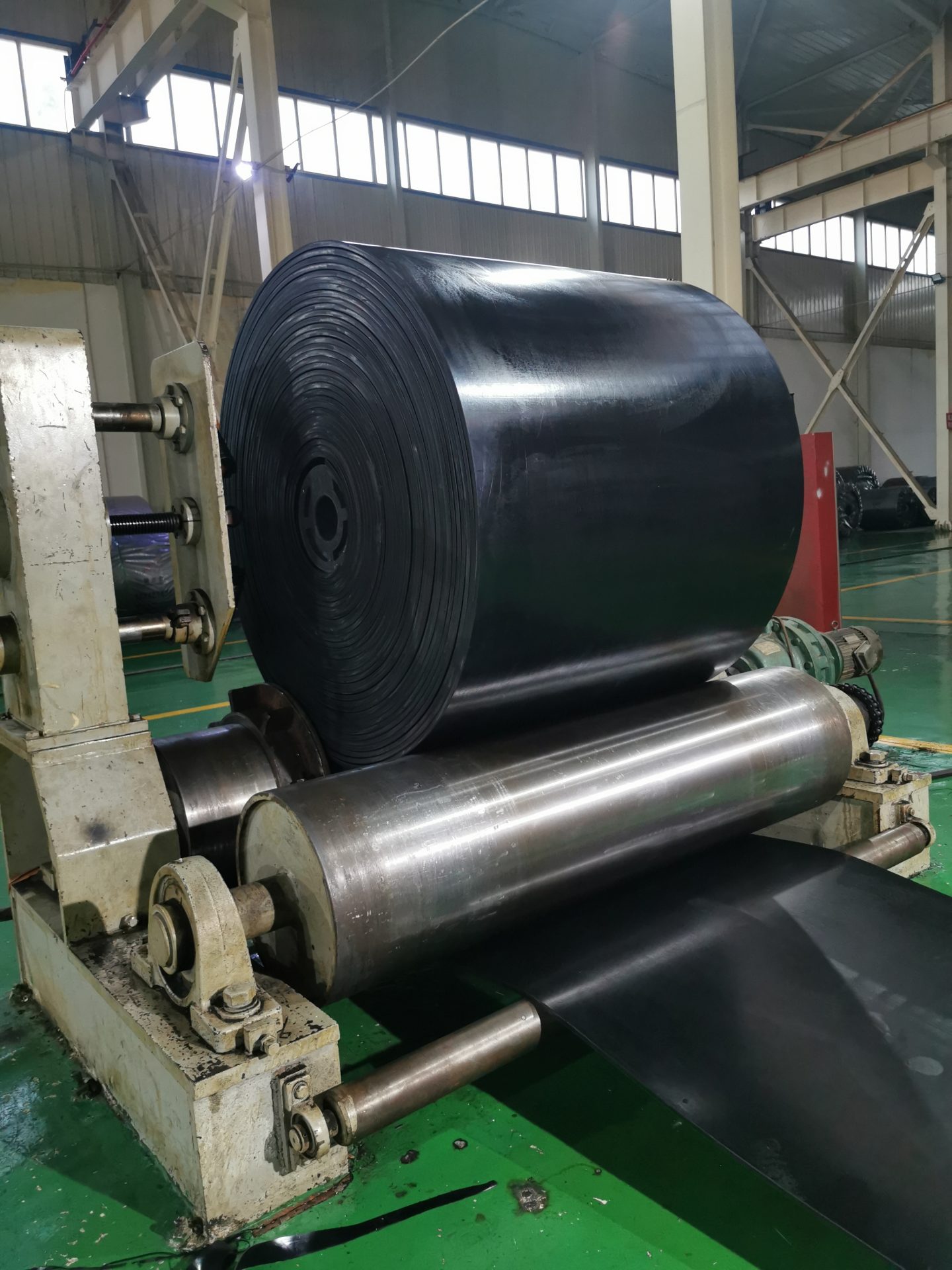
Sliding wear and a local cut are different observations. Record whether rubber is gradually disappearing across a contact region or whether sharp material is creating distinct incisions and missing pieces. The supplier’s cover proposal should address the observed mechanism, rather than rely on one abrasion figure to answer every form of damage.
Sharp crushed stone raises cutting questions beyond volume loss
For a crushed-stone line, describe the material shape and size range together with photographs of the damage. A cover can have a reported wear result while the actual order still needs assessment for sharp-particle contact. Ask what evidence supports the proposed compound for that condition; do not infer cutting resistance from the abrasion number alone.
GRAM’s mining belt route is relevant to discussing bulk ore and demanding material duties. It is not a separate proof that every listed construction has a particular cut or abrasion classification. Connect the chosen reinforcement and cover to the described material rather than allow the application label to substitute for evidence.
Chunk loss at loading calls for a support review
When rubber pieces are lost near a transfer, include the landing condition in the assessment. Record where the material contacts the belt and what supports that region. An abrasion test is not a measurement of the complete loading arrangement, and a cover-only change can leave the original mechanical condition unexamined.
GRAM’s impact rollers use ringed working surfaces in the illustrated assemblies. They provide a different support route from a plain carrying roller. The loading-zone support range also includes beds, saddles and idlers. Their actual geometry and duty need engineering assessment; no generic support family is automatically a cure for chunk loss.
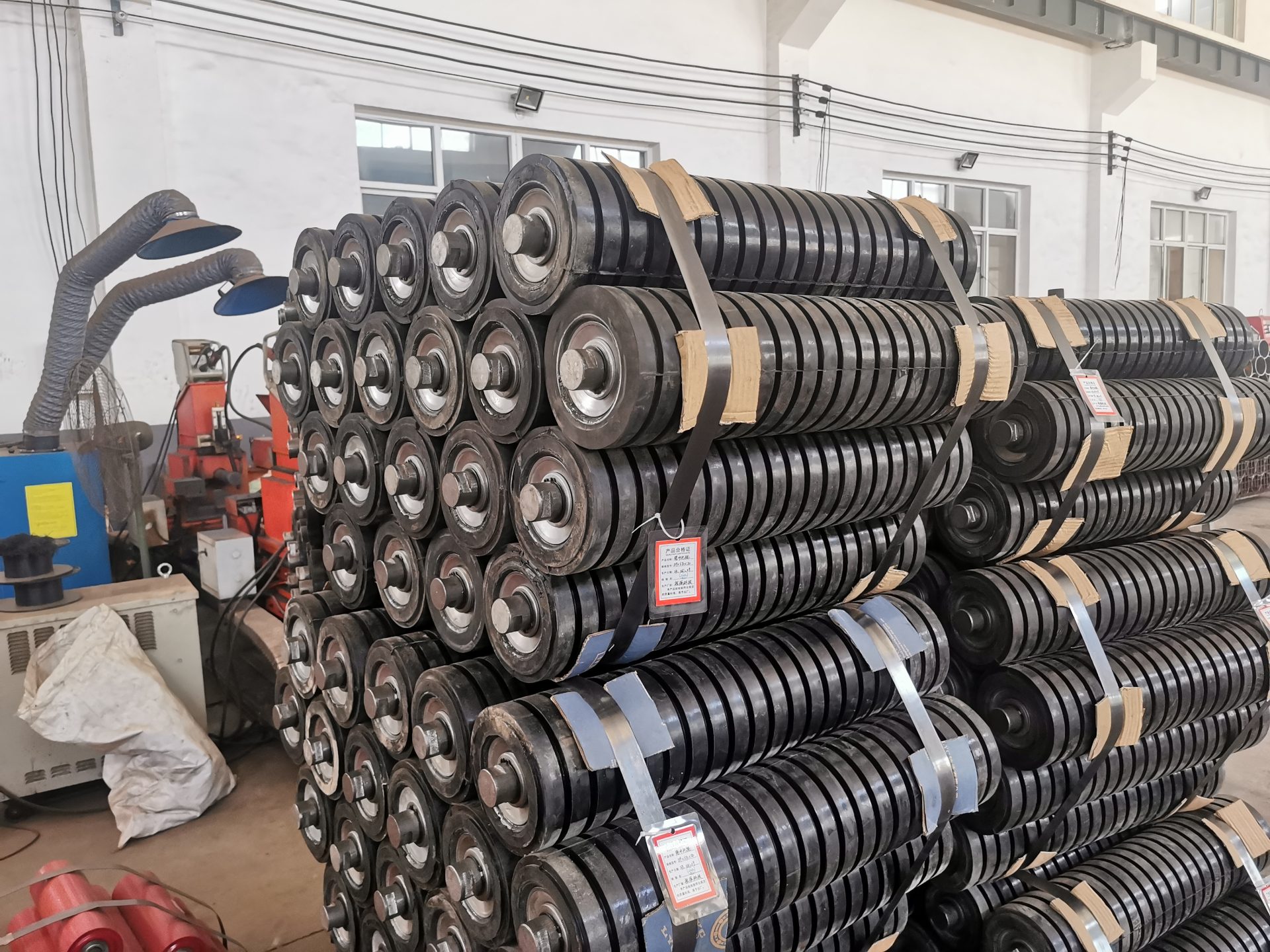
For a quarry replacing both belting and loading supports, keep the two decisions separately stated. The belt proposal concerns construction and cover evidence. The support proposal concerns the actual assembly and its installation. Review their interaction, but do not describe a support purchase as an improvement in the belt’s laboratory abrasion result.
Keep EP reinforcement separate from the wear-resistant cover decision
The EP route identifies polyester longitudinal yarns and nylon transverse yarns. Its carcass provides a distinct part of the belt construction beneath the covers. Changing the proposed upper rubber does not settle the reinforcement requirement, and a reinforcement upgrade does not establish a new cover-wear result.
If the original carcass designation is to remain, state that in the revised order. If the supplier proposes another construction, obtain its actual specification and have it assessed against the conveyor. The GRAM rubber range includes fabric and steel-cord routes; neither should be silently substituted because the inquiry emphasizes abrasion.
Cover thickness and tested wear describe different things
Cover thickness is a construction dimension; a wear result describes behavior under a stated test. Request both when both matter to the order. A thicker cover is not proof of a better compound result, and a favorable laboratory result does not determine the acceptable thickness for the retained conveyor.
Ask the supplier to identify the proposed cover dimension and its tolerances in the agreed specification. Where the conveyor retains its pulleys, supports and cleaners, the responsible engineer must review the finished construction against those contacts. Do not estimate a new dimension from a worn belt surface or choose thickness solely from a generic product photograph.
A wear specification should preserve the agreed rubber result
When a tender requires a maximum reported loss under a named method, retain that requirement in the final cover proposal. Replacing it with a phrase such as premium wear rubber makes the acceptance condition less precise. Have the supplier identify the offered compound and applicable result against the requirement, without inventing a classification from the product family name.
If offers use different test descriptions, first determine whether the results can legitimately answer the same requirement. The buyer should not devise a conversion between unrelated methods to make the commercial comparison easier. Where clarification changes the offered compound, keep the revised compound identity attached to its revised evidence rather than combine the favorable number from one proposal with the price of another.
For a repeat EP order, this distinction also prevents a cover substitution from being hidden by an unchanged reinforcement designation. The belt can remain EP while the proposed upper rubber changes. The receiving record should therefore retain the agreed cover description as well as the fabric construction. If the delivered identification differs, resolve that difference before the belt is installed and its documents become separated from the shipment.
Carry the wear evidence into a material-specific belt trial
When a comparison on the actual conveyor is feasible and approved by the site, define the observed condition before the replacement runs. Record the construction, material duty and relevant support changes. Otherwise, a later difference in damage can be attributed to the new rubber when the loading arrangement or feed also changed.
The landing-zone roller discussion examines the support interface in more detail. Use that separate assessment when impact is part of the evidence. It should complement the cover review, not replace it with a different product claim.
For the next abrasion-resistant order, require a comparable test description, an identified cover and an account of the real material contact. If the main observation is cutting or chunk loss, make that condition part of the proposal. The smallest unexplained number is a poor reason to repeat a belt that is failing for a different mechanism.
Last Updated on October 2, 2026 by gramconveyor_admin


