A Rubber Coated Conveyor Rollers Manufacturer Must Allow for the Finished Diameter

Adding rubber to a steel roller changes the surface that touches the load. It can also change the finished diameter and the clearance available in the conveyor. An integrator selecting a rubber coated conveyor rollers manufacturer should therefore approve the finished assembly dimensions before comparing a coated roller with the bare steel original. GRAM’s conveyor roller range describes rubber-coated steel rollers for increased grip and reduced noise. The appropriate enquiry starts with the product being handled, its contact surface and the existing roller installation.
For a carton transfer, coating may address slipping or harsh contact. For a loaded belt conveyor, the question can involve a different contact arrangement entirely. Identify which job the roller performs and whether it is free-running or driven. A material name alone cannot establish that a replacement will run at the correct height or fit between the adjacent components.
A rubber coated conveyor rollers manufacturer needs the finished running diameter
The bare tube diameter is the diameter before the rubber working surface is considered. The finished diameter is what establishes the roller’s external contact geometry. Put those two descriptions on the drawing separately. If the enquiry gives only one measurement, state whether it refers to the worn sample, bare tube or required new running surface.
Coating thickness belongs with the steel tube specification
A coated assembly needs a relationship between the underlying tube and the external rubber surface. Ask the manufacturer to define that relationship in the offer rather than interpreting a photograph. GRAM’s steel roller range explains the steel body, end bearings and shaft interfaces that remain part of the assembly beneath or beside the coating.
A replacement buyer may measure an old coated roller after years of wear. That sample provides useful evidence of mounting dimensions, but the worn running surface may no longer represent the intended new diameter. Compare the measurement with the equipment drawing or an unworn roller from the same position. Mark the desired finished dimension explicitly before ordering.
Transfer height can change when the rubber surface changes
When the shaft position remains fixed, a change in outside diameter changes the roller’s upper contact level. At a short transfer, that can affect how a carton moves from the preceding conveyor to the next section. Inspect the adjacent contact levels and any guides rather than evaluating the coated roller in isolation.
For an integrator adding grip to a troublesome carton transfer, the useful comparison is therefore more than rubber against steel. It includes the finished running diameter, contact height and clearance to the surrounding frame. A coated option should solve the original movement problem without introducing a step, rubbing point or unintended interference.
Rubber coated conveyor roller selection depends on how the load moves
A grip-oriented coating enquiry needs the actual load contact. Describe whether the roller meets cardboard, a rigid container, a bag or a belt. Include contamination that changes the contact, such as moisture or dust. The manufacturer can then discuss the offered surface construction against a defined use rather than an unsupported promise of better traction in every condition.
Powered coated rollers require drive compatibility as well as grip
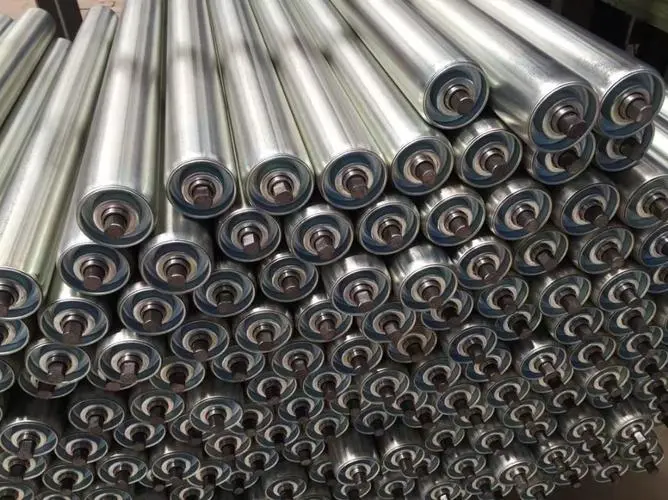
For a driven roller, identify the transmission arrangement and the position of its drive components. GRAM lists grooved and sprocket variants within the steel range. Those are distinct interfaces that must match the conveyor. Rubber on the running surface does not make an incompatible groove or sprocket position acceptable.
If roller rotational speed is set by the existing drive, a different finished diameter can also change the relationship between rotation and contact movement. The system designer should assess that relationship before approving the coating change. Do not use a generic friction claim as a replacement for the conveyor’s drive and speed requirements.
Free-running rubber coated rollers still need a controllable load path
On a free-running transfer, increased surface grip does not create a powered conveyor. The product still needs suitable support and a defined means of movement. A coating that changes rolling behavior can alter how an operator handles a package or how it travels through a gravity section. Evaluate the actual product and operating arrangement with the conveyor owner.
GRAM’s heavy-duty roller conveyor range distinguishes gravity and powered conveying. Use that distinction to describe the equipment in the enquiry. Do not combine a carton-transfer coating discussion with the unrelated support requirements of a bulk-material belt conveyor.
Keep continuous rubber coating separate from rubber-ring impact support
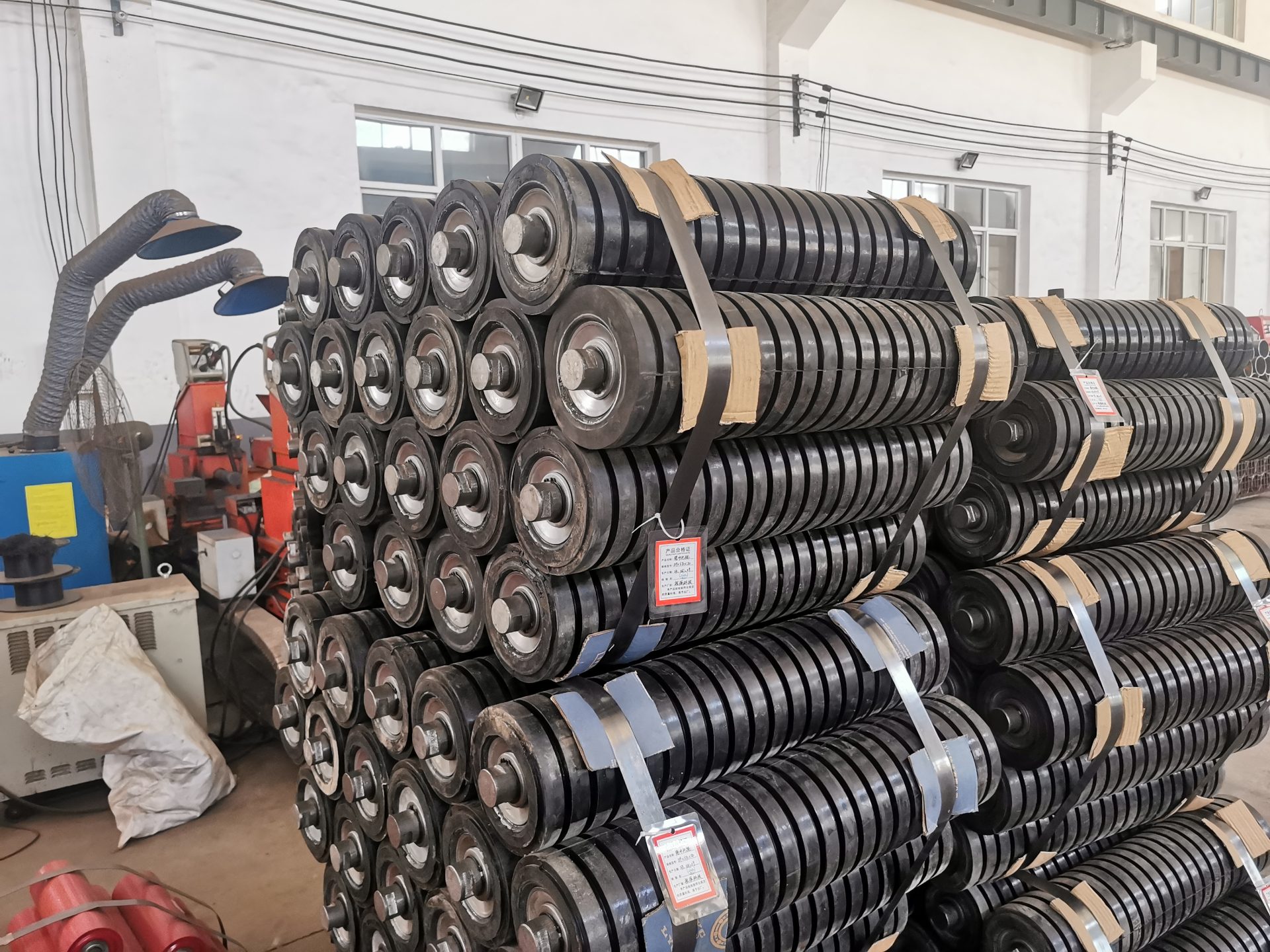
A continuously coated running surface and a roller fitted with rubber rings are different constructions. GRAM’s impact rollers use rubber-ring working surfaces for loading-zone support. That purpose should remain clear when a buyer compares photographs or asks for a rubber roller.
A contractor whose belt is damaged by falling aggregate should investigate the impact support and transfer conditions. A carton-line integrator seeking gentler contact should investigate the running surface and product movement. Using one term for both enquiries makes it harder to select the correct assembly and can bring irrelevant products into the quotation.
GRAM’s quiet roller conveying route is another relevant option when noise is part of the problem. However, neither that route nor the rubber coating description establishes a measured sound reduction for a particular installation. Discuss the offered assembly and actual source of noise without assigning an unsupported performance figure.
Specify coated roller contact before approving the drawing
The package contact area should justify the rubber-coated surface
A carton that slips on a short transfer is not the same application as a rigid crate moved through a long roller line. Describe which part of the load touches the roller and whether the base is flat, flexible or uneven. A coating enquiry should explain that contact problem. It should not begin by assuming that maximum grip is the correct objective for every item passing through the conveyor.
For a line handling a mixture of cartons and containers, evaluate the least stable base as well as the easiest item. A new surface may change how the product enters a stop or negotiates a transfer. The conveyor designer should assess those movements with the proposed finished diameter and actual product condition. Do not compensate for an unresolved support problem by simply asking for a softer or thicker coating.
Contamination should also be described at the contact surface. Water, loose dust and a film of process material can change the way the load meets the roller. State whether those conditions are occasional or routine, and identify the cleaning method. The offered rubber material and its suitability require confirmation; a general grip description is not a promise of identical behavior on every contaminated surface.
If an existing drive roller is being refurbished or replaced, identify what the buyer expects to retain. The tube, bearings, shaft and surface may have separate damage or wear. Specify the supplied assembly boundary and the inspection of the retained parts. A new coating should not conceal a bent body or an unresolved bearing fault in a supposedly ready-to-install replacement.
The purchase drawing should identify the finished diameter, working surface length, shaft ends and any drive feature. It should also show where the coating stops relative to the end components. Those boundaries matter when adjacent rollers, guides or frame parts sit close to the running surface. The custom roller dimension discussion can help clarify which interfaces the buyer has verified.
Check a supplied sample or finished unit against the approved drawing. Look for visible surface damage, exposed areas where continuous coverage was required, and rubbing at the ends during rotation. Any agreed runout, dimensional tolerance or material test needs its own acceptance value in the purchase documents. A visual check cannot establish an unspecified coating hardness or bond performance.
The Rolcon product range distinguishes different conveyor roller constructions and replacement options. It is useful background for separating roller functions. Its particular coating systems, materials or manufacturing claims should not be copied into the specification of a GRAM product.
Coated running surfaces need protection from transit contact damage
Ask how the finished rubber surfaces will be kept from rubbing against sharp shaft ends or metal parts during shipment. If spacers or protective wrapping are agreed, confirm that they support the roller without distorting the working surface. Inspect the delivered coating before installation rather than discovering transport damage only after the roller enters the line.
Identify coated replacements by the approved finished diameter as well as the mounting dimensions. This is useful when a distributor stores bare and coated steel rollers for the same customer. Similar shaft interfaces can make the units look interchangeable, even when their contact heights or surface behavior differ.
Approve the rubber-coated replacement only after the running surface, installation clearance and movement requirements are resolved together. The best result is a roller that addresses the original contact problem while fitting the existing transfer. A coating description without those dimensions is still an incomplete order, regardless of how attractive the unit price appears.
Last Updated on October 3, 2026 by gramconveyor_admin


