
Separate Raw Feed and Hot Product in a Cement Plant Conveyor Belt Supplier Order

One cement plant purchase order can contain conveyor belts for duties that have little in common beyond the site name. A raw-feed line, a hot-product conveyor and another retained transfer should not inherit the same requirement simply because they are being bought together. Give a cement plant conveyor belt supplier a separate duty description for each line. GRAM’s heat-resistant rubber belts offer a route for hot-material review, while reinforcement and cover choices for the other lines need their own acceptance.
A cement plant conveyor belt supplier should preserve each line’s duty
Begin with the plant reference and material conveyed at each position. State whether the inquiry concerns raw feed, a hot product or another transfer within the process. The distinction lets the supplier connect an actual GRAM construction to an actual conveyor, instead of treating the plant’s most demanding duty as a specification for every belt.
A purchasing team consolidating several replacement orders may simplify its inquiry to “cement plant belts.” That makes the administrative scope shorter but the technical scope less clear. Preserve the separate line references even when the supplier provides one commercial offer, because the receiving and maintenance teams will still install the belts on different equipment.
Raw-feed wear does not define the hot-product cover requirement
For a raw-material conveyor, identify the actual material and transfer condition being assessed. GRAM’s rubber conveyor belt range provides the broader construction route. The supplier should identify the offered cover and reinforcement against that line, rather than select a hot-material description merely because another conveyor on the site carries clinker.
Where the raw feed changes, keep that change attached to the affected conveyor reference. It does not automatically change the specification for the hot-product line or another retained belt. The buyer needs the proposed differences explained at the relevant position, not a plant-wide upgrade claim with no connection to the individual equipment.
The same separation should remain visible when one line has a more demanding replacement requirement than before. If the revised HR offer applies only to the hot-product conveyor, identify that line on the accepted revision. Do not describe all belts in the shipment as the revised hot-duty construction unless that is actually the agreed supply. A raw-feed EP belt may retain its own accepted cover and build while sharing the commercial order. Receiving personnel need both descriptions, especially when a plant project changes some conveyors while leaving others in their previous service.
Clinker duty belongs with the actual HR belt offer
GRAM’s HR material description names clinker among its hot-material applications. That supports reviewing this product route for an appropriate cement duty, but the offered belt must still be assessed against the actual exposure and retained conveyor. A general product description does not establish an accepted operating temperature for every clinker line.
Do not copy a temperature figure from another manufacturer into the GRAM inquiry as if it were the supplier’s capability. The actual proposal should identify the construction and applicable duty information. If a cooling-stage change alters the belt exposure, make that changed condition part of the review for the affected conveyor.
Compare cement belt reinforcement separately from the cover duty
GRAM’s belt families distinguish reinforcement from the rubber surfaces that encounter the operating environment. Keep those distinctions visible in a multi-line proposal. The term heat-resistant describes a cover-related duty requirement; an EP, NN or steel-cord description identifies a different part of the construction discussion.
| Line requirement | GRAM route to review | Decision still required |
|---|---|---|
| Identified raw-material duty | Rubber belt with accepted textile construction | Material exposure and retained machine fit |
| Defined hot-product exposure | HR rubber belt proposal | Actual cover duty and complete belt construction |
| Different retained reinforcement route | EP, NN or steel-cord construction | Equipment and joining compatibility for that line |
EP’s yarn arrangement should remain explicit on the relevant line
GRAM’s EP rubber belts use polyester yarns in the longitudinal direction and nylon yarns transversely. This is a useful construction detail to preserve in an accepted proposal. It is not a complete statement of cover duty, ply build or compatibility with every retained pulley and support arrangement.
If two plant lines use EP reinforcement, their covers and complete construction can still require separate review. The buyer should not treat the shared fabric name as permission to exchange their replacement rolls. Identify the actual offered build for each line and keep its order reference connected to the intended position.
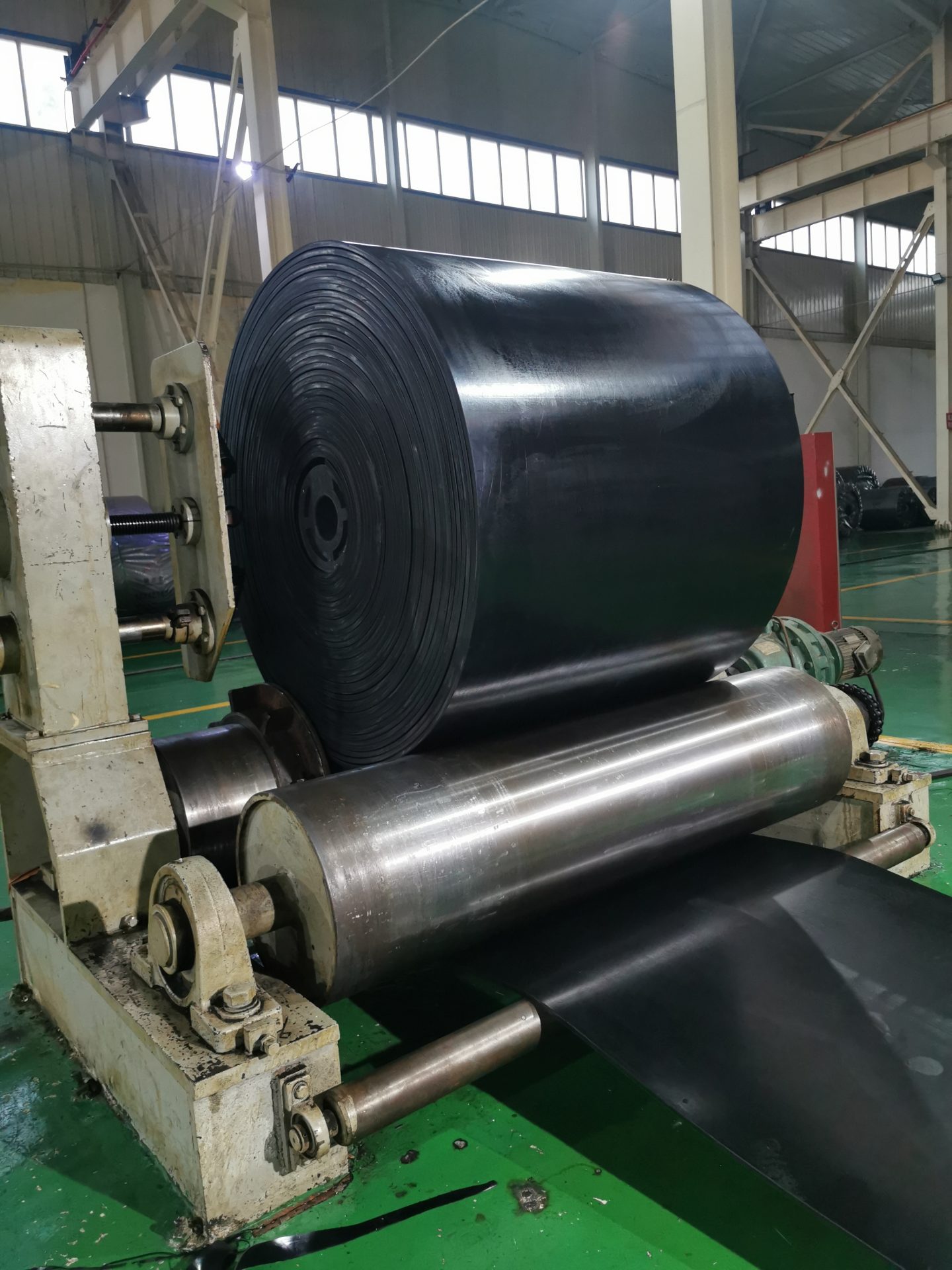
NN reinforcement is a separate alternative, not a heat rating
GRAM’s NN rubber belt construction uses nylon in both fabric directions. If it is proposed as an alternative for one line, identify what changes from the accepted construction and assess that change against the actual conveyor. The material name alone does not establish the suitability of the rubber cover for hot product.
A buyer comparing EP and NN offers should preserve the same line duty in both reviews. Otherwise, the comparison can become misleading: one quotation may assume ordinary raw feed while the other includes a hot-material cover requirement. Resolve those application assumptions before treating the offers as alternatives for the same replacement.
A steel-cord proposal needs its own cement conveyor interface review
GRAM’s steel-cord conveyor belts provide a distinct reinforcement route. The visible longitudinal steel cords and the complete belt construction need an application review suited to the actual retained conveyor. They should not be treated as a universal substitute for the textile belts elsewhere on the purchase order.
If a plant asks the supplier to combine steel-cord and fabric belt replacements in one delivery, preserve their separate construction and joining requirements. A shared plant reference does not make their reinforcement or acceptance documents interchangeable. The proposal should show which conveyor each supplied construction is intended to serve.
Delivery identification should distinguish the reinforcement routes
The receiving documents should connect each delivered belt to its accepted line and construction. This matters when the commercial order covers several similar-looking black rolls. Preserve the steel-cord identity alongside its specified cover and agreed delivery-unit information; do not rely on appearance to distinguish it from a fabric belt.
Actual roll dimensions, mass, protective arrangements and delivery timing must come from the accepted supply offer. The buyer should request information for the particular delivered units, rather than infer a standard packing method from GRAM’s production photographs. Grouped delivery should make the separate order identities clearer, not remove them.

Keep cleaning contact tied to the belt supplied for that line
A replacement belt can also affect the retained cleaning interface. GRAM’s polyurethane conveyor cleaners have direct blade contact with the belt, with photographed transverse supports and adjustment components. The cleaning proposal should use the actual belt and duty at that position rather than a plant-wide assumption.
If the hot-product belt and a raw-feed belt are being replaced together, assess their cleaning requirements separately. A scraper selected for one belt surface, residue condition and mounting arrangement should not be assumed suitable for the other. The offered cleaner’s actual application boundaries need to be identified when it accompanies a belt order.
For a plant changing the cooling stage, include any changed condition at the cleaner in that line’s review. Do not assume that replacing the belt with an HR construction establishes the cleaner’s temperature capability or pressure setting. The belt and cleaning assembly are separate products whose shared contact must be accepted for the proposed installation.
Challenge a cement belt substitution at the line where it will run
A supplier may propose another construction when the purchasing team asks about delivery. Assess the alternative against the same conveyor duty and retained equipment that supported the original selection. Identify which reinforcement, cover or construction detail changes and which acceptance documents must be updated for that line.
This keeps a commercial substitution from becoming an unexamined application change. A convenient width or a shared reinforcement name is not enough to establish equivalence. The plant needs a defensible accepted offer for each position, even when the supplier can deliver several alternatives in the same shipment.
Fenner Dunlop’s cement-industry overview highlights the different wear and hot-material demands encountered in this industry. Its proprietary constructions and temperature claims remain its own. The useful general lesson is to retain the actual duty when selecting a belt, not to adopt another producer’s grades for GRAM supply.
Release the consolidated order with separate belt acceptance records
The detailed hot-material exposure discussion can help define the HR line. Use that description alongside the separate raw-feed and retained construction requirements. One well-defined hot-duty inquiry should improve its own belt proposal without becoming a blanket specification for the whole plant.
At supply inspection, connect each delivered construction to the accepted line reference, reinforcement and cover description. Where an offer changed during ordering, retain the accepted revision. The plant should be able to explain why each roll belongs at its intended position before installation personnel are asked to distinguish them on the floor.
Approve the purchase as several defined conveyor duties supplied together. Keep the clinker requirement with the hot-product line, the raw-material requirement with its own transfer, and each reinforcement choice with the retained machine it must serve. That is a clearer basis for repeat supply than asking the next buyer to reconstruct every belt from the phrase “cement plant order.”
Last Updated on October 3, 2026 by gramconveyor_admin


