
An EP Rubber Conveyor Belt Manufacturer Should Explain What Makes Up the Quoted Thickness

“The new belt is thicker” can conceal several different proposals. The added material may be in the upper cover, the lower cover, the fabric carcass or the rubber between fabric layers. Before accepting that statement from an EP rubber conveyor belt manufacturer, ask which part changed and why it suits the retained conveyor. GRAM’s EP belt construction separates these layers. Maintenance buyers and distributors should compare that construction, rather than use total thickness as a shortcut for strength, wear allowance or replacement compatibility.
An EP rubber conveyor belt manufacturer should separate covers from carcass
EP describes the fabric arrangement: polyester longitudinal yarns and nylon transverse yarns. It does not describe every property of the rubber surrounding that fabric. A complete offer needs to identify the fabric carcass and the cover arrangement together, so the buyer can see what the quoted overall thickness includes.
- Upper rubber cover
- The material-facing rubber above the reinforcing carcass. Its proposed compound and thickness concern the carried-material duty.
- Fabric carcass and bonding rubber
- The reinforcing textile layers and the rubber connecting them. Their construction must be identified independently of the cover allocation.
- Lower rubber cover
- The machine-facing rubber below the carcass. Its requirements relate to the underside contact and retained conveyor.
Upper-cover thickness is not the EP fabric strength
Adding upper-cover material does not, by itself, define a different textile reinforcement. The buyer should keep the offered carcass designation visible when comparing a thicker cover option. If a supplier describes a thicker belt as stronger, ask whether the reinforcement changed or whether the statement only concerns the outer rubber.
For a maintenance buyer dealing with cover loss on a mineral-handling belt, additional cover may be part of a proposal. The project still needs the appropriate compound, a defined carcass and compatibility with its machine. More outer rubber should not hide an unreviewed change in fabric construction or become evidence that the particular wear mechanism has been resolved.
Lower-cover allocation changes the underside of the replacement
The lower cover has a different contact environment from the material-facing cover. State its proposed allocation separately. Two belts with a similar overall thickness may distribute rubber differently between their faces; a buyer comparing only the total cannot see that difference.
If the old construction is known, compare the offered underside with its accepted specification. Keep current wear measurements distinct from original construction information. A worn belt may help locate a problem, but its remaining thickness is not necessarily the correct starting specification for a new product.
More fabric plies and a thicker EP carcass are different statements
GRAM’s fabric belt route provides the broader textile construction context. Fabric plies are individual reinforcement layers within the carcass. The number of layers is useful information, but it should be accompanied by the actual fabric specification and the finished construction the manufacturer proposes.
Bonding rubber belongs in the carcass thickness explanation
The EP construction description includes rubber connecting the fabric layers. Consequently, a change in carcass thickness may involve more than a change in ply count. Have the supplier explain which constituent changed instead of assume that every additional part of the measured thickness is extra reinforcing fabric.
Fenner Dunlop’s technical discussion of belt quality distinguishes carcass thickness from ply count and notes the need to match construction to use. This is general selection background. Its numerical examples and performance comparisons are not GRAM test results or specifications for the offered belt.
A distributor comparing two offers should therefore avoid marking them equivalent because both list the same ply count. Ask for the carcass description in each offer and retain the separate cover information. Where a quotation omits the fabric construction, the missing detail should remain an open technical question rather than be filled from another supplier’s brochure.
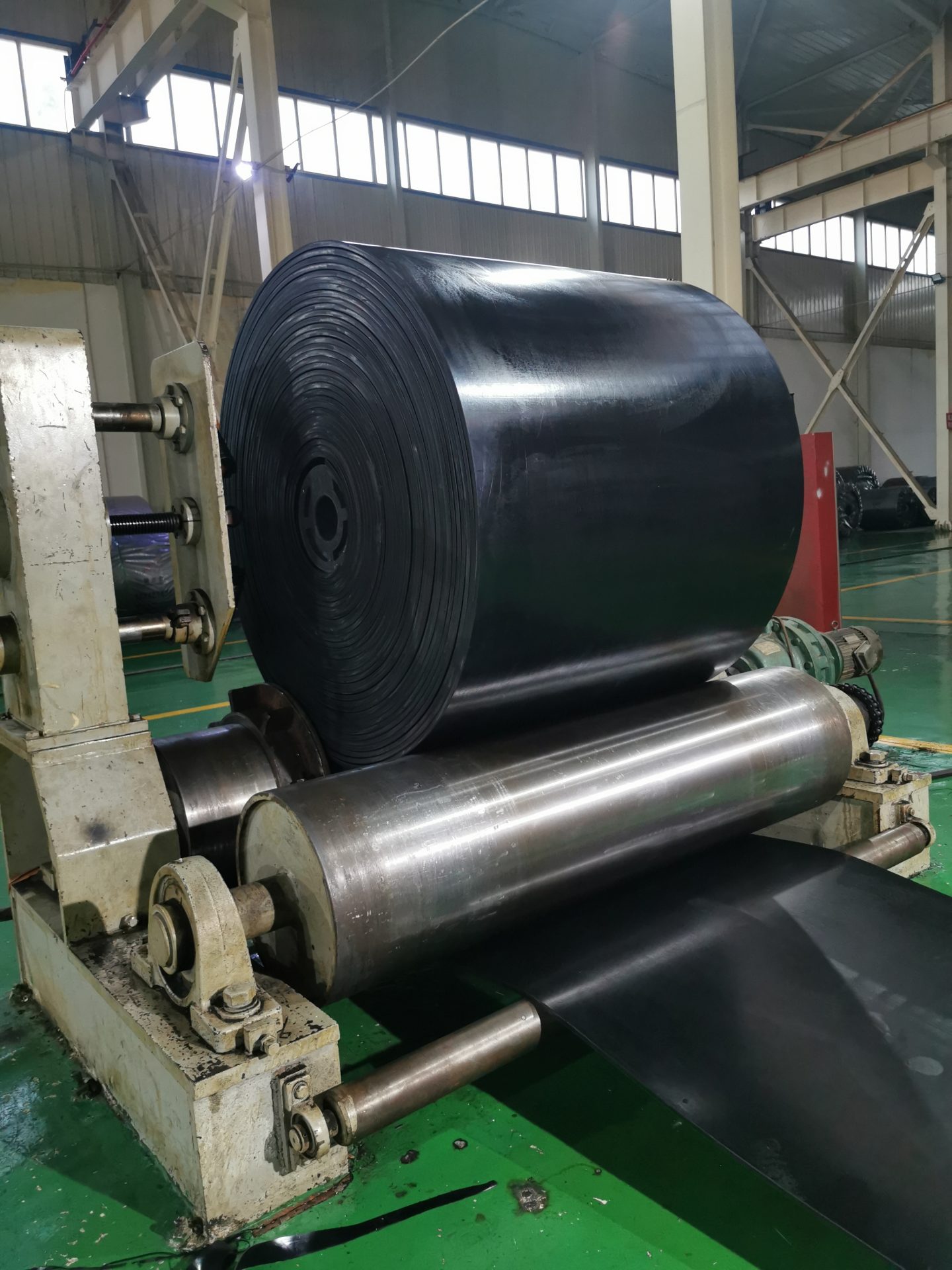
A thicker EP proposal must still pass around the retained conveyor
Changing the belt build can change how the replacement behaves around the machine. Provide the retained pulley arrangement and the intended operating duty to the responsible technical reviewer. A proposed increase in thickness should be assessed as a construction change, rather than accepted only because there is physical space above the belt.
The pulley assessment needs the offered fabric build
The project needs to review its pulleys against the actual proposed carcass and cover arrangement. Do not infer a universal minimum pulley diameter from the term EP or from the number of fabric plies. Required dimensions and acceptance criteria belong to the supplied construction and the retained machine.
If the manufacturer provides a requirement for a different belt in its range, ask whether that requirement applies to the offered replacement. The purchasing team should not attach favorable data from one construction to a thicker alternative whose fabric or rubber build differs.
The same discipline applies to the proposed joining arrangement. A change in layer construction needs the joining provider’s review using the actual belt information. This does not mean every thickness change demands the same joining response; it means the existing instructions cannot be presumed applicable without checking their construction scope.
Cover thickness cannot be assessed apart from cleaner contact
Where the conveyor retains a cleaning system, identify the surface and finished construction that system will contact. The buyer should have the appropriate team review the proposed replacement against the equipment instructions. A cover change should not be described solely as additional service life while its interaction with retained equipment remains unexamined.
At a troughed carrying run, the belt’s ability to take the intended support shape is also a separate question. The EP width and trough discussion addresses that geometry. Thickness decomposition helps make the proposal clear; it does not replace the review of belt width, station shape or machine compatibility.
Keep EP reinforcement separate from a heat-resistant cover offer
GRAM’s HR route concerns a heat-related application requirement. EP concerns textile reinforcement. A belt proposal may need both descriptions, but one does not establish the other. Increased upper-cover thickness is not proof of an accepted heat-duty envelope.
A plant purchasing for hot material should describe its exposure and ask for the exact offered cover and reinforcement. Compare its construction changes with the retained conveyor, then review the applicable operating information. Do not import temperatures or compound grades from another manufacturer merely to complete a partly specified EP offer.
Likewise, the rubber belting range contains several construction routes. A broad rubber product description cannot tell the buyer which cover, fabric or thickness allocation will arrive. The quotation needs enough information to connect the offered belt to its intended duty, not just a product-family name.
An NN alternative is a fabric change even when the outer dimensions match
GRAM’s NN construction uses nylon in both fabric directions. That differs from the polyester longitudinal and nylon transverse arrangement of EP. A proposal to substitute NN should remain visible as a reinforcement change, even if its width and total thickness resemble the earlier EP offer.
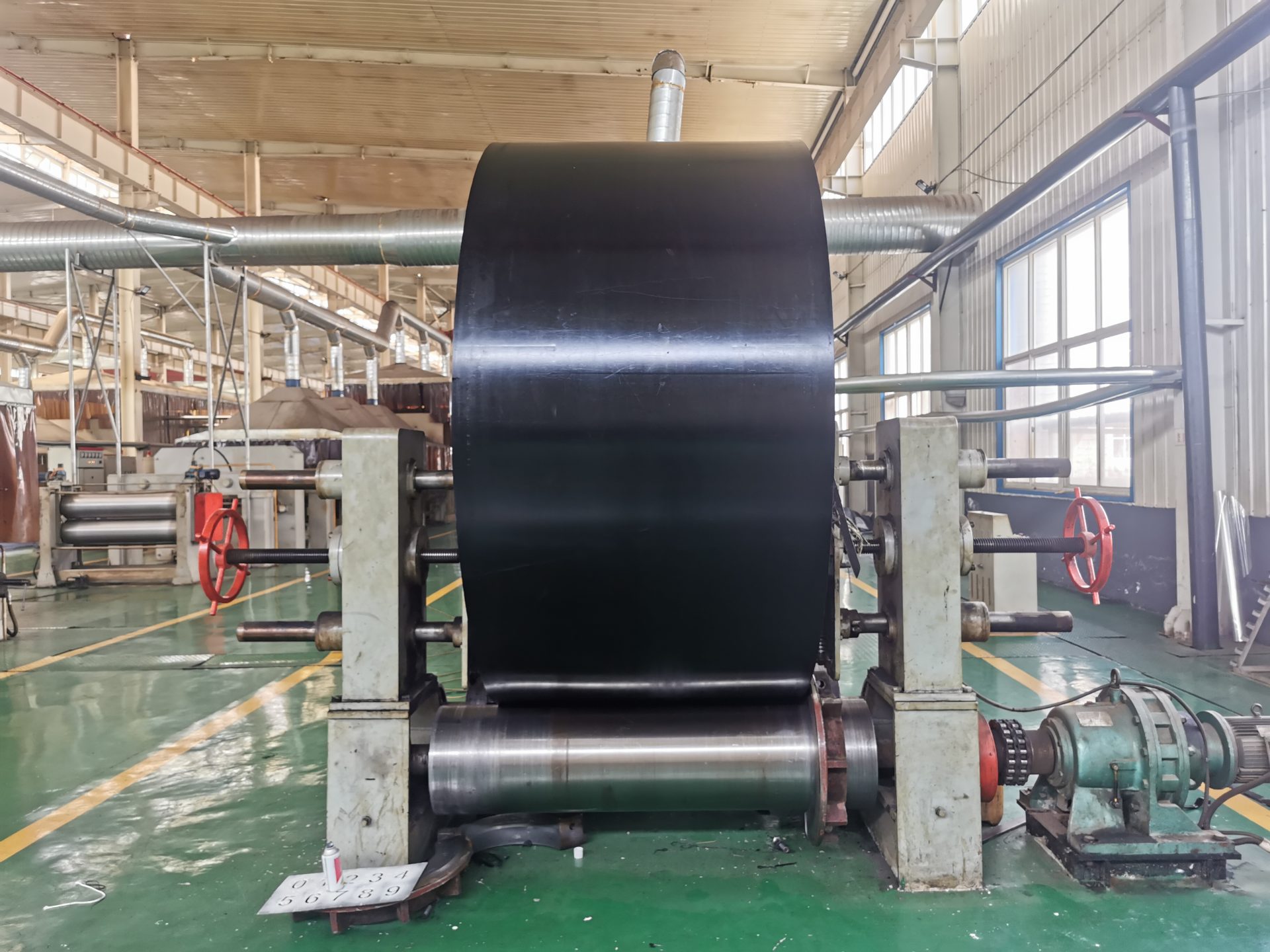
For a distributor receiving mixed EP and NN orders, keep the reinforcement description attached to the delivered rolls. Similar outer dimensions are a poor basis for allocating stock to a customer. The product identity should include the accepted fabric and cover construction so a later replacement does not begin with a mistaken assumption about the roll.
The technical reviewer should decide whether the proposed reinforcement suits the project. Purchasing should avoid accepting the alternative merely because it appears thicker or has an attractive price. The relevant comparison concerns the defined construction under the intended duty; this article does not establish interchangeable EP and NN grades.
An EP cover-loss measurement needs its original layer reference
A total measurement on the old belt can be difficult to interpret if both faces have changed in service. Compare the remaining condition with the original cover and carcass allocation where that information exists. Without it, a reduction in overall thickness does not tell the purchasing team how much material was lost from each cover.
Keep measurements from visibly affected and unaffected regions distinguishable. The purpose is to describe the condition for review, not to derive an unverified original specification from a damaged section. If the offered replacement uses a different cover split, require that difference to be explained rather than assume that the same overall number restores the earlier build.
This distinction also matters when the supplier presents a section photograph. Ask which construction the section represents and whether it belongs to the actual offer. A clearly visible set of layers can be informative, but a photograph of another belt does not establish the thickness allocation, fabric identity or conformity of the roll being purchased.
Make the EP thickness acceptance understandable at receipt
Before issuing the purchase, identify how the offered thickness is described and how the supplier proposes to demonstrate conformity. The accepted drawing or specification should distinguish an overall measurement from individual-layer information. Do not prescribe an arbitrary measurement tolerance or sample-preparation method without the responsible technical agreement.
If a section sample is part of that agreement, connect it to the offered construction and explain what it is intended to show. A section can help make layer allocation understandable; it does not, on its own, establish tensile performance, adhesion or the compatibility of a compound with a particular exposure. Those claims require their applicable evidence.
Keep the packaging identification consistent with the accepted build. Protect the roll faces and edges through the agreed handling process, and retain the label linking the supplied roll to its construction. A receiving team needs to know whether the thicker offer changed covers, carcass or both; “extra thick EP belt” is not enough information for that decision.
Release the replacement when the manufacturer has explained the build and the project has accepted the changes. If all you know is that the belt is thicker, ask the unanswered layer question before comparing prices. The useful improvement is a defined construction that addresses the duty and fits the machine, not a larger total on the thickness line.
Last Updated on October 3, 2026 by gramconveyor_admin


