
Suspension Connections to Agree with a Conveyor Garland Idlers Supplier

The replacement drawing shows the right roller diameter, but it leaves both suspension ends blank. For a mine maintenance engineer, that is not a complete proposal from a conveyor garland idlers supplier. The linked set must connect to the retained frame and form the intended support shape beneath the belt. Begin with GRAM’s carrying garland assemblies, then identify the outer attachments, inter-roller connections and parts that will remain on the conveyor. Those interfaces can decide whether the proposed set is installable.
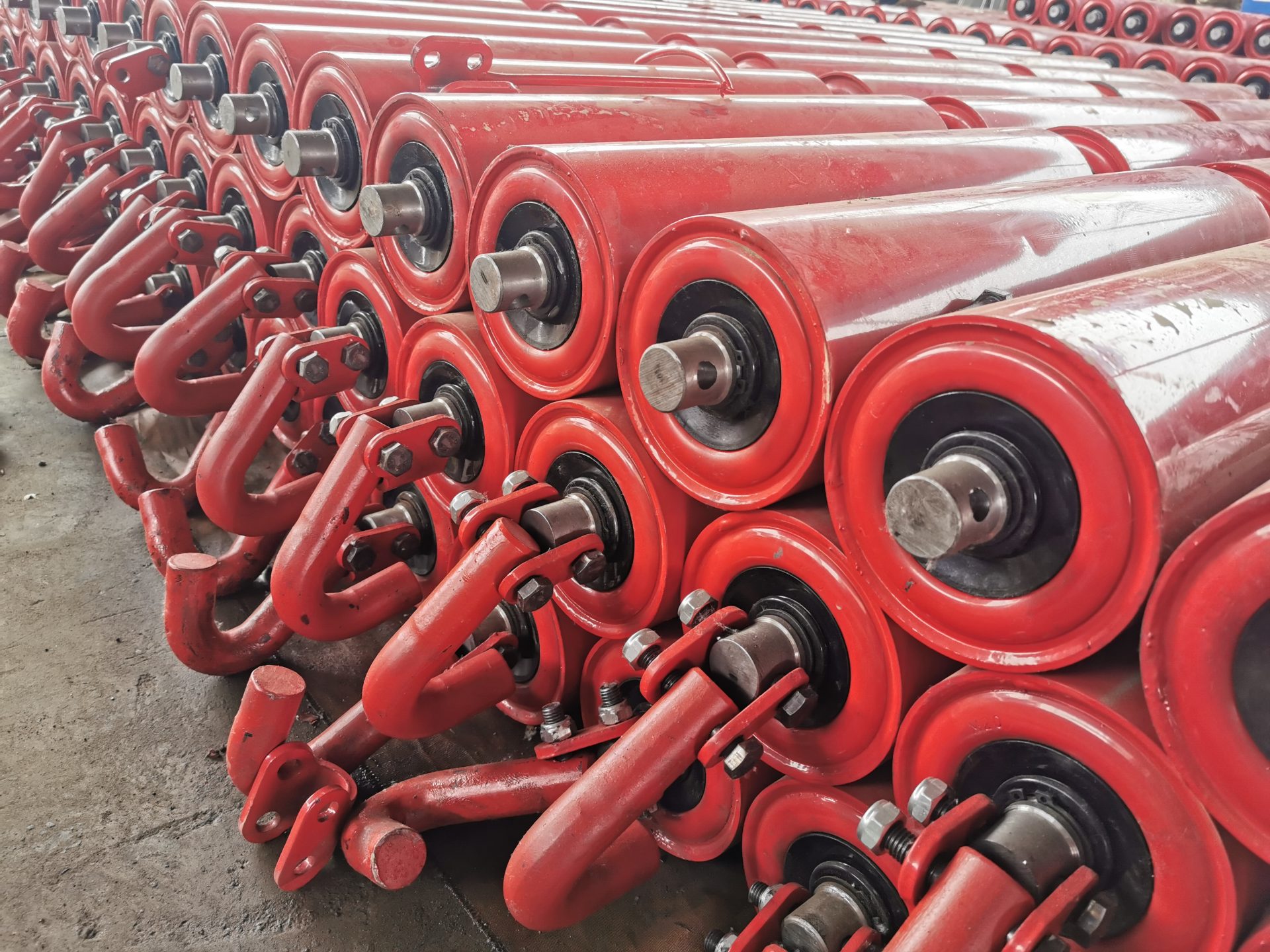
A garland is a suspended assembly rather than a row of independent rollers resting in one rigid transom. GRAM describes rollers joined by chains or links and suspended from the conveyor frame, including arrangements with several rollers. The connecting parts belong to the assembly’s working geometry. They should not disappear from the order simply because the rollers receive most of the attention.
Give the Conveyor Garland Idlers Supplier Both Retained Suspension Ends
A drawing of one end can leave the other end unresolved. Record both frame attachments, their installed separation and the way the garland connects at each side. If the existing attachments differ through repair or modification, show the difference rather than assuming symmetry from the conveyor’s general arrangement.
Frame Attachments Determine What a Complete Garland Set Must Include
A coal-handling maintenance team may retain the frame connections while replacing the rollers and linking components beneath the belt. The order must say where that replacement starts and ends. Otherwise one party may price a complete suspended assembly while another expects the old outer connectors to remain in use.
Identify the connection form, the retained fixing arrangement and the position of the attachment relative to the belt path. A photograph helps reveal condition, but it does not provide every required dimension. Mark the relevant reference points so the proposed assembly can be compared with the existing interface without interpreting several unrelated measurements.
If retained connections are worn, cracked, bent or otherwise unsuitable, that condition belongs in the replacement decision. A new garland should not be approved against an attachment whose serviceability has not been established. Separate the proposed component compatibility from the inspection of the retained frame and its fittings.
End Connection Orientation Matters When the Frame Stays
The connection’s orientation affects how the suspended set hangs and how the parts can be fitted. Record its orientation as well as its dimensions. A replacement that connects in a different plane may require an engineered change rather than a direct exchange, even if its roller bodies match the existing diameters.
A contractor receiving a revised garland arrangement should ask which frame conditions the proposal assumes. If the supplier’s drawing expects a new attachment or a different suspension position, name that condition clearly. An approval relying on unlisted frame work leaves the installation team with a partially defined assembly.
Trace the Garland Load Path Through the Inter-roller Connections
The belt load reaches more than the roller shells. In a suspended assembly, the roller-end connections and links participate in maintaining the support arrangement. Identify the actual connecting components of the proposed set and any components being retained. A roller-only order cannot silently become approval of the complete suspended load path.
Links, Pins and Retainers Are Separate Replacement Decisions
Where the actual garland uses connecting pins, record their fixing and retention arrangement with the links. Do not identify a pin solely by a nominal diameter or replace its retaining parts with whatever is available at the site. The supplied assembly needs a confirmed connection design suitable for its intended duty.
Similarly, a link that looks thicker is not automatically an approved upgrade. Its interface, freedom of movement and relationship to the surrounding parts need assessment. A dimension change can prevent the assembly from adopting the required shape or can introduce an unreviewed contact between parts.
A maintenance buyer replacing individual rollers should determine whether the old connection can be transferred and whether that transfer is permitted for the proposed roller. If the connection is integral to the roller end, a shell-and-bearing comparison will not establish interchangeability. The product drawing should identify the complete end construction.
Do not use a damaged old pin as the only dimensional reference. Compare the retained connection with the design information and identify where wear may have changed its shape. The supplier needs to know whether a measurement represents an intended interface or a worn condition that the replacement is supposed to correct.
Where a garland is replaced one roller at a time, record the exact roller position within the linked group. Outer and central positions can have different connecting relationships even when their bodies appear similar. An order for “one roller from the garland” leaves that position ambiguous; a marked assembly drawing gives the proposed component a defined role.
Any connecting hardware supplied loose should carry an assembly reference that survives unpacking. If two garland arrangements use visually similar fittings, keep the parts separated until their intended connections are established. A matching appearance is insufficient evidence to mix hardware between independently approved assemblies.
Connection Movement Should Be Agreed for the Suspended Assembly
A linked set needs the movement intended by its design. The reviewer should establish how the connections permit that movement and what surrounding structure could obstruct it. The fact that an uninstalled set can articulate by hand does not establish its permissible operating movement or its loaded capacity.
Describe nearby structure, chutes and retained components that may approach the set as its geometry changes. If a proposed link arrangement occupies a different envelope, the installation review must include that difference. Keep the movement assessment attached to the particular garland construction rather than using a general statement that suspended systems are flexible.
A Different Garland Roller Arrangement Changes More Than Quantity
GRAM’s description includes multi-roller arrangements, with three-to-five-roller layouts used to explain the garland concept. That description does not make every arrangement interchangeable beneath one belt. The proposed number of rollers, their face lengths and their connection geometry must create the intended support shape on the actual installation.
Roller Faces and Suspension Separation Define the Working Shape Together
For a contractor comparing a revised set, ask how the proposed roller arrangement relates to the retained suspension separation and belt width. Changing the number of rollers while preserving an old drawing note can leave the effective support geometry unclear. The approval should show the complete proposed set in its installed relationship to the belt.
If the proposal changes the trough shape, the engineer should assess the belt and material duty for that shape. Do not treat a deeper-looking suspended arrangement as an automatic improvement. The belt’s path, support and interaction with adjacent stations still need agreement.
Rulmeca’s bulk-handling catalog treats suspended garlands as a distinct support arrangement. It supports reviewing the linked set as a system; its product ratings and configuration choices are not specifications for a GRAM order.
Carrying and Return Positions Should Not Share an Unqualified Garland Description
Identify whether the proposed assembly supports the carrying belt or another position. The belt condition, load and intended contact differ by position. A distributor should not merge those orders under one garland description merely because both contain linked rollers.
Keep the direction of travel and any reversing duty with the location record. Where the layout differs from the original set, explain what remains unchanged and what the supplier must evaluate. An assembly approved for one position should not become a general spare for every suspended section without a compatibility decision.
Select Garland Roller Bodies for the Specific Suspended Duty
The connections establish how the assembly is retained, while the roller bodies, shafts and bearings must suit their work. GRAM lists steel rollers, rubber-ring impact rollers and polymer roller assemblies as separate routes. Their availability as product families does not establish that any combination is an approved garland construction.
For carrying positions, define the material load, belt speed and environment for the proposed complete set. In a dusty coal-handling area, contamination around roller ends deserves attention alongside mechanical loading. The bearing and sealing proposal must be identified for the actual offered assembly, not assumed from the material of the shell.
If a polymer body is proposed, GRAM’s described polymer construction includes sealed precision bearings, non-contact rubber seals and metal end caps. Those details show that a non-metallic body still belongs to a multi-part assembly. Confirm which construction applies to the offered garland rather than extending a general polymer description into a claim about every suspended set.
For an impact position, a rubber-ring body has a different contact function from a plain carrying roller. Confirm the proposed assembly and its duty before changing only the roller surfaces. The suspension and connecting parts must still be assessed for that complete arrangement; rubber rings do not approve the retained links.
Separate Retained Garland Parts from the New Supply Before Ordering
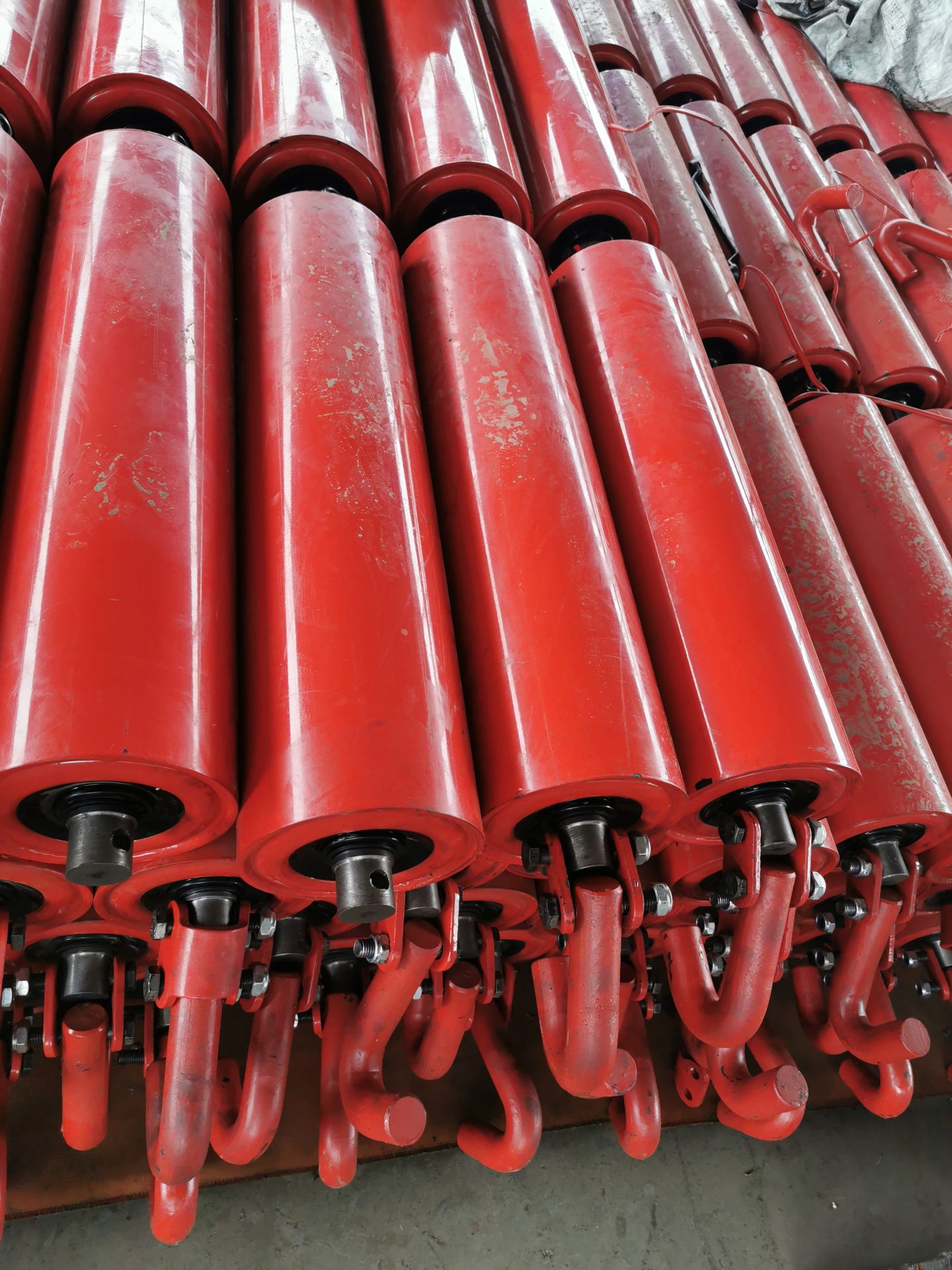
A garland quotation should identify whether it covers individual rollers, a linked group or the complete assembly with outer connections. That distinction affects both price comparison and receiving. A lower-priced roller group is not an equivalent quotation if another proposal includes the connecting hardware needed for installation.
Retained Frame Connections Need a Named Inspection Boundary
Record the components staying on the frame and the evidence used to accept their condition. Show their interfaces on the replacement drawing, including any approved changes. Keep the responsibility for inspecting retained parts separate from a supplier’s proposal for new components.
New Garland Connections Need a Complete Supplied-parts Boundary
List the new connecting and retaining components that belong to the proposed assembly. Identify which parts arrive assembled and which interfaces the installer must complete. Agree the appropriate construction documentation before the order is released.
For transport, protect projecting ends and prevent the connections from becoming unidentifiable within mixed bundles. The actual package and handling arrangement should be agreed for the supplied sets and their mass. The existing product photographs illustrate components and grouping; they do not establish the packing method or lifting instructions for another order.
At receiving, compare the actual outer connection forms and linked arrangement with the approved drawing before the old set is removed. Inspect visible transport damage and identify each supplied set by its intended position. If several arrangements arrive together, their identifying references should remain readable without separating every component from its protection.
Approve the Complete Suspended Set Before Treating It as a Spare
GRAM’s wider conveyor roller range helps identify the component families, while the existing garland idler explanation provides additional context for suspended support. The actual spare must still be tied to a complete approved assembly and its retained frame interfaces.
A practical approval file should let the installer identify both suspension ends, the connecting arrangement between rollers and the supplied-parts boundary. If it describes the rollers well but leaves the outer connections to interpretation, it has not resolved the assembly’s fit. Return that question to the drawing review before the purchase becomes an installation problem.
Once the complete set is approved, keep its reference attached to future replacement requests. If a later supplier changes a link, roller end or outer connector, reassess that change explicitly. A garland spare is useful when its complete suspension path is understood, rather than when its roller diameter happens to match a number in the maintenance store.
Last Updated on October 2, 2026 by gramconveyor_admin


