
Reopen the Belt Offer with a Mining Rubber Conveyor Belt Supplier When the Ore Changes

A mine begins feeding material from another working area, but the replacement request still says “same belt as last time.” That can leave a mining rubber conveyor belt supplier evaluating the old duty while the conveyor receives a different feed. For mine procurement teams and contractors, the first step is identifying what changed in the ore, waste or transfer condition. Start with GRAM’s mining belt range and the actual retained conveyor, then review the proposed complete construction against the revised duty.
The change does not automatically mean the previous belt is unsuitable. It means that a repeat order needs an accepted basis for the new condition. Keep the evidence for continuing the existing construction separate from the assumption that an unchanged conveyor name means unchanged service.
A mining rubber conveyor belt supplier needs the changed feed description
Describe the actual new material presented to the belt. Preserve relevant information about the incoming pieces, fines and moisture where it is available. If the mine only knows that the source has changed, say what is known and identify the missing material information rather than inventing a hardness or abrasion number.
A contractor should avoid turning a workshop sample into the whole specification for changed ore duty. The sample can help identify the previous build and observed condition. The mine’s revised feed information gives the supplier the reason to assess whether that build should be repeated or changed.
Large pieces and fines should remain distinguishable in the offer request
A description such as “ore” can conceal different material presentations at different transfer positions. State whether the affected line receives the incoming feed directly or carries material after a processing stage. Where the plant has actual size information, retain it with the applicable line reference.
Do not infer a universal cover selection from a broad mining label. The supplier’s accepted proposal should identify the material duty it addresses. A belt proposed for one stream should not be reassigned to another simply because both streams originate at the same mine.
A revised drop or loading path belongs with the ore description
If the material entry has changed, describe that change alongside the feed. A new transfer path can present a different contact situation even when the nominal material name remains. The buyer should identify the retained loading arrangement and the revised incoming condition for the responsible engineering review.
This does not replace the design of the transfer or support equipment. The changed-load idler discussion addresses another part of the conveyor. Keep the belt and support reviews connected without assuming that selecting a different rubber cover settles the support question.
Rubber cover duty and mining reinforcement need separate answers
GRAM’s rubber conveyor belt range includes reinforcing routes beneath the rubber surface. The cover contacts the material; the reinforcement forms a different part of the complete build. A supplier proposal should identify both rather than use one description as evidence for the other.
If a mine observes new surface cuts after the feed change, give the supplier the actual observation and its location. Do not treat every damaged area as a proven deficiency in the reinforcement. Equally, a reinforced belt description does not establish that the cover is accepted for the changed material presentation.
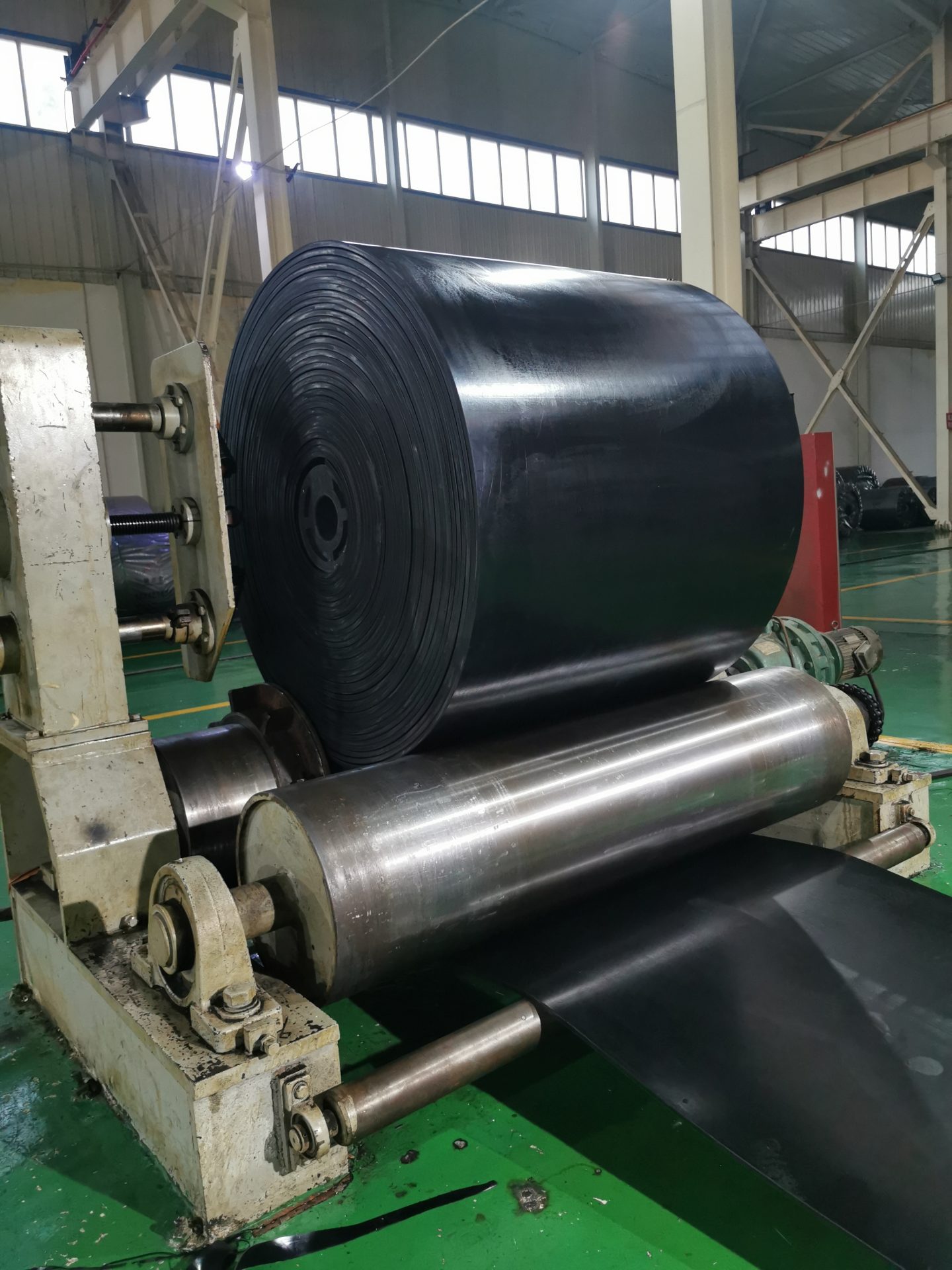
EP reinforcement keeps its own declared yarn arrangement
GRAM EP rubber belts use longitudinal polyester and transverse nylon yarns. If the revised offer retains EP reinforcement, keep its actual fabric and ply build identifiable. The two-letter designation is not a complete rating for the finished belt.
For an engineering buyer, the useful comparison is the proposed complete EP construction against the actual retained conveyor and revised duty. Do not calculate a missing capacity from a generic fabric name. Ask for the applicable offered construction information and preserve the project’s own acceptance requirements.
A proposed cover change can leave the EP name unchanged while altering the complete belt. Record the actual revised layer description. Otherwise a repeat-order line item may conceal the very construction change made to address the new feed.
Steel-cord proposals require the accepted complete alternative
GRAM’s steel-cord conveyor belt route uses longitudinal steel reinforcement beneath the rubber construction. This is a different reinforcing route from textile EP. It should not be presented as an automatic upgrade that fits every retained mining conveyor.
If the project considers switching reinforcement, identify that as a construction change and assess its equipment and joining implications with the responsible parties. A shared outside width does not establish equivalence. The offer should state the actual proposed build rather than borrow a steel-cord model or rating from another manufacturer.
For a repeat procurement, keep an available steel-cord alternative separate from the original accepted textile specification. The supplier needs an explicit project acceptance of the offered alternative. Availability, a similar photograph or a mining application description cannot provide that acceptance.

Changed material does not remove a mine’s flame-related requirements
The GRAM flame-retardant rubber belt route addresses a separate product requirement. If the retained site specification includes a flame-related test or approval basis, preserve it when changing the cover or reinforcement proposal. A material-change review should not silently remove an existing acceptance condition.
Keep the actual applicable requirement connected to the identified belt being offered. A product family name alone does not demonstrate an underground approval, regulatory acceptance or a specific test result. The supplier needs the relevant evidence for the proposed construction where the project requires it.
A buyer comparing a mining belt and a flame-related proposal should clarify whether the offers address the same complete duty. Do not combine separate descriptions into an unsupported assertion that one unspecified belt possesses both sets of properties. The final proposal must identify the actual combined construction and its accepted basis.
External conveying product descriptions distinguish textile and steel-cord families across applications. That general range distinction supports comparing constructions rather than names. Its proprietary products, ratings and service capabilities are not GRAM facts.
Separate a recurring wear observation from a new ore assumption
The mine may notice a change in belt condition at the same time that the feed changes. Preserve both records without assuming the feed is the sole cause. Identify the affected surface and conveyor position, and note whether retained components or material entry also changed.
A contractor evaluating a replacement should not promise that a different belt will eliminate the observed problem before the relevant duty and equipment conditions have been assessed. The supplier can propose a construction for the identified service; unsupported life predictions do not help the buyer compare it.
Consider two retained conveyors receiving different fractions from the same changed feed. One may see the incoming material directly while another carries a processed stream. A consolidated order can still preserve both duties. Do not assign one construction to both merely because procurement prefers a shared supplier and delivery.
For a distributor, identify the destination conveyor with each accepted build. A mining customer can request several similar rolls whose exposure or reinforcing requirements differ. Delivery identification should preserve those differences rather than leave the plant to infer each destination from outside appearance.
Repeat the mining belt order only against the reviewed duty
A change request should also distinguish a trial feed from the duty the mine intends to retain. If the replacement is being selected for a continuing new source, identify that ongoing condition. If several feeds are expected, describe the actual range the proposal must address using available material information. The supplier cannot assess the full service from a sample representing only the easiest part of it.
Where the mine has not yet settled the future feed, avoid presenting an old belt reorder as acceptance for every possible source. Define the duty that is known and the conditions that still need review. That narrower order basis gives procurement a usable decision while preserving the engineering question created by a later change.
Once the supplier proposes retaining or changing the construction, keep the accepted feed description, equipment basis and actual belt build together. If information remains missing, record the condition under which the proposal can be accepted. Do not turn an incomplete inquiry into an unconditional replacement promise.
For the selected roll, agree the actual supplied form, identification and delivery requirements. Those commercial details should follow the accepted construction; they do not establish its suitability for the revised ore. Keep any proposed substitution subject to the same duty review.
The useful repeat order is the one whose old construction has been considered against the current feed and its actual transfer condition. Give the supplier the material change, preserve the separate cover and reinforcing decisions, and release the belt that the project has actually accepted for that duty.
Last Updated on October 3, 2026 by gramconveyor_admin


