
Brief a Long Distance Steel Cord Conveyor Belt Supplier on the Entire Route

Route length alone is not a tensile specification. An engineering buyer briefing a long distance steel cord conveyor belt supplier should provide the route geometry, loading and approved tension basis before comparing belt constructions. GRAM’s steel-cord belt range describes longitudinal steel reinforcement and long-distance applications. Start with that range and the complete conveyor duty; do not select a strength designation solely because the route is called overland.
This approach suits engineering contractors, mine project buyers and maintenance teams replacing long belt sections. First identify which route information has been approved by the conveyor designer and which remains provisional. Then coordinate the offered belt construction with delivery sections and joining requirements. The supplier needs a coherent project basis rather than a length and width without operating context.
A long distance steel cord conveyor belt supplier needs the entire route
Provide the plan and elevation information used by the responsible designer, with the loading, discharge and relevant equipment locations. The route description should include meaningful changes in level and geometry rather than treating the conveyor as a straight line on a procurement schedule. Those conditions help define the mechanical duty that the offered belt must satisfy.
Overland elevation changes belong in the engineering handoff
A project extending a conveyor across uneven terrain should identify the proposed route and retained equipment together. A longer alignment can introduce a different duty even if the material and nominal width remain unchanged. The designer should establish the resulting requirements; the supplier should identify a complete belt offered against them.
If the route survey is incomplete, mark the uncertain geometry rather than presenting it as final. The purchase should not treat a provisional profile as an approved tension basis. Resolve the engineering inputs before selecting a final construction or assigning delivery sections that depend on the completed design.
Loaded starts and operating states require the designer’s tension basis
The conveyor’s required duty concerns more than steady movement. Give the supplier the operating conditions defined by the project, including the relevant loaded or interrupted states. The responsible designer should establish the applicable belt requirement; the supplier should not be asked to calculate the entire system from an informal route label.
No exact operating tension, strength class or maximum route length should be invented where the available GRAM information does not establish it. Request the offered product’s actual applicable specification and assess it against the approved engineering basis. A general long-distance application statement is a starting point, not a completed design.
Long distance steel-cord belt selection needs a complete construction record
GRAM describes steel cords running longitudinally within the conveyor belt. That reinforcement is distinct from the rubber covers meeting the material and equipment. The offer should identify the actual reinforcement and cover arrangement, together with the dimensions and applicable product information required by the project.
The cover duty must remain separate from the steel reinforcement
A steel-cord construction does not automatically establish the required abrasion, oil, heat or other cover suitability. Describe the conveyed material and credible exposure. GRAM’s rubber belt range discusses general and specialty cover routes, but the actual offered compound must be identified for the intended duty.
The mining belt range provides relevant bulk-material context. Use it to describe the application accurately, while keeping the offered belt’s mechanical and cover evidence explicit. The mining name should not replace the actual product specification or become an unsupported approval for every mine environment.
Fabric alternatives need an approved comparison rather than a material slogan
GRAM’s EP route uses polyester warp and nylon weft, while its NN route uses nylon in both directions. These are useful construction distinctions for a comparison where the designer considers alternatives. Neither fabric name establishes that it is suitable for the route merely because it is available.
Compare alternatives against the same approved duty and installation requirements. A fabric-to-steel-cord or steel-cord-to-fabric change can affect the complete belt and joining assessment. It should follow the conveyor design review, not a purchase decision based only on material names or initial unit price.
| Project record | What the supplier should receive | What it cannot replace |
|---|---|---|
| Route profile | Approved plan and elevation references | The required mechanical duty |
| Operating basis | Defined loading and relevant operating states | A complete offered belt specification |
| Belt offer | Declared reinforcement, cover and dimensions | The conveyor designer’s system approval |
| Delivery plan | Agreed sections, handling and joining scope | The approved installed belt requirement |
Coordinate long belt delivery sections with the joining plan
A contractor may need to divide a long replacement into sections that can be transported and handled at the site. Establish that constraint early, but coordinate it with the approved installed length and joining arrangement. A convenient package size should not be selected independently of the belt construction and project installation plan.
Transportable sections should not create an undefined splice scope
Identify who performs the joining and what construction information that party needs. The supplier’s offer should state the delivered form and relevant identification. A steel-cord product description alone does not establish an approved splice or mean that on-site joining services are included.
External Continental steel-cord belt information illustrates that reinforcement, covers and splice-related solutions are distinct considerations. Its proprietary systems, grades and performance claims remain Continental’s. They should not be copied into a GRAM supply commitment.
Reel access needs an actual site handling description
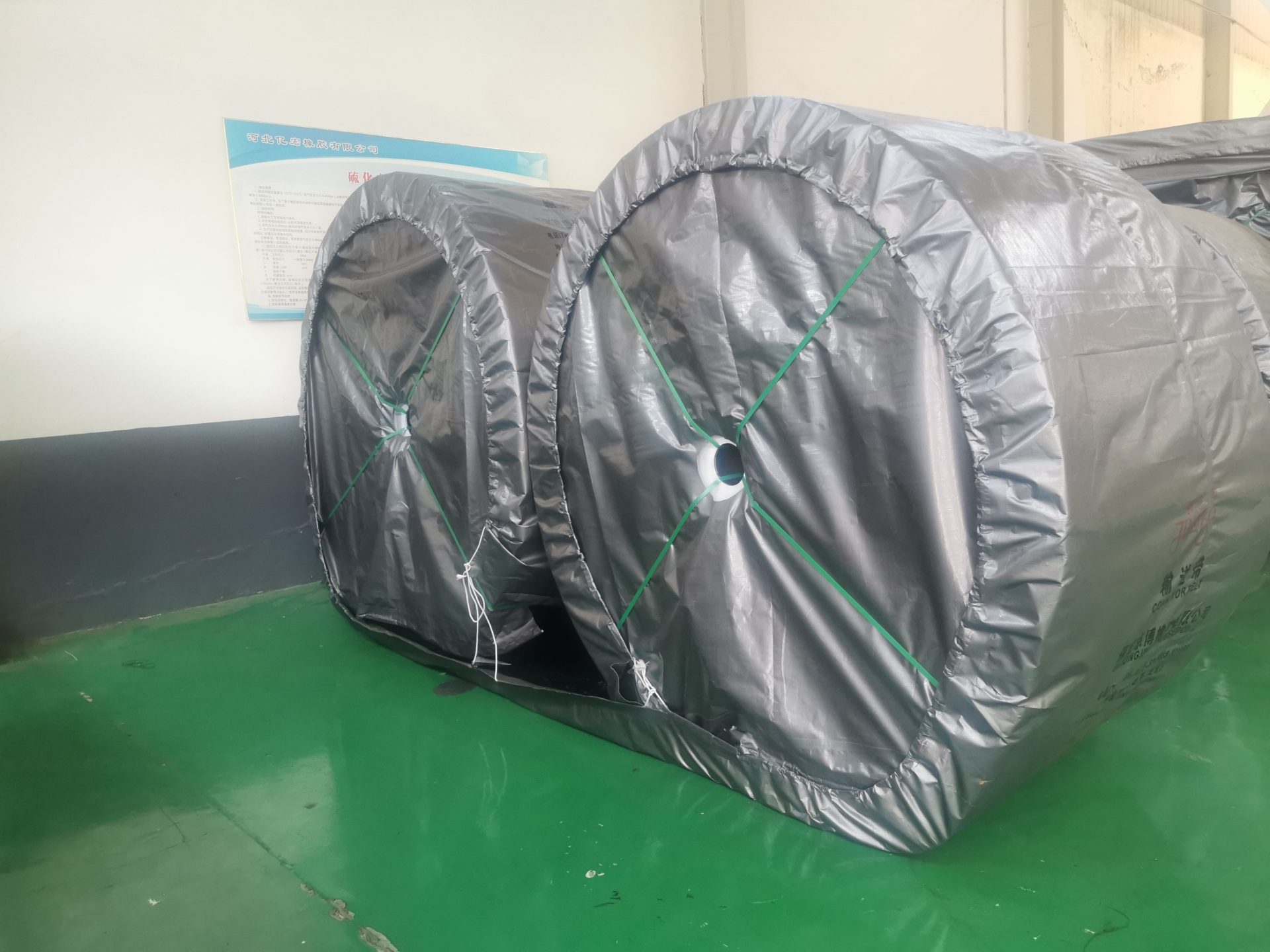
Provide the transport and handling route to the installation location, including the relevant access constraints. Ask the supplier to identify the proposed package arrangement for the actual sections. Do not assume a standard reel, lifting capacity or available handling service without agreement.
The reel-access guide addresses that separate logistics decision. For a long-distance project, keep it connected to the route and joining requirements. A section that can reach the site is useful only if it belongs to the approved installation plan.
Protect steel-cord belt identity across multiple deliveries
A long project may receive sections at different times. Keep each section traceable to the offered construction, project identification and intended use. If the supplier proposes a construction or delivery change, identify it before acceptance so the responsible team can review its effect on the complete installation.
At receipt, compare the supplied identification and documents with the approved item. Inspect accessible surfaces and edges for visible damage through the agreed handling procedure. Preserve the product and storage instructions with the section record rather than separating them from an unidentified reel.
Route revisions should trigger a review of the open belt order
If the alignment, operating duty or retained equipment changes after the initial enquiry, tell the supplier and designer before the final construction is accepted. The old length may remain close to the new requirement while the mechanical basis changes. A procurement drawing should state which route revision it serves.
Similarly, a revised transport plan can alter section delivery without changing the approved belt duty. Keep those changes distinct. The buyer should be able to see whether a revision affects construction, installed length, joining scope or only the handling arrangement.

Compare overland belt alternatives against the approved route
Long-distance belt alternatives should identify the departure from the approved specification
A supplier’s alternative may change the reinforcement, cover or delivery arrangement. Ask which part differs from the approved item and what applicable information supports the proposal. A similar nominal width or a general steel-cord description is not enough to establish equivalence on the overland route.
If the route designer approves a revised construction, coordinate that decision with the joining plan and section identification. The installation team should receive the information for the actual belt, not the superseded offer. This is particularly important when delivery sections are prepared before all project records are finalized.
For a project buyer comparing several offers, use the same route revision and operating basis for each. Otherwise, a lower-cost offer may have been prepared against a different loading or geometric assumption. Clarify those inputs before comparing the construction or treating price as a meaningful like-for-like measure.
Where the belt supplier and joining contractor have separate scopes, identify the information that must pass between them. The complete offered construction, supplied form and applicable product instructions should be available to the party responsible for the approved joining work. Do not infer that such coordination or site service is included without agreement.
A long-route spare section should also remain traceable to its intended construction and approved use. Before it is reassigned to another conveyor, compare that route’s mechanical and cover requirements. Long length and steel reinforcement are not enough to establish that the section belongs to every overland installation.
The useful approval package combines the route revision, mechanical requirement, material-contact duty and offered complete construction. It also identifies the delivery sections and joining responsibility. Where an input remains provisional, keep that uncertainty explicit rather than allowing it to disappear inside a supplier quotation.
Brief the long-distance belt supplier on the entire route and ask for a product against the approved duty. Treat package size as a logistics decision and strength as an engineering requirement. When both remain connected to the same construction record, purchasing can compare offers without pretending that length alone specifies the belt.
Last Updated on October 3, 2026 by gramconveyor_admin


