
Show Your Aggregate Conveyor Belt Supplier What Leaves the Screen, Not Just What Enters the Crusher

The stone entering a crusher is not necessarily the material carried by the next belt. After screening, a plant can have coarse product, finer fractions and wet material moving along different routes. Show the aggregate conveyor belt supplier the stream that the ordered belt will actually carry. GRAM’s EP, NN and rubber belt routes provide starting constructions; the buyer should first establish particle condition, moisture, transfer and machine duty rather than specify every position as a generic stone conveyor.
An aggregate conveyor belt supplier needs the particular screen stream
Identify the material at the belt’s own loading point. A photograph of the plant entrance or a description of the quarry rock can be misleading for a belt after a screen. Explain which fraction the conveyor receives, whether it has been washed and how it reaches the belt. The supply decision should follow that local duty.
A conveyor beneath a coarse discharge may receive angular pieces with a particular landing pattern. A conveyor beneath a fine wet discharge may receive adhering material and a different contact pattern. Both carry aggregate, but they do not present the same question to the belt-cover and support suppliers.
Coarse pieces need a transfer description as well as a material name
For a coarse-product route, describe the particle distribution and the way the stream lands. A statement such as crushed stone does not explain the largest pieces, their shape or whether the loading point creates a concentrated contact region. Give the responsible reviewer the actual transfer arrangement instead of assume that an abrasion description answers impact and cutting as well.
The Fenner Dunlop discussion of cover wear distinguishes abrasive scouring from cutting and gouging. That distinction is useful industry background. It does not select a GRAM compound or transfer another manufacturer’s grades and laboratory results to this order.
Wet fines require their own description after the screen
At a fine-product discharge, explain the material’s moisture and adhering behavior as observed by the plant. Identify whether the condition remains similar through the shift or varies with washing and feed changes. The belt supplier needs the exposure the plant expects to operate, not an assumption that the fine product behaves like the dry coarse fraction.
A buyer ordering for a washed-material conveyor should distinguish ordinary service from a temporary abnormal condition. If excessive residue began after a process change, identify that change separately. A new cover cannot, by itself, establish that an upstream washing, screening or transfer issue has been corrected.
| Stream at this loading point | What the belt proposal must address |
|---|---|
| Coarse screened product | Particle shape, carried distribution and the local landing/support arrangement. |
| Fine or wet screened product | Material exposure, adhering residue and the cleaning/return conditions. |
| A stream that changes with production | The range of intended conditions rather than only one favorable sample. |
Rubber covers and textile reinforcement answer different aggregate questions
The material-facing rubber responds to the carried stream, while the textile carcass provides a distinct structural part of the belt. GRAM’s EP construction uses polyester longitudinal yarns and nylon transverse yarns. Its NN construction uses nylon in both fabric directions. Neither fabric name establishes the finished cover’s response to every aggregate condition.
EP and NN should not be selected from moisture wording alone
Provide the supplier with the retained machine and intended operation when comparing these reinforcement routes. A wet-material description is important, but it cannot replace a review of the carcass, cover build and conveyor geometry. Avoid reducing the order to “nylon for wet material” or “EP for every heavy-duty belt.”
If the proposed reinforcement differs from the old belt, identify the change plainly. A plant using one accepted construction at the crusher-feed position should not apply it to every downstream conveyor by default. The smaller screened fraction, route and retained machine may require a different assessment even when the customer wants a convenient common stock.
A distributor can still coordinate purchasing across the plant. Keep each proposed common construction connected to the duties for which it was accepted. If one roll is intended to serve several routes, have the responsible reviewer identify those routes rather than allow a shared product name to become an unexamined substitution.
The aggregate landing station should be assessed beneath the actual stream
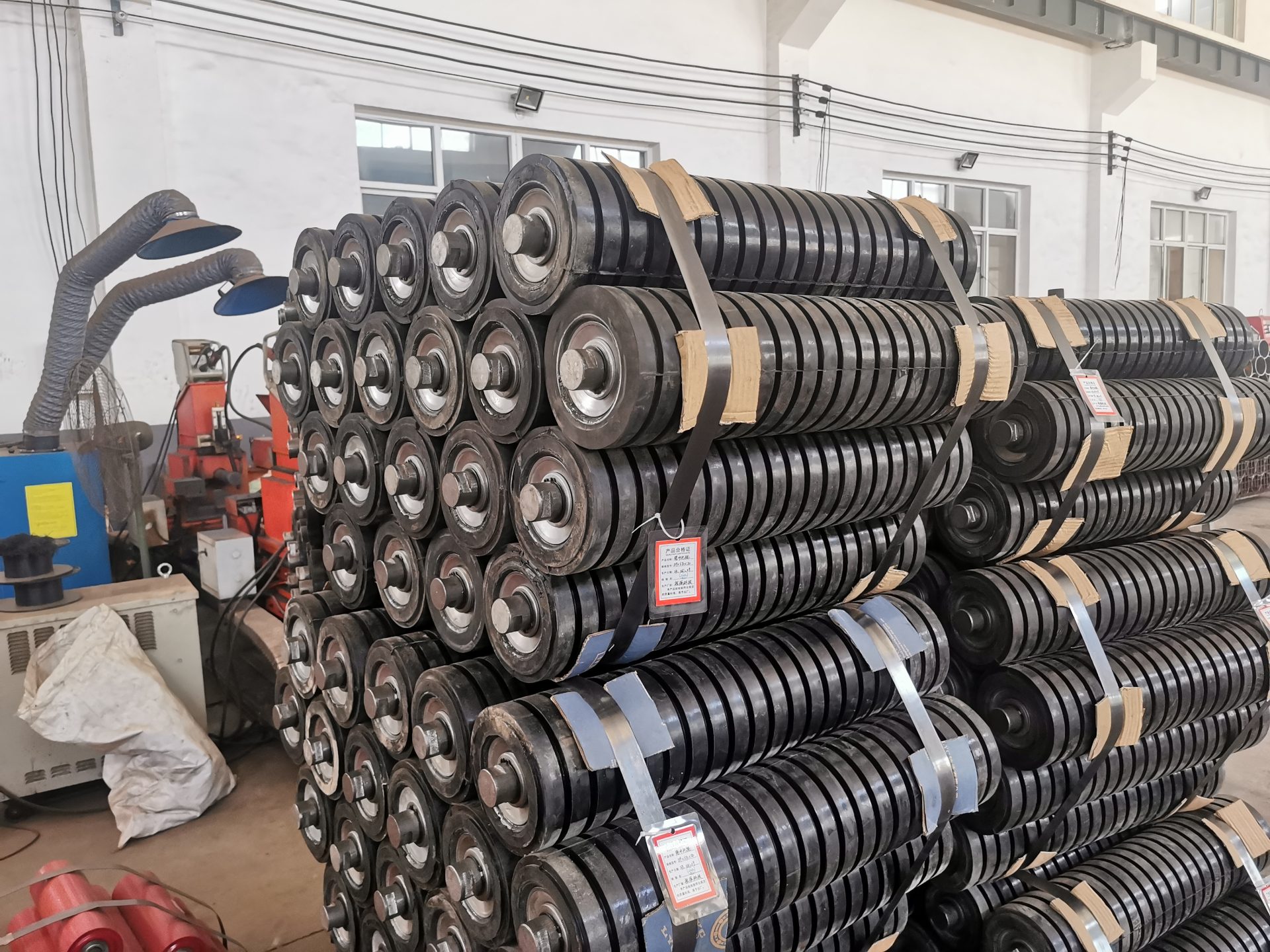
GRAM’s impact rollers use rubber-ring working surfaces. Their role concerns support at an impact location, not an automatic upgrade for every conveyor carrying aggregate. Describe the landing stream and the station arrangement before asking whether that support route is appropriate.
A fine-material transfer is not automatically a coarse-rock impact station
A fine stream and a coarse stream can reach the belt differently. Do not assign them an identical impact requirement because they pass through the same plant. The engineer should establish the actual support duty and the intended belt shape at each loading position.
Where an impact assembly is proposed, identify its ringed outside profile, shaft interfaces and installed support geometry. A roller’s visible ring arrangement does not define a universal impact capacity. Keep any performance claim attached to the accepted assembly and duty, rather than infer a load limit from the photograph.
If the plant changes the screen configuration and moves material to another transfer, reassess that receiving position. The belt purchase should reflect the new stream and loading arrangement. Merely keeping the conveyor’s old equipment tag can conceal a significant process-duty change.
Wet aggregate residue follows the belt beyond the discharge
After discharge, adhering material can continue onto the return route. The buyer should therefore describe both the conveyed stream and what remains on the belt. A cover proposal for wet fines should be considered with the retained cleaning system and return support, without claiming that any one belt material guarantees a clean return.
A polyurethane cleaner needs a defined contact arrangement
GRAM’s polyurethane cleaner photographs show blade elements, a transverse shaft, brackets and spring adjustment components. Those visible parts provide a useful assembly route for review. They do not prove that the illustrated cleaner fits the project’s discharge, belt construction or installation space.

Describe where residue remains and how the existing cleaner is arranged, using observations made under the site’s equipment and isolation procedures. If a cleaning change is proposed, ask for the complete assembly and its applicable setup information. Increasing blade pressure without a reviewed instruction is not a purchasing solution for an unidentified contact problem.
Keep the lower-cover and return-side conditions visible as well. Material deposited farther along the return route may create a different contact environment from the clean belt assumed in the original specification. A new top cover does not remove the need to establish what the underside and support components will encounter.
Inclined aggregate routes need a separate material-retention decision
A plant may have a flat transfer followed by an inclined product conveyor. The order should distinguish them. GRAM’s rubber range provides the relevant belt-family starting point, but the supplier needs the actual material, inclination and retained return arrangement to assess a proposed surface or profile.
Do not choose a raised profile just because the belt carries aggregate, or assume it solves a wet-fines transfer problem. The intended profile must suit the particular material-retention requirement and the machine’s contact arrangement. A profile change can also require review of the cleaning and return route.
For mixed product orders, label the intended conveyor duty with each supplied roll. Protect raised surfaces, edges and roll identity through the agreed handling process where applicable. An installation team should not discover the distinction between a flat-transfer belt and an inclined-route proposal only after the roll is at the machine.
A recirculating screen stream belongs in its own belt inquiry
Some plant arrangements send a fraction back for further processing. Where that happens, describe the material on the recirculating route rather than assume it matches the finished-product conveyor. State the intended operating arrangement and identify what changes when the screen separates a different fraction. The belt supplier needs that route’s carried material, not only the plant’s saleable product description.
A screen adjustment may alter which pieces return, how much material reaches the transfer and the condition of that material. Have the plant’s responsible team establish those conditions before repeating a product-belt specification. No recirculation capacity or screen-setting recommendation is established here; the point is to keep the belt order tied to the process position it actually serves.
If purchasing consolidates recirculating and finished-product belt orders, identify both duties in the quotation comparison. A shared EP reinforcement may be possible after review, but it does not automatically establish a shared cover, loading-station requirement or cleaning arrangement. Consolidated buying should preserve those distinctions rather than erase them.
Approve the aggregate stream before comparing belt quotations
A quotation becomes more useful when it names the stream it answers: coarse screened product, wet fines, or another defined output. Compare the proposed cover and reinforcement on that basis. If the supplier has assessed a dry sample while the plant intends to operate wet material, resolve that mismatch before judging the price.
The existing aggregate and abrasion guide provides broader cover-selection context. This order should go further by identifying the actual screen outlet and conveyor position. A plant-wide aggregate label is too broad to establish a replacement for every route.
When the screen or washing process changes, tell the belt supplier what the ordered conveyor will receive after that change. Keep coarse impact, fine-material exposure and return residue as separate questions. The right starting specification is the material leaving this screen outlet, supported by the construction and machine assessment that makes it a usable belt order.
Last Updated on October 3, 2026 by gramconveyor_admin


