
Ask a Ceramic Conveyor Rollers Manufacturer What Surface and Complete Assembly the Offer Includes

A request for ceramic rollers can leave the most important part of the order undefined: what is ceramic, what it contacts and what complete assembly will arrive. Industrial buyers comparing a ceramic conveyor rollers manufacturer should settle those questions before treating the material name as an upgrade. GRAM has a ceramic roller route alongside other conveyor roller families. Begin with the intended working contact and an identified proposed construction. A ceramic description does not, by itself, establish a load rating, impact duty or approval for a hot process.
A ceramic conveyor rollers manufacturer should define the working surface
Ask which part of the offered roller is ceramic and how that part is constructed. The inquiry should distinguish a ceramic working region from the remaining body, ends and shaft interfaces. Do not assume that a surface-material description means every part of the assembly has the same material or exposure capability.
GRAM’s ceramic discussion mentions alumina. That material name alone does not identify the composition, purity, finish or construction of an individual offered roller. Obtain those details where they are relevant to the intended contact, without adding an assumed composition or hardness to the order.
Ceramic material and roller surface finish need separate descriptions
The material designation and its working finish answer different questions. The buyer needs the proposed finish defined for what the roller will touch, whether that is a conveyor belt or another identified process contact. A broad statement about smoothness cannot establish the required surface condition for every installation.
CoorsTek’s technical materials information explains ceramic selection in relation to component requirements and manufacturing methods. This is general design background; its formulations, processes and capabilities are not GRAM supply facts. For the GRAM proposal, ask for the actual offered construction rather than borrow an external material specification.
For a maintenance team considering ceramic after repeated working-surface wear, record the existing contact and wear location. Ask what part of the proposed ceramic construction addresses that condition. A material change should have a stated purpose, not simply replace the old roller’s name with a harder-sounding description.
Review the complete ceramic roller assembly before retaining the frame
A surface proposal still has to belong to an assembly that fits and works in the intended position. GRAM’s ceramic photographs show individually wrapped cylindrical assemblies with projecting shaft ends. The photographs identify visible form, but they do not establish hidden bearing details or the dimensions of the proposed order.
Shaft extensions and mounting features must match the proposed drawing
Define the shaft interfaces and the installed mounting arrangement for the actual replacement. Identify working-face length separately from total assembly length. A ceramic-surface proposal cannot resolve an incorrect shaft extension or a mounting feature that does not fit the retained frame.
For a buyer preserving the original frame, supply the accepted drawing or reliable interface measurements and mark uncertain information. Ask the manufacturer to state any difference in its proposed assembly. Do not approve the ceramic material against one description while the site expects another shaft arrangement.
The ceramic contact diameter should refer to the finished assembly
The contact diameter needs to describe the supplied working surface, not an unidentified underlying component. Ask the supplier to state the finished dimension and the inspection basis applicable to the offered construction. Do not estimate a surface thickness or diameter from the wrapped product photograph.
If the proposed construction changes the contact position or clearance, have that effect reviewed on the conveyor. Retaining a frame does not prove that any roller of approximately the same visible size will work in it. The fitted assembly and its intended duty remain part of the acceptance.
Compare ceramic, steel and polymer rollers for the actual contact problem
Different material routes are useful when the buyer can explain what needs to change. GRAM lists ceramic, steel and polymer rollers separately. Compare proposals for the same identified role and contact before choosing a construction; do not compare the material names while allowing the duty to change between offers.
A steel roller proposal provides a separate construction baseline
The steel roller offering is a distinct route for a buyer reviewing a replacement. If an existing steel working surface is wearing, preserve the old construction and operating history as the comparison baseline. Ask how the proposed ceramic option differs in the region that matters to that wear observation.
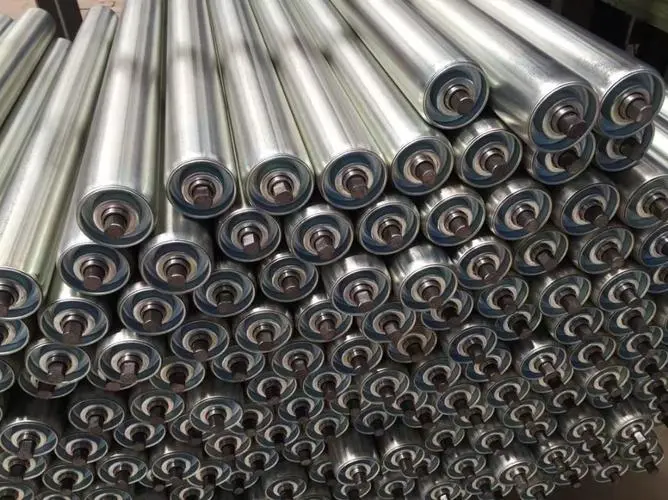
Do not attribute every observed difference to the working material if the proposals also change bearing arrangement, dimensions or operating conditions. Keep those differences visible. Where the real concern is an end-component failure, a new working-surface material may not answer the problem that caused the replacement.
A polymer roller body leaves other assembly components to assess
GRAM’s polymer route describes body, end, bearing and sealing components. That shows why a body-material choice is only part of the complete roller assessment. Compare the actual proposed assembly with the ceramic offer rather than assume that a polymer label describes every component.

For a distributor receiving alternatives, retain each proposal’s drawing and material identity. The customer should be able to distinguish the ceramic working-region proposal from the steel or polymer assembly offered beside it. An alternative price does not establish interchangeability.
Ceramic wear claims do not establish impact or kiln duty
Wear, impact and hot-process requirements are different conditions to assess. A description of ceramic wear resistance is not sufficient evidence of suitability for every loading event or temperature. Tell the supplier the actual position and duty and request the supporting construction information that the responsible engineer needs.
Rubber-ring impact rollers remain a different loading-support route
GRAM’s impact assemblies visibly use rubber-ring working surfaces. That is a separate construction to discuss for a loading-support problem. A ceramic offer should not replace it solely because the buyer wants greater wear resistance; the actual loading duty and compatibility must be reviewed.
The roller-family discussion helps keep the intended working role identifiable. Use that distinction when a purchase request has combined material selection and roller position into one short description.
Protect the identified ceramic surface through receiving and fitting
Agree handling and package protection for the actual offered ceramic construction. The working surface should remain identifiable and available for the agreed inspection, while the shaft interfaces receive protection appropriate to the supplied assembly. Do not derive a lifting method or allowable impact from a photograph of wrapped rollers.
If an agreed sample establishes the surface finish, keep it identified with the proposed construction revision and the acceptance description. Its role is to provide a comparison for that surface requirement, not to prove the production assembly’s bearing performance or load capacity. Ask how the delivered rollers will be checked against the agreed surface and dimensions. Where the supplier changes the ceramic construction after the sample is accepted, reopen that comparison instead of applying the old surface acceptance to an undefined replacement.
At receipt, compare the assembly and records with the accepted surface and drawing description. If damage, a visible surface difference or an unexplained construction substitution appears, resolve it before installation. The inspection should follow the offered object’s actual acceptance conditions rather than a generic promise that ceramic is durable.
Ask for the surface description, assembly drawing and intended contact to be agreed together. If the manufacturer answers only ceramic roller, the order still lacks a defined object. Release the replacement when the proposed working surface and the complete fitted assembly answer the original wear or contact problem.
Last Updated on October 2, 2026 by gramconveyor_admin


