
Tell a Chemical Resistant Conveyor Belt Supplier What Happens Between Production and Cleaning

The belt carries a fertilizer product without an obvious problem, then its surface changes after the cleaning routine is revised. Purchasing only around the process material can miss the second exposure. A chemical resistant conveyor belt supplier needs the production and cleaning conditions described separately before proposing a construction. GRAM’s belt range includes chemical-resistant belting for processing, fertilizer and mining contexts. Start with that route and its rubber constructions, but obtain a proposal for the identified substances and conditions rather than accept a blanket acid-or-alkali claim.
A chemical resistant conveyor belt supplier should see the entire contact cycle
Follow what contacts the belt during production, after discharge, during cleaning and at restart. Those stages can involve different substances and contact times. Describe the actual sequence so the supplier’s proposal can be assessed against the complete duty the plant intends.
During production: identify the carried product and whether it reaches the belt as dry material, wet feed or a changing mixture.
Between batches: describe the residue remaining on the belt and whether moisture can change its contact with the rubber.
During cleaning: identify the cleaning product, its concentration in use and how long it remains in contact before removal.
For a processing plant using the same belt through several product campaigns, list each relevant exposure rather than supply only the largest-volume feed. A construction suitable for one documented condition is not automatically accepted for every batch or cleaning product. Keep unresolved conditions visible in the proposed duty statement.
Dry fertilizer and wet residue are separate exposure descriptions
A fertilizer conveyor may carry predominantly dry product but also experience damp feed, humid storage or wet cleaning. Tell the supplier which condition reaches the belt and when. Do not describe the chemical only by its commercial product name if its constituents or contact conditions are needed for assessment.
GRAM’s chemical-resistant range description makes this a relevant purchasing discussion, but it does not provide a universal concentration or temperature limit. The offered cover needs supporting information applicable to the actual exposure. A general reference to fertilizer duty cannot resolve a wet-residue question for an unspecified compound.
The cleaning agent belongs in the chemical-resistant belt proposal
The cleaning product can be different from the substance transported. Identify it separately, including the concentration used at the conveyor rather than only the concentration in the purchased container. Describe the temperature and duration of its actual contact with the belt.
Habasit’s material information explains that chemical assessment depends on the substance, concentration, temperature and exposure period. Its material tables concern other belt constructions and must not be transferred to GRAM rubber belting. The relevant lesson here is to define the conditions, not borrow a compatibility result.
A new detergent can change an otherwise unchanged conveyor duty
For a maintenance buyer replacing a belt after the site changes its detergent, provide both the previous and intended cleaning conditions. The carried product, frame and belt width may be unchanged while the chemical contact has changed. Reordering from the previous belt description alone can leave that difference outside the replacement assessment.
Have the proposed rubber construction assessed for the intended routine before release. The plant should agree how a cleaning change is reviewed in future, so a later substitution of cleaning product does not rely on an earlier acceptance for another substance. A broad chemical-resistant label is not a standing permission to change the exposure.
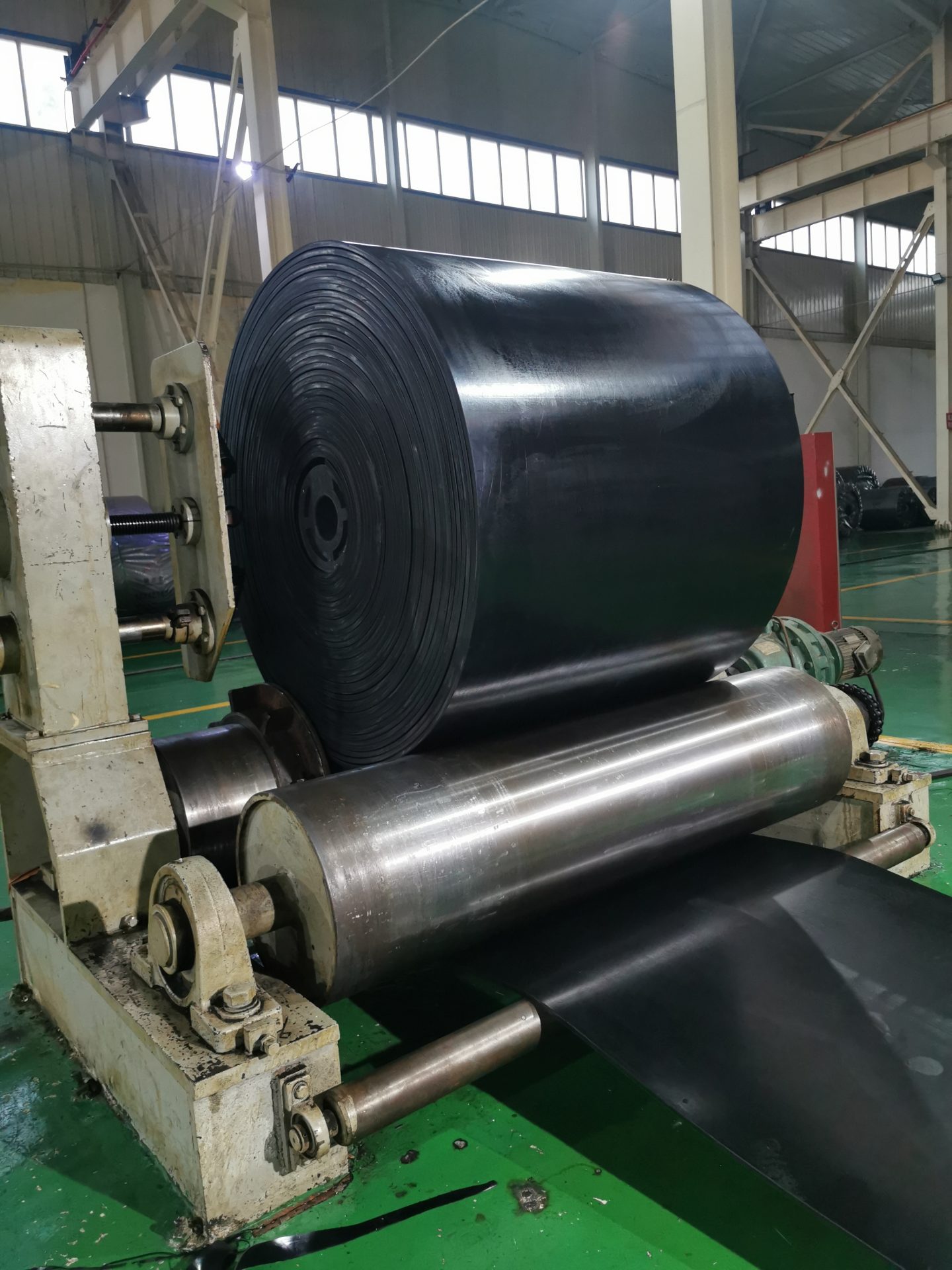
Fabric belt layers meet different parts of the cleaning cycle
GRAM’s fabric belt construction separates an upper cover, textile carcass and lower cover. That arrangement helps identify where each substance contacts the proposed belt. It also prevents the buyer from treating one exposed-face description as proof of compatibility for the entire construction.
Cleaning runoff can involve the lower cover and belt edges
The upper face may receive the cleaning product directly, while runoff or retained liquid can reach other regions. Describe those paths from the actual cleaning arrangement. A proposed upper-cover assessment does not automatically answer what happens at the lower face or an exposed edge.
Ask the supplier to identify the covers and edge arrangement in the offered construction, and explain which exposure its evidence addresses. Do not assume every fabric belt has the same edge protection. If the order changes an edge or cover detail, keep that change in the chemical-contact review rather than treating it as an unrelated manufacturing option.
EP yarn identity cannot establish cover compatibility
The EP route describes polyester longitudinal yarns and nylon transverse yarns. These are reinforcement details. They do not identify the rubber compound or establish its compatibility with the plant’s cleaning liquid.
For a retained EP conveyor, state whether the reinforcement designation and dimensions are to remain while the cover is reviewed. If another construction is proposed, obtain its actual details for the mechanical assessment as well. Keep the chemical decision and conveyor-fit decision connected without allowing one to stand in for the other.
NN fabric needs its own finished-belt assessment
GRAM’s NN construction uses nylon in both fabric directions. That is a different textile arrangement, not a chemical-resistance class. A proposal based on NN still needs an identified cover and an exposure statement for the complete offered belt.
A buyer should not change from EP to NN solely because the inquiry emphasizes chemicals. Ask what part of the construction the proposed change addresses. If the reason concerns the outer rubber, a change in yarn arrangement is not, by itself, an answer to the compound-compatibility question.
Wet residue before restart should remain in the belt assessment
Restart can introduce a condition different from either normal production or direct cleaning. Record whether residues remain, whether the belt has been rinsed and what material first reaches the cleaned surface. These are conditions to establish from the plant’s routine, not a universal cleaning instruction.
A contractor commissioning a replacement belt should obtain the intended production-and-cleaning description from the operator. The installation team can confirm mechanical fitting, but fitting successfully does not establish chemical acceptance. Make sure the supplied construction is the one reviewed for the operator’s stated exposure.

Where the site sees swelling, surface change or separation, preserve the affected region’s location and operating history for technical assessment. Do not assign a cause from appearance alone. A changed cleaning routine is relevant evidence, but other contacts and operating conditions may still require investigation.
Accept the chemical-resistant belt against stated conditions, not a broad promise
The final proposal should identify the finished construction and the process and cleaning conditions it addresses. Any limits or exclusions should be understandable to the operator. If the supplier’s evidence concerns a different concentration or temperature, obtain the required clarification before the belt is accepted for the intended duty.
Where a practical assessment is required, agree the proposed sample or construction and the exposure conditions with the responsible reviewer. A rubber sample can answer a defined material question but cannot automatically establish the behavior of a complete moving, tensioned belt. Keep those assessment scopes separate. Do not turn a favorable observation on one cover sample into a promise about the fabric carcass, edges or installed joint without the applicable supporting information.
Receiving records should preserve that construction identity. If multiple fabric belts arrive together, keep the chemical-duty order distinguishable from a general-purpose replacement of similar width. Agree identification and package protection for the supplied belt; do not infer a special packaging system or delivery commitment from the chemical-resistant description.
The existing fertilizer and processing overview provides the broader selection discussion. For a line whose cleaning routine is changing, carry the separate contact cycle into the actual offer first. Approve a defined construction for defined conditions, and reopen that assessment when the substance or routine changes.
Last Updated on October 2, 2026 by gramconveyor_admin


