
Review the Full Pulley Path with Your Fabric Conveyor Belt Supplier

The drive pulley looks large enough, so the replacement belt is approved. Later, the installer finds that the revised construction has not been assessed around the smaller retained pulleys elsewhere in the path. A fabric conveyor belt supplier should receive the complete pulley inventory before an engineer approves a changed textile carcass. Begin with GRAM’s fabric belt range, including its EP and NN constructions, and identify the offered belt and joining method against every retained bend.
This is a construction approval, not a request for a universal pulley diameter. The belt’s fabric arrangement, covers and joint must be suitable for the conveyor it will follow. If the proposal changes those elements, an old approval for a different belt cannot silently become approval of the new one.
Give the Fabric Conveyor Belt Supplier the Entire Retained Pulley Path
A belt encounters more than the drive pulley. Depending on the installation, the path can include tail, bend, snub, take-up or tripper pulleys. Identify which are present and which will stay. Their positions and duties should be clear enough that the proposed belt can be assessed against the real path rather than an abbreviated equipment description.
Small Bend Pulleys Can Remain Unchanged When the Carcass Changes
A plant buyer may increase the requested ply arrangement to address a perceived strength problem while retaining the take-up path. The supplier needs to know that those pulleys remain. The new construction should not be approved only at the drive because its repeated bending duty also includes the retained smaller positions.
Record each relevant pulley’s actual dimensions and location using the project’s agreed measurement method. Do not assume that the general arrangement drawing still matches a conveyor modified over several maintenance cycles. If a replacement pulley has been installed, identify it in the inventory used for the belt assessment.
Also show how the belt passes around each pulley. The same nominal diameter at two positions does not necessarily describe the same duty. The reviewer needs the path and operating condition associated with the measurement, including any arrangement that bends the belt in a different sense.
Keep pulley measurements distinct from dimensions of adjacent hardware. A photograph of the assembly can show a bearing housing or projecting shaft more clearly than the pulley face itself. Mark what has actually been measured so a component dimension is not mistaken for the diameter or face information needed for the belt review.
Where old equipment identification is incomplete, supply the available machine record and clearly mark unresolved measurements. A missing bend-pulley dimension should remain visible as a pending construction question. Filling the record with a value from a different conveyor makes the approval appear complete while giving the supplier the wrong retained path.
Trippers and Changing Belt Paths Need Their Operating Positions
If retained equipment changes position, show the belt path through the intended operating envelope. A proposal assessed against one convenient stationary position may omit another condition that the belt encounters during service. Identify those conditions before accepting a complete construction approval.
A contractor preparing an installation file should make this information retrievable without several separate conversations. One clearly marked path record can identify the pulleys, their dimensions and the retained equipment revision. The record does not need to duplicate a design calculation, but it must describe the machine against which that calculation or construction assessment is made.
Use the equipment reference, position in the belt path, actual diameter and relevant operating condition together. Mark which pulleys are staying and which are part of an approved change. The belt proposal should refer to the same register revision.
Keep Fabric Carcass and Rubber Cover Details Separate in the Proposal
GRAM describes EP with polyester warp and nylon weft, and NN with nylon reinforcement in both directions. Its belt construction descriptions distinguish the top cover, textile carcass and bottom cover. Those parts have different roles; the complete offered construction is the object that needs approval for the retained conveyor.
EP and NN Abbreviations Do Not Establish a Pulley Requirement
The reinforcement family helps identify the product route, but it does not supply a universal bending limit. Ask for the actual fabric construction, ply arrangement and covers being offered. If a bidder changes those details while retaining the same EP or NN label, the reviewer needs to see the change.
GRAM’s nylon conveyor belt route provides another entry into the nylon construction discussion. Do not treat a broad material name as a complete specification. Confirm whether the offered belt is the approved construction rather than assuming that every nylon-containing carcass has the same mechanical requirements.
Where several fabric proposals are being compared, maintain one common retained-pulley record. Each bidder should state the construction assessed against it. Otherwise a favourable statement from one proposal may be attached to another belt with a different carcass or cover arrangement.
More Fabric Plies Require Review Rather Than Automatic Acceptance
A request for additional plies can sound like a straightforward strength improvement. It also changes the construction being proposed. The engineer should assess the actual revised carcass against the belt’s required bending and support duties, not infer suitability from the larger ply count.
Fenner Dunlop’s textile construction tables show different requirements for different fabric designs. Their particular dimensions and product claims are not GRAM specifications. They demonstrate why a construction-specific assessment is needed when the offered belt changes.
For an older conveyor with limited modification scope, make any conditional approval explicit. If the revised belt requires a retained pulley to change, name that change and its responsibility before accepting the order. A condition that appears only in technical correspondence can be missed by the purchasing and installation teams.
Approve the Fabric Belt Joint Against the Same Conveyor Path
The belt and its joint are not independent replacement decisions. Identify the intended joining method and the actual proposed construction before the joining work is arranged. The installer needs the belt-specific documents and a clear scope, not an assumption that the previous joint procedure can be reused unchanged.
A Changed Carcass Can Make the Previous Joint File Inapplicable
If the old belt had a different fabric arrangement, retain its records as background rather than present them as the new installation instruction. Request the joining information appropriate to the supplied belt. This guide does not provide dimensions or curing settings for a joint; those belong to the actual construction and approved joining procedure.
The contractor should know who supplies the joining materials, who performs the work and which documents govern acceptance. A belt-only quotation should not be interpreted as an included field joining service. Resolve that boundary while the construction is being approved, rather than after the replacement roll reaches the site.
If an old joint sample is retained, identify which belt it came from and what comparison it is intended to support. It may help explain a previous construction or failure, but it should not become the dimensional instruction for the replacement. Keep the new belt-specific joining information separate from that historical sample.
The same applies when a replacement belt has a profiled working surface: the joining plan must describe the actual construction being joined, including any relevant surface arrangement. A sample showing only smooth rubber cannot establish how the ordered profile and textile carcass should be prepared or connected.
Mechanical fastening, where considered, also needs explicit compatibility review for the belt and its path. The correct decision cannot be made from a general statement that fabric belts can be fastened. Identify the proposed fastening arrangement, relevant pulleys and any associated contact equipment before approval.
Joint Allowance Must Remain Separate from the Operating Belt Length
Record the required installed belt length and any additional material needed by the agreed joining plan. Do not apply one informal allowance to every fabric construction. The cutting instruction should reference the actual joint arrangement so usable installation length remains clear.
A distributor supplying a cut length should preserve that instruction with the piece. If the original roll is split, the remaining length and supplied length should each retain their own identity. A delivery note describing the original full roll cannot resolve a later disagreement about the cut piece needed for the approved joint.
Profiled Fabric Belts Add a Contact Geometry Question
GRAM’s fabric range includes photographs of belts with raised surface profiles. Those visible shapes are relevant when the project compares a profiled and a smooth working surface. They do not identify the photographed carcass or establish permission to run that construction around a particular retained arrangement.

Raised Profiles and the Smooth Back Face Encounter Different Contacts
Identify which belt face contacts each retained pulley or other relevant component. A path that includes reverse bending or contact with a profiled face needs to be reviewed for the actual belt. Do not infer compatibility from another conveyor using a similar-looking profile.
The same distinction matters around cleaning or sealing equipment. A surface profile can change the contact that a retained device sees. If the project changes the working face, record the associated equipment that needs review rather than treating it as a purely cosmetic amendment to the roll order.
GRAM’s rubber conveyor belt range provides broader cover and construction context. A chosen cover duty and a chosen working profile should remain identified separately from the reinforcement. Together they describe the offered belt; none alone proves compatibility with the complete retained path.
Send One Approved Fabric-belt Revision to Receiving and Installation
Commercial and technical revisions can become separated during a replacement project. The purchase order may show a new construction while the installation file still describes the old one. Before dispatch, establish which approved revision identifies the belt, pulleys, covers and joining scope that belong together.
For a plant receiving several rolls, keep each roll tied to that revision and its intended conveyor. Similar width or appearance does not establish equal carcass construction. If a later substitution is proposed, review it against the retained pulley inventory rather than approve it solely on availability.
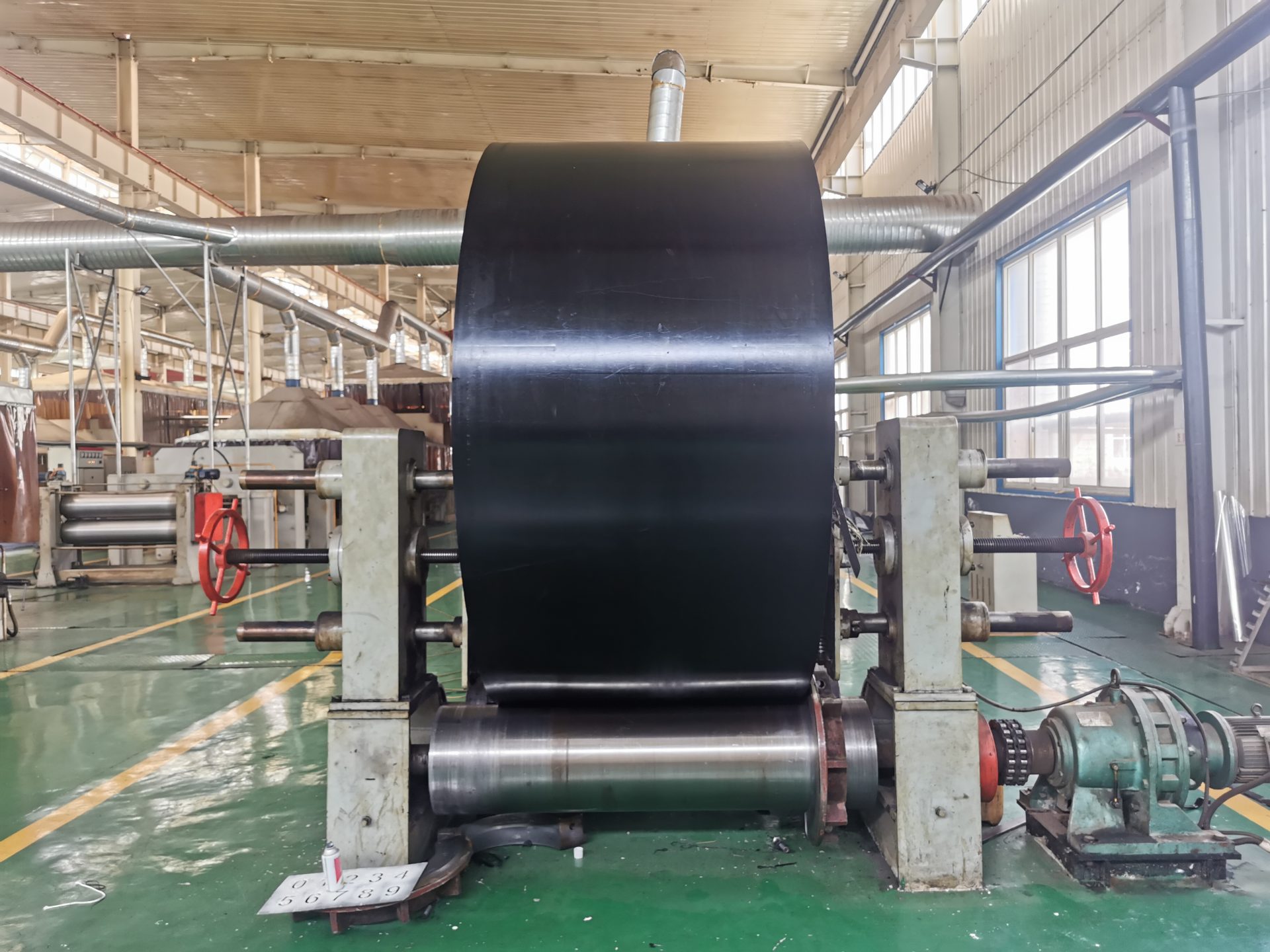
Agree how the roll will be supported and protected during transport using its actual dimensions, mass and handling information. A changed carcass or cover arrangement can change the delivered object even if the width remains the same. Do not infer unloading equipment or safe restraints from a photograph of another roll.
At receiving, compare the documents with the final proposal and record visible damage before the belt is prepared for joining. The inspection should preserve enough information to distinguish a transport concern from an unapproved construction substitution. Neither issue is resolved by confirming the product family abbreviation alone.
Send the installer the approved construction together with the retained-pulley register, not as two files with unrelated revision dates. If the project changes a pulley after the belt order, record that change for the construction reviewer. The installation team should be able to explain which actual belt path the supplier assessed before preparing the textile joint.
The existing EP, NN and multi-ply construction explanation supplies useful background for the reinforcement discussion. For the project approval, keep the complete retained pulley path and actual offered construction together. If a small bend pulley or a changed joint still lacks an assessment, the replacement belt is not yet ready to become the installation team’s assumed solution.
Last Updated on October 2, 2026 by gramconveyor_admin


