
Ask Your Polyurethane Conveyor Belt Cleaner Supplier About the Splice Before Replacing a Blade

The replacement blade looks like the old one, yet it catches when the belt joint passes. For a maintenance buyer, that is a compatibility question rather than a reason to increase spring pressure. A polyurethane conveyor belt cleaner supplier should know the splice arrangement, belt surface and retained mounting hardware before proposing the new blade. GRAM’s polyurethane conveyor cleaner assemblies provide a starting point for bulk-material cleaning, but the order should identify whether a blade alone or a complete cleaner is required.
For an aggregate plant retaining the existing cross-shaft and tensioning arrangement, matching blade length is only one part of the replacement. For a distributor supplying a complete assembly, mounting space and the cleaner’s intended position also need agreement. Both buyers need a product-specific compatibility decision rather than an assumption that polyurethane makes every splice harmless.
Tell the Polyurethane Conveyor Belt Cleaner Supplier What Crosses the Blade
The blade contacts the belt surface as the belt travels. A joint, repair or projecting fastener can interrupt that surface. Identify the splice type and condition before the replacement is selected, especially if the belt has changed since the cleaner was originally installed.
Mechanical Belt Fasteners Need an Explicit Cleaner Compatibility Decision
A mechanically fastened joint should be described with the belt and the proposed cleaner, not left as an incidental maintenance detail. Its profile and condition matter to the contact with the blade. Do not assume compatibility because the previous blade was also polyurethane, or because a similar-looking assembly operates on a different conveyor.
A distributor may receive a photograph of a red blade after a customer replaces the belt fasteners. That image does not identify the blade compound, the approved joint arrangement or the tensioning system. Ask whether the splice has changed and retain that information with the replacement request. The buyer should not discover the change only after the blade is installed.
Flexco’s cleaner selection guidance includes splice type alongside operating and material conditions. Its selection charts apply to its products. For a GRAM order, the principle is to obtain compatibility confirmation for the actual cleaner and belt joint, without borrowing another manufacturer’s model approval.
Vulcanized Splices and Belt Repairs Still Affect the Cleaning Surface
A vulcanized joint does not remove the need to inspect the working surface and the belt’s condition. A repair, damaged cover or uneven joint can change the contact presented to the blade. Describe those features to the responsible engineer and supplier instead of treating the splice name as proof that the surface is uniform.
If the belt itself is being replaced, GRAM’s rubber conveyor belt range provides the relevant belt route to examine. Coordinate the cleaner selection with the approved new cover and joint. The cleaning assembly should be assessed for the belt being installed, rather than only for the belt that has just been removed.
Do not modify a fastener, joint or blade by copying a procedure from an unrelated cleaner. The appropriate treatment belongs to the approved belt and cleaner instructions, with responsibility assigned to qualified personnel. This guide identifies information needed for replacement approval; it does not prescribe a field alteration to make an incompatible part pass.
Which Cleaner Parts Will Remain on the Conveyor?
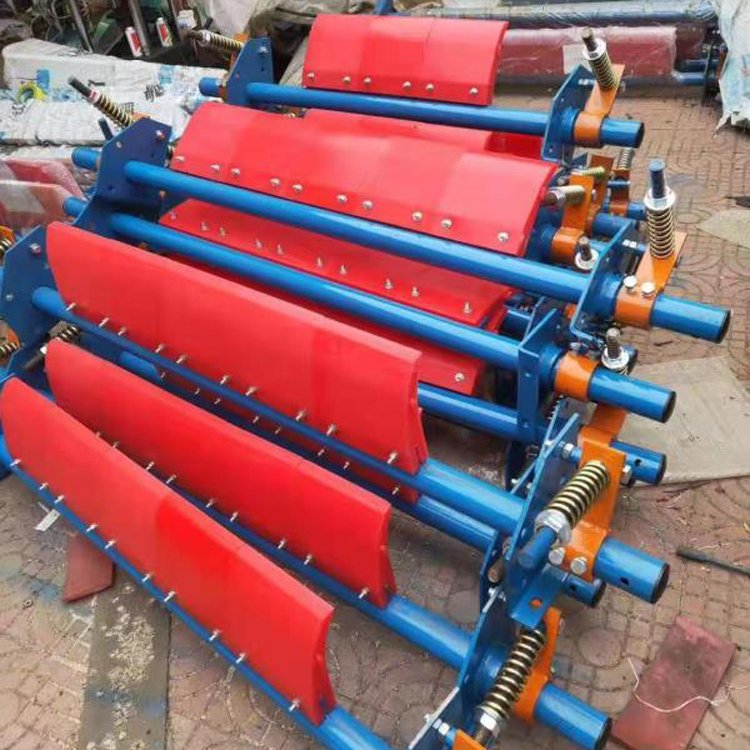
GRAM’s existing cleaner photographs show a blade attached to a transverse support, mounting brackets and spring or adjustment elements. Those visible structures help identify what a buyer means by a cleaner assembly. They do not establish that every pictured part is included in every blade order or interchangeable with hardware already on site.
The Blade Attachment Must Match the Retained Support Shaft
For a blade-only replacement, identify the mounting interface and the dimensions that establish fit. Include the blade profile, attachment pattern, supported length and the hardware intended to remain. A matching overall blade length cannot establish that the attachment holes, support shape or working edge position are correct.
Measure the attachment from an intact reference where possible. A torn hole, bent support or worn blade edge can distort the dimensions taken from the failed part. Note which measurements describe the mounting interface and which describe the original working profile. If the retained support has been modified, show that change on the replacement request rather than asking the supplier to reconstruct it from an unlabelled photograph. The delivered blade should fit the approved retained interface, not reproduce damage found on the discarded one.
A plant may be keeping an old cross-shaft because it appears mechanically sound. The proposed blade still needs to suit that support and its intended movement. If the supplier proposes a different mounting arrangement, evaluate whether the change requires a complete cleaner replacement rather than treating it as a minor blade substitution.
Spring Adjustment Belongs to the Proposed Cleaner Design
GRAM’s cleaner discussion includes adjustable pressure arrangements. The correct setting depends on the proposed assembly and its instructions; there is no universal spring position for all polyurethane blades. Increasing pressure to compensate for a damaged surface, incorrect mounting or unsuitable compound can leave the underlying problem unresolved.
For an aggregate conveyor whose blade wears unevenly, record the retained adjustment arrangement and the wear pattern before replacing the blade. Confirm that the assembly can be inspected and adjusted as intended. The order should not depend on a tensioner that is seized, damaged or inaccessible after installation.
Where the cleaner is mounted at the head pulley, its geometry must suit that location. A cleaner intended for a different position may require a different arrangement. Obtain the proposed installation drawing and check the available space; do not infer the correct location from a photograph of an uninstalled assembly on a factory floor.
Why Is the Polyurethane Blade Worn More in the Centre?
A belt’s material path and its full width are different dimensions. If carried material occupies the central portion, the cleaning duty can be concentrated there. Observe the residue path and the blade wear pattern together before deciding that a wider blade will necessarily improve cleaning.
Martin Engineering’s cleaner selection explanation links blade selection to the material path and head-pulley geometry. Its dimensional rules are for its selection method and should not be copied into a GRAM order as universal allowances.
For a plant conveying damp aggregate, central wear may occur alongside deposits at the discharge. Establish whether the proposed cleaner reaches the residue path, whether the blade makes the intended contact and where removed material will fall. A new blade can be fitted correctly yet leave a material-handling problem if the removed residue has no suitable discharge route.
GRAM’s broader conveyor belt range includes different belt constructions and surfaces. A smooth working surface and a profiled surface should not be assumed to accept the same blade arrangement. Describe the actual surface and obtain confirmation for the proposed cleaning method before ordering a continuous blade for an unfamiliar belt.
If the belt is worn or its surface geometry has changed, keep that condition in the replacement discussion. The buyer is not choosing a blade against a perfect belt shown in a diagram. The proposed cleaner needs to suit the actual acceptable belt condition, while damage requiring belt repair remains a separate maintenance decision.
Polyurethane Colour Does Not Establish the Blade Compound
The red blades in GRAM’s existing photographs identify the appearance of those assemblies. They do not provide a hardness value, chemical compatibility result or operating temperature limit. A purchase description should identify the proposed blade material and its intended conditions without inventing a specification from the colour.
Wet Residue, Abrasive Material and Hot Product Need Different Evidence
Describe whether the residue is wet, sticky, abrasive or heated, and whether cleaning chemicals contact the blade. Those conditions influence what must be confirmed for the proposed compound. A general polyurethane description cannot establish suitability for every combination of temperature and chemical exposure.
Martin Engineering’s urethane blade information illustrates that manufacturers can use different formulations for different duties. Its colour codes and limits belong to Martin. They cannot be applied to a visually similar GRAM blade or used to infer an unlisted GRAM grade.
When the material changes seasonally, include the relevant operating conditions rather than specifying only the dry-weather product. A blade selected for the expected exposure needs a confirmed basis for that exposure. If the supplier cannot establish the required compatibility, revise the proposed construction or investigate a different cleaning arrangement before committing to the replacement.
Reversing and rollback require separate confirmation as well. A belt cleaner suitable for travel in one direction is not automatically acceptable when the belt moves the other way. Flexco’s belt-cleaning handbook distinguishes product selection by operating and splice conditions. Its product ratings are not GRAM ratings; request the appropriate confirmation for the specific proposed assembly.
Carryback on Steel Rollers Is Evidence to Examine, Not a Blade Setting
Material carried beyond discharge can collect around return-side components and the conveyor structure. GRAM’s steel roller range is relevant when those components also need assessment, but replacing a roller does not establish why residue remained on the belt.
Observe where deposits begin, whether the cleaner is making its intended contact and whether the material falls back onto the return path after being removed. These observations help separate ineffective scraping from an unsuitable discharge arrangement. They should not be reduced to an instruction to tighten the cleaner until the deposits disappear.
For a belt with continuing carryback after a blade change, review the complete cleaning route with the responsible engineer. A different cleaner position or additional cleaning stage may need assessment, but a second device should not be added without resolving access, mounting and material discharge. GRAM’s scraper belt cleaner explanation supplies further product-family context for that discussion.
Approve the Delivered Blade Against the Retained Cleaner Interface
A replacement record should allow the maintenance team to connect the delivered blade to the assembly it will fit. GRAM’s conveyor accessories range provides a broader route where the order includes related support components. Identify those items individually rather than leaving the supplier to assume that “cleaner” includes all retained and replacement parts.
- Identify the blade construction and attachment that fit the retained support.
- Associate the cleaner location with the actual belt surface and splice.
- Confirm the applicable compound and operating conditions.
- Record the supplied mounting and adjustment parts separately from those staying on site.
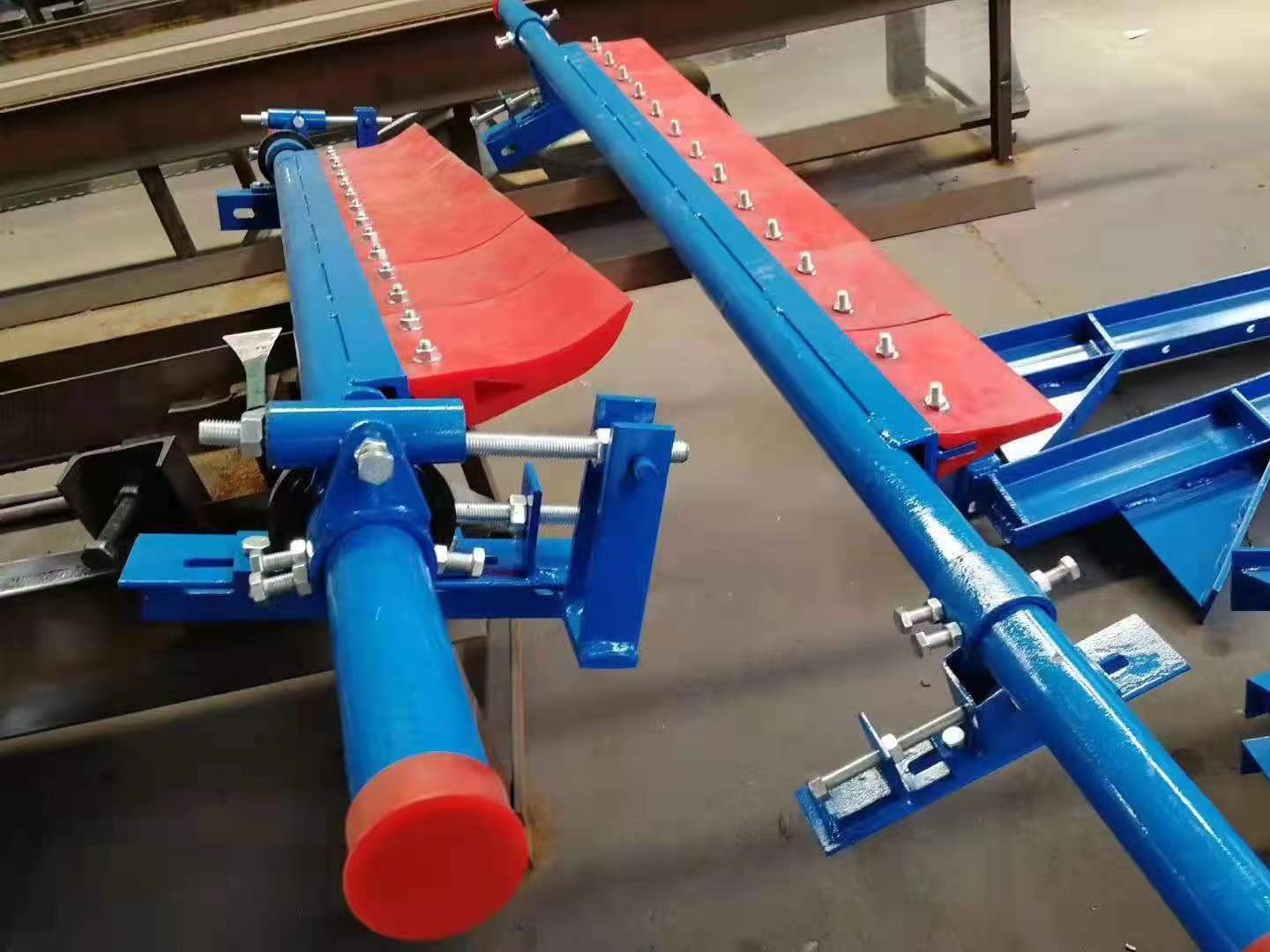
Agree protection for the blade edge, attachment and adjustment components during transport. At receipt, check the delivered identity and visible condition against the approved order before installation. If only blades are supplied, preserve the part reference so the next replacement does not depend on a colour photograph or a worn sample alone.
Inspection and replacement must follow the site’s approved isolation and maintenance procedure. The OSHA hazardous-energy overview explains the isolation principle. Access to a cleaner beside a moving belt is not made safe by the softness of the blade, and spring or adjustment components must be handled under the appropriate approved instructions.
Keep the old blade’s wear pattern and the belt joint information attached to the replacement decision. If the proposed blade matches the support but its splice or operating compatibility remains unresolved, the order is still incomplete. Resolve that interface before treating another blade as routine stock; the next replacement should address the reason this one failed.
Last Updated on October 2, 2026 by gramconveyor_admin


